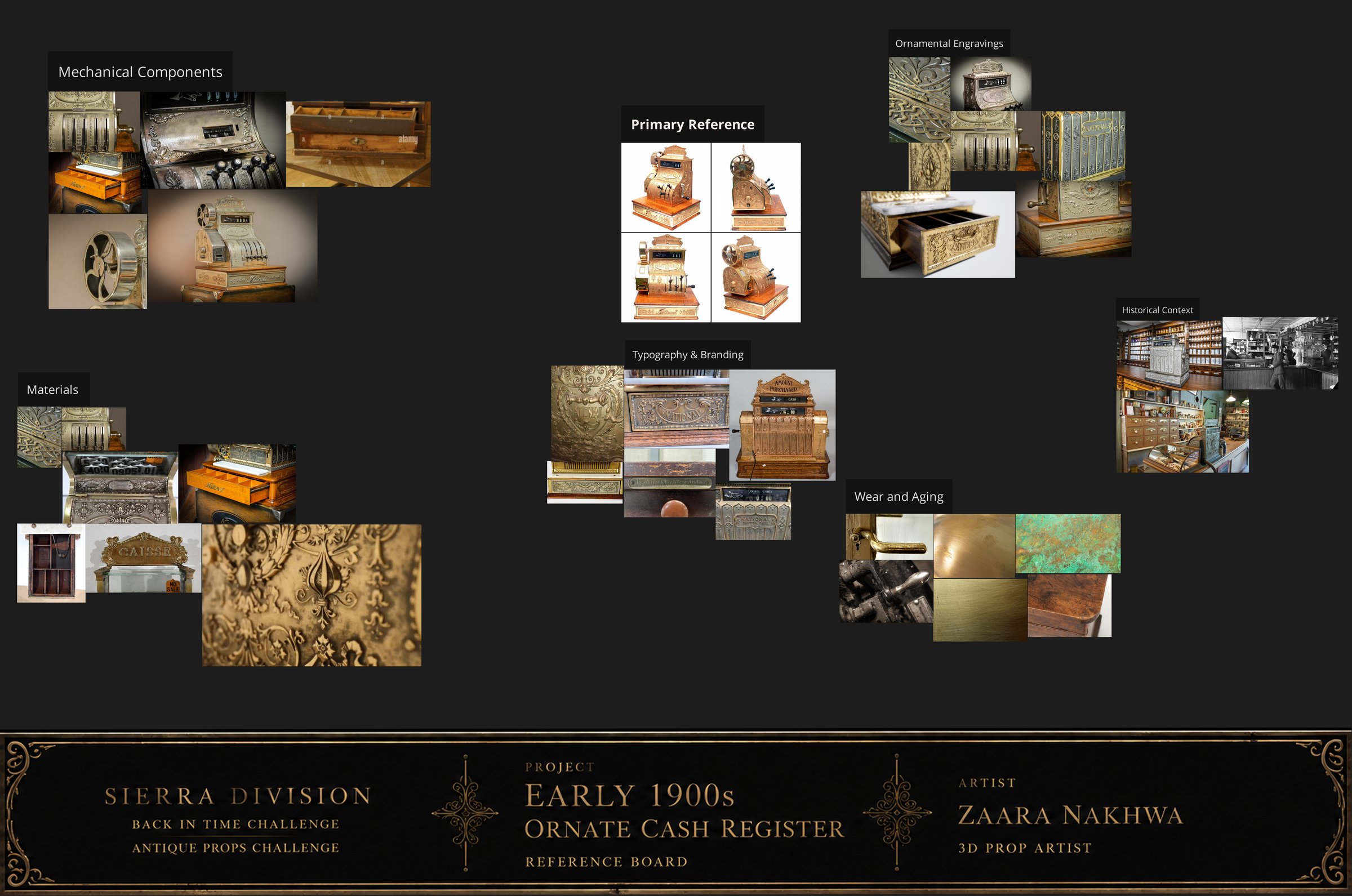
Log 02: The Next Step – Gathering References
Introduction to the Process
In this second log, I’m focusing on one of the most important stages of the project: gathering references for my Early 1900s Ornate Cash Register. This phase is essential because it establishes a strong visual and historical foundation for the prop before moving into modeling and texturing.
Since this project is heavily focused on craftsmanship, ornamentation, and historical authenticity, I need to understand not only how the cash register looks but also how it was constructed, how it functioned, what materials it was made from, and how it aged over decades of use.
The references collected during this stage will guide every aspect of the project, from proportion and mechanical design to material creation and surface detailing.
Why References Matter
References help transform a simple prop recreation into a believable and historically grounded asset.
Rather than relying on assumptions, I am studying authentic early twentieth-century cash registers, decorative engraving techniques, mechanical components, material properties, and real-world wear patterns. This research ensures that every design decision is supported by historical evidence and visual accuracy.
By understanding how these machines were manufactured, operated, and maintained, I can create a prop that feels authentic and lived-in rather than simply decorative.
Categories of References
Primary Cash Register References
The first step is collecting multiple views of authentic early 1900s cash registers.
I am gathering front, side, rear, and three-quarter views to better understand the overall silhouette, proportions, and construction of the machine. These references provide a blueprint for the modeling phase and help identify details that may not be visible from a single image.
Studying multiple examples also helps reveal common design characteristics shared across cash registers of the period.
Ornamental Engravings and Decorative Details
One of the defining features of antique cash registers is their elaborate decorative metalwork.
I am collecting close-up references of engraved brass panels, floral motifs, scrollwork, embossed patterns, and decorative borders. These references will help me analyze the depth, complexity, and craftsmanship of the engravings while providing valuable information for sculpting and texturing.
Researching decorative art styles from the late Victorian and Edwardian periods will also help me understand the design language that influenced these machines.
Mechanical Components
Understanding how the cash register functioned is just as important as understanding its appearance.
For this section, I am gathering references of the mechanical controls, value-setting levers, crank mechanisms, display windows, receipt roll assemblies, and cash drawers. These references will help ensure that each component is modeled accurately and contributes to the authenticity of the final asset.
Studying these mechanisms also provides insight into how engineering and craftsmanship worked together during the early twentieth century.
Typography and Branding
Cash registers from this era often featured beautifully designed branding elements and decorative typography.
I am collecting references of engraved logos, manufacturer markings, ornamental lettering, customer display signage, and embossed nameplates. These details play a significant role in establishing the identity of the machine and will be useful when creating decals, engravings, and surface details later in production.
Materials and Surface Properties
To accurately recreate the prop, I need to understand the materials used in its construction.
The primary materials I am researching include:
-
Polished brass
-
Aged brass
-
Cast metal components
-
Antique glass
-
Hardwood construction
-
Painted and lacquered surfaces
By studying these materials under different lighting conditions, I can better understand how they reflect light, wear over time, and contribute to the overall visual appeal of the register.
Wear and Aging
An object that has existed for decades naturally develops signs of use and history.
For this reason, I am collecting references of finger-polished brass, tarnish buildup, oxidation, dust accumulation, scratches, worn corners, and aged wooden surfaces. These references will help me create believable wear patterns that tell the story of a machine that has been actively used throughout its lifetime.
Understanding where wear occurs and why it develops is essential for creating realistic textures and materials.
Historical Context
To better understand where these cash registers existed, I am gathering references of early twentieth-century stores, pharmacies, hotels, and retail interiors.
These references provide context for how the machine was used within its environment and help reinforce the historical narrative behind the prop. Studying period photographs also reveals additional details about materials, placement, and wear that may not be visible in isolated product references.
Next Steps
With the reference gathering phase complete, the next stage of the project will focus on creating a blockout of the cash register.
Using the collected references, I will establish the overall proportions, primary forms, and mechanical structure of the asset before moving into high-poly detailing. This process will ensure that the foundation of the model is accurate and ready for the intricate ornamental work that defines the character of this early 1900s cash register.