Update #13Jul 9, 2024
tonybonet thanks for the compliment 😊
tonybonet thanks for the compliment 😊
andrew_walker12 Thanks for the compliment
ninjafloss Thankyou for kind words
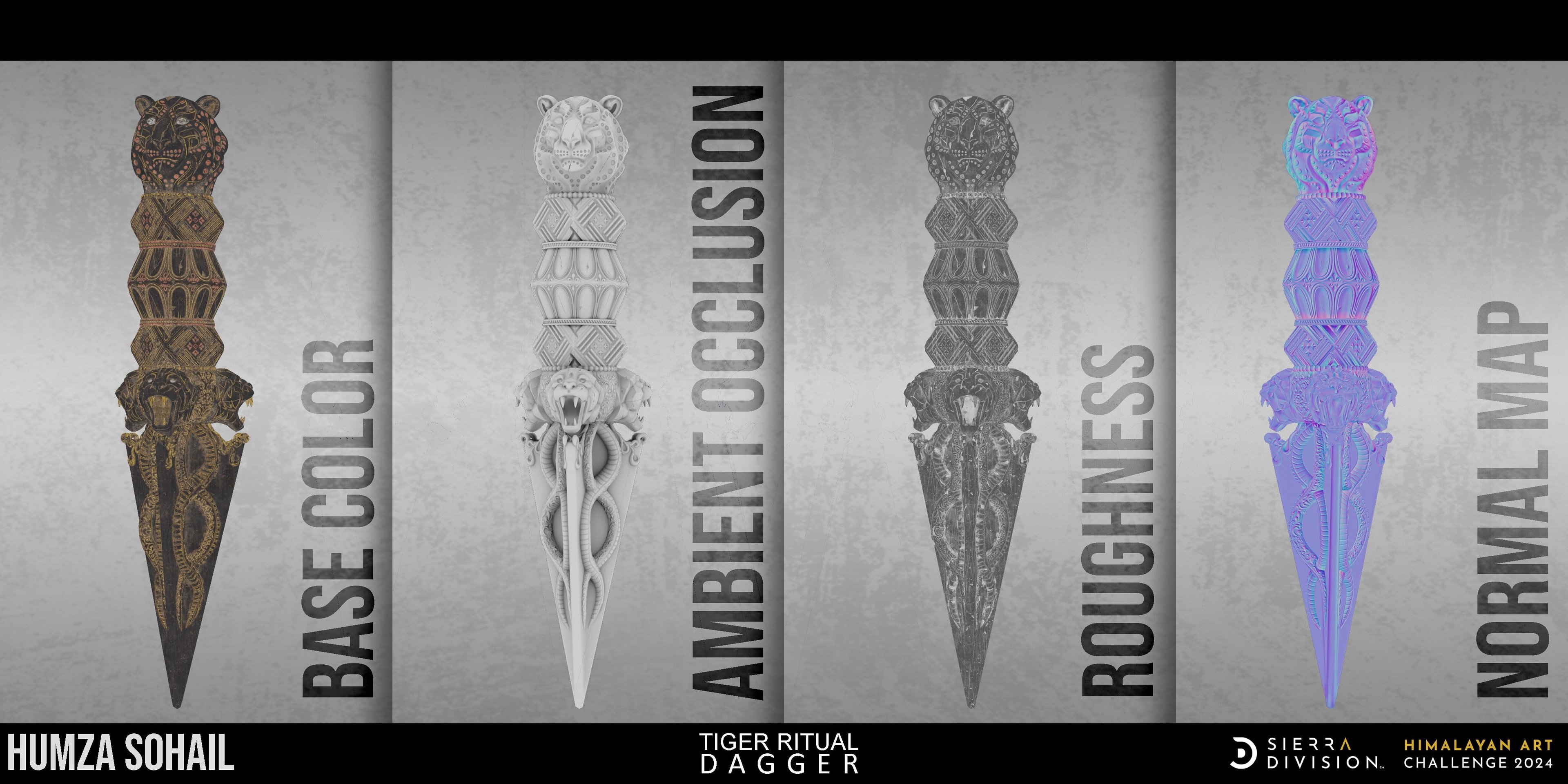
After making a low poly version and baking i move to substance painter for texturing
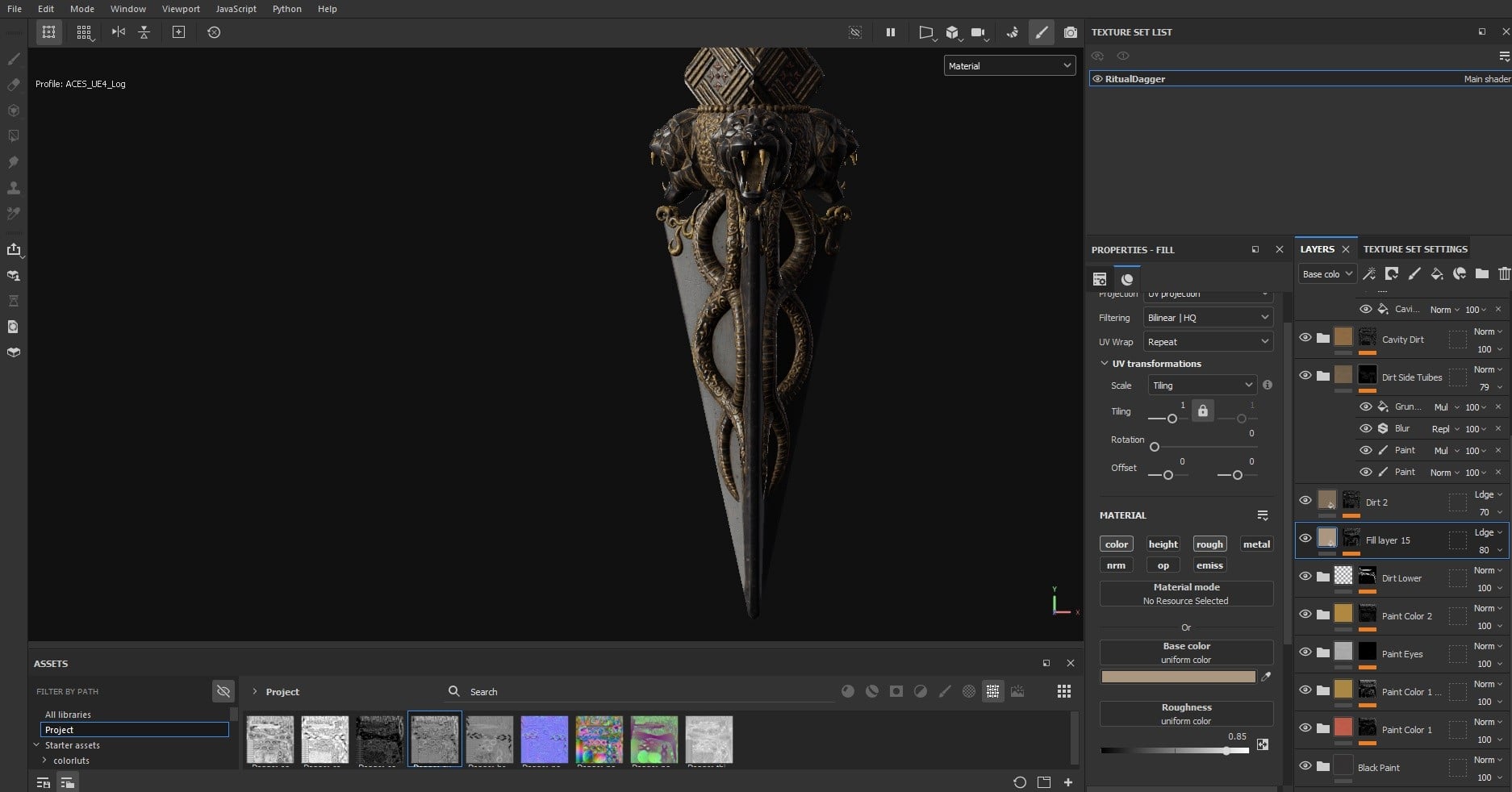
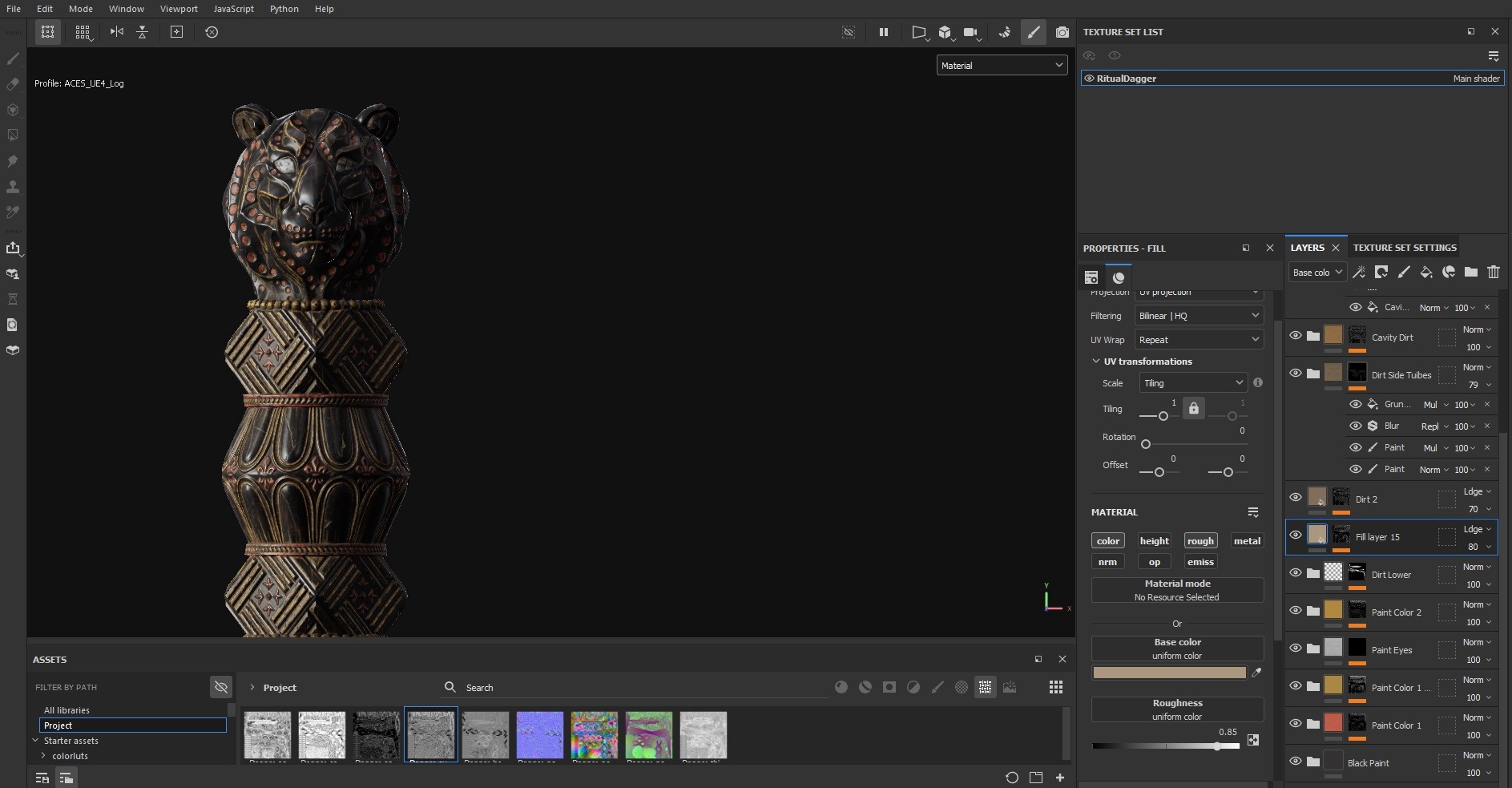
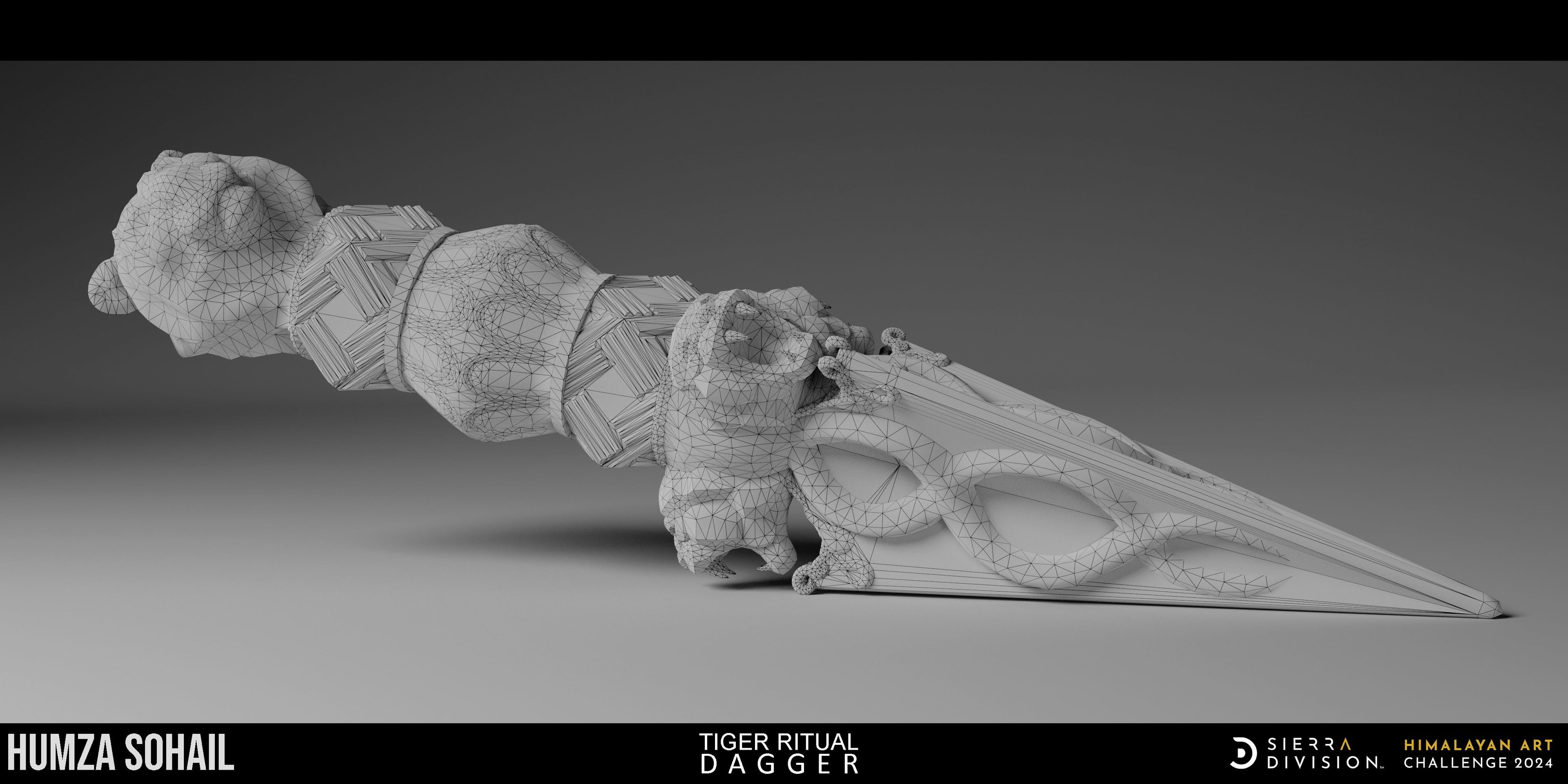
After texturing i move to blender for rendering of Tiger Ritual Dagger. The textures are 4K and only one material set. The Low Poly version contains 18,948 triangles.
So, lets move to renders.
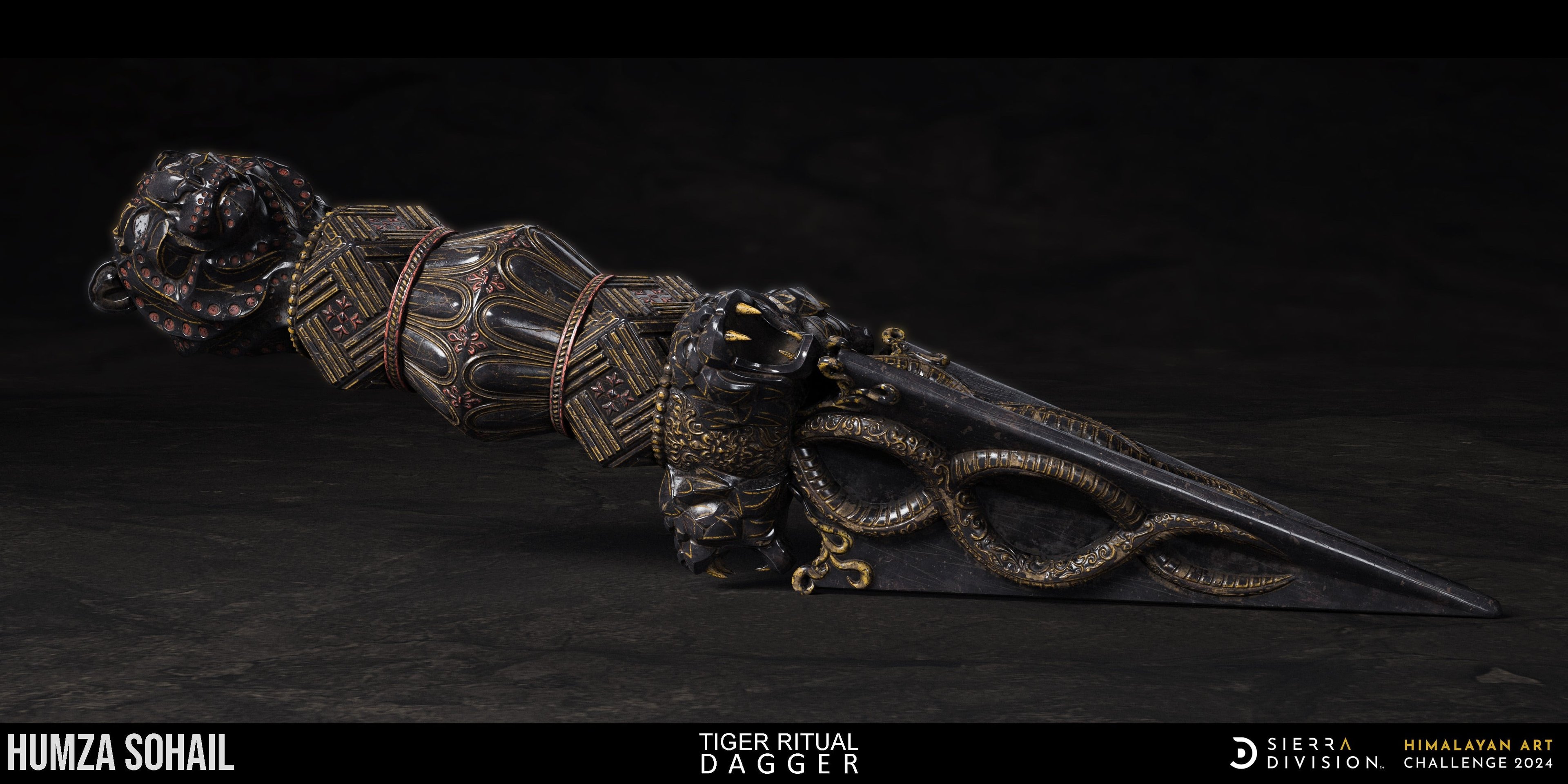
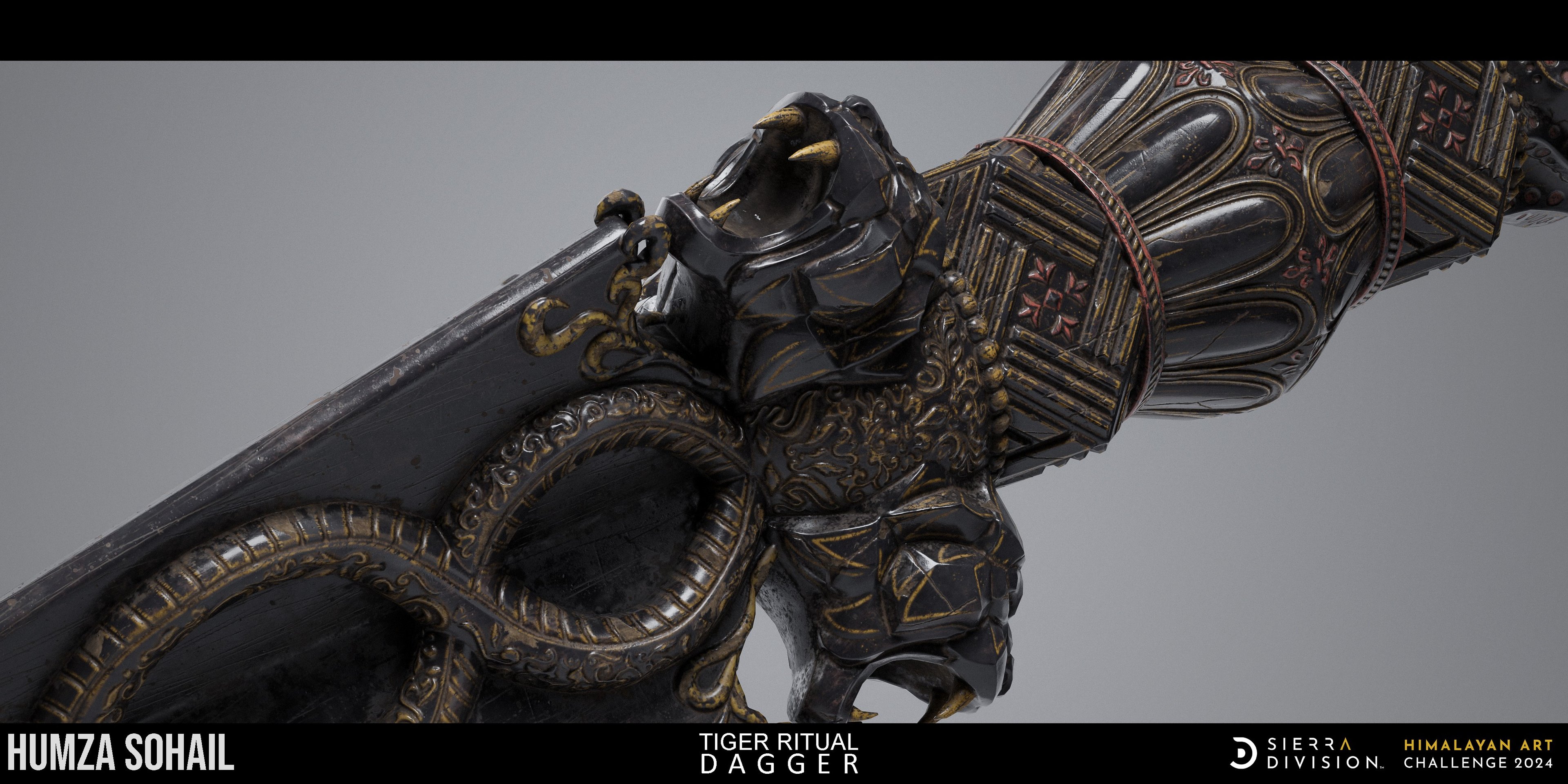
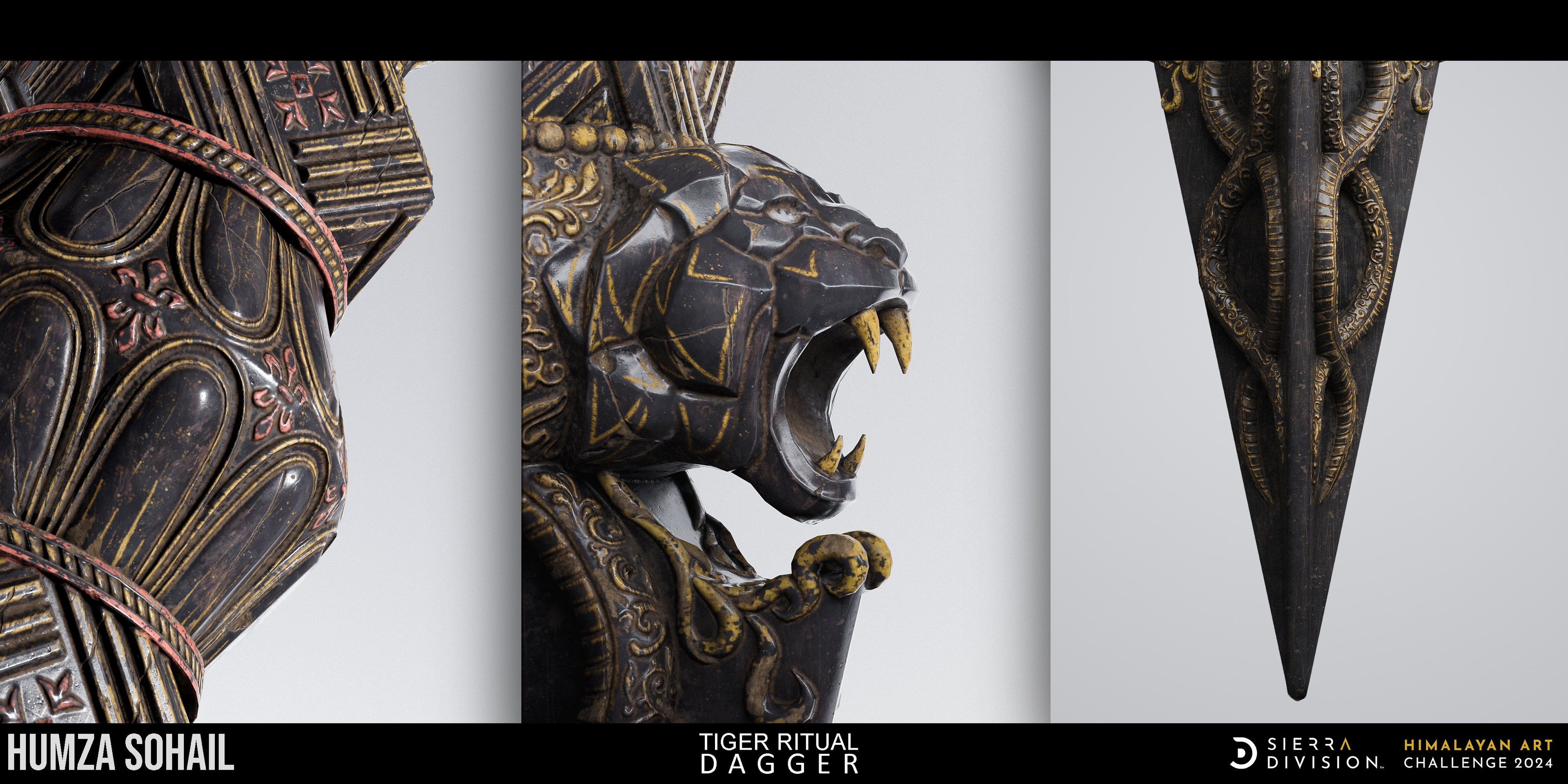
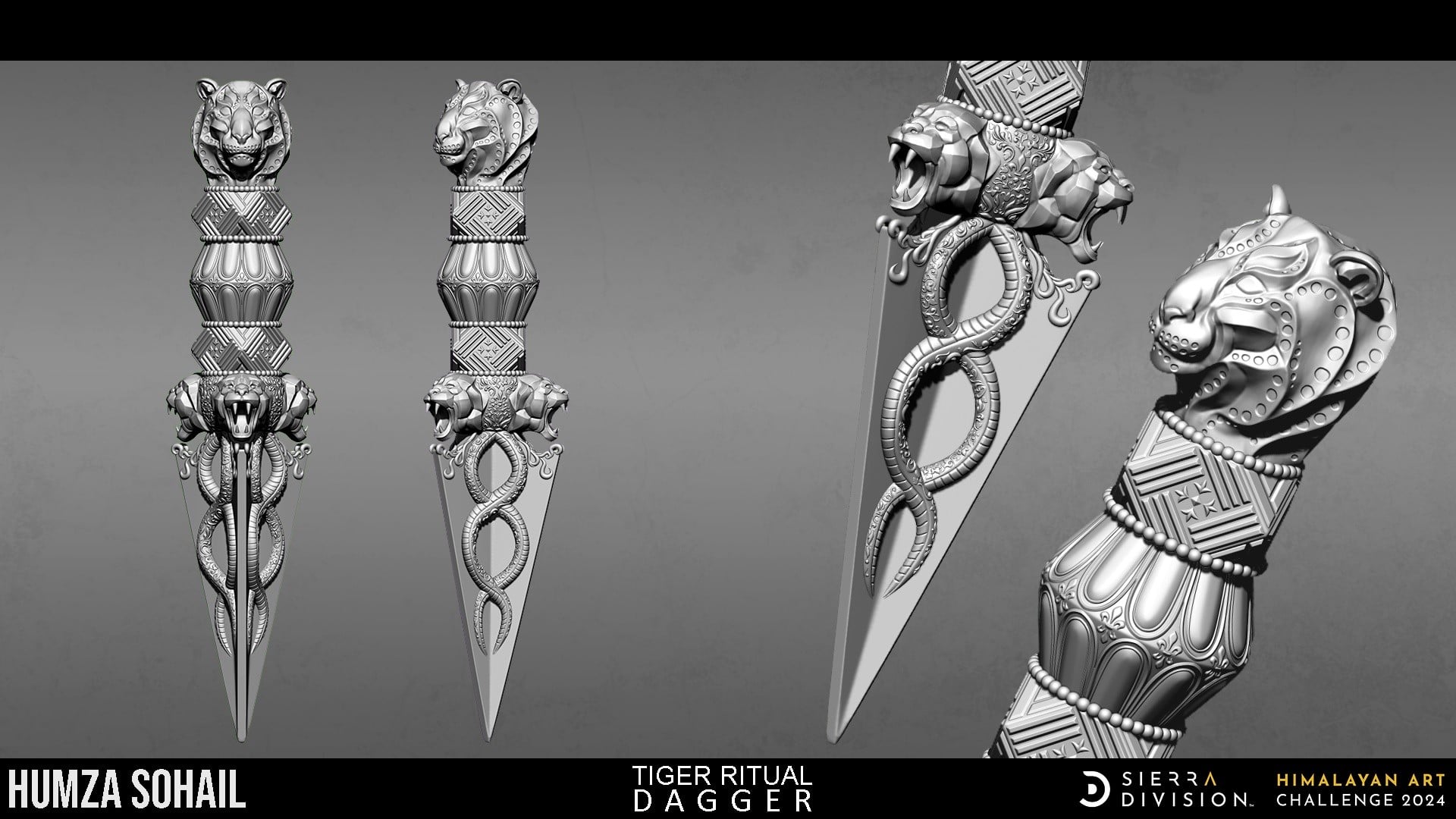
The challenge began with a set amulet and earrings, but as I saw the creativity of other participants, I felt inspired to elevate my own prop. I decided to change my approach to keep up with the rest of the challengers. I planned to make a ritual dagger because of its unique design and purpose, but I wanted mine to stand out. So, I thought, why not create an animal-themed ritual dagger? A tiger came to mind, and thus, I began working on the Tiger Ritual Dagger.
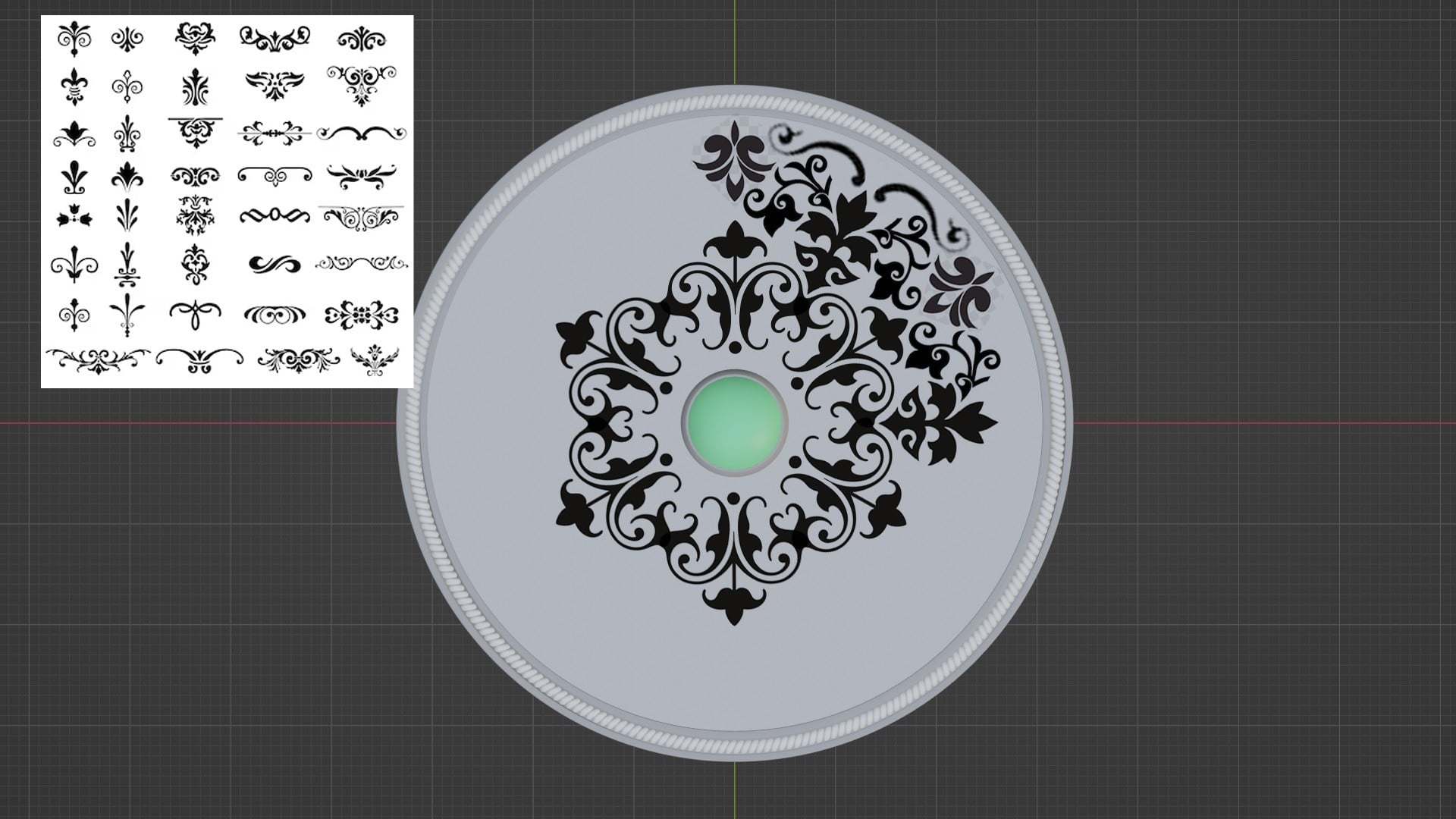
This was my first time sculpting an animal face, and it was quite challenging. It was also my first time working with ornaments. To create the ornaments, I designed the shapes in Photoshop, then moved them to Substance Designer to give the edges roundness, and finally used them as alpha brushes in ZBrush.
The texturing process was very interesting due to the various elements like cracks, dirt, damage and many other things. I'm happy with the result, though I know I still need to improve my texturing skills.
For rendering, I usually use Marmoset or Unreal Engine, but this time I decided to explore Blender to improve my skills. I’ve used Blender for rendering in the past, but this was a chance to revise and enhance my abilities.
Overall, this challenge was an enjoyable and enriching experience. Not only was it fun and creatively stimulating, but more importantly, it fueled my artistic growth and equipped me with valuable new skills.
After making Amulet and earrings i move on to 2nd prop. To choose 2nd prop and i did some research and there were many great things like prayer wheel, singing bowl, temple bell, mask etc. But the prop i like the most is Ritual Dagger.
Ritual daggers are special knives used in various religious and spiritual practices around the world. Unlike regular knives, ritual daggers are not meant for everyday tasks or self-defense. They are symbolic tools used in rituals and ceremonies. Some cultures use ritual daggers to channel or direct energy during rituals.
Ritual daggers, like the phurba and athame, hold a powerful presence in many traditions. However, I felt compelled to explore a unique concept: an animal ritual dagger. Intrigued by the rich symbolism of the Himalayan region, the tiger emerged as the perfect inspiration. The tiger is a beloved icon representing raw strength. It's frequently shown as sign of power.
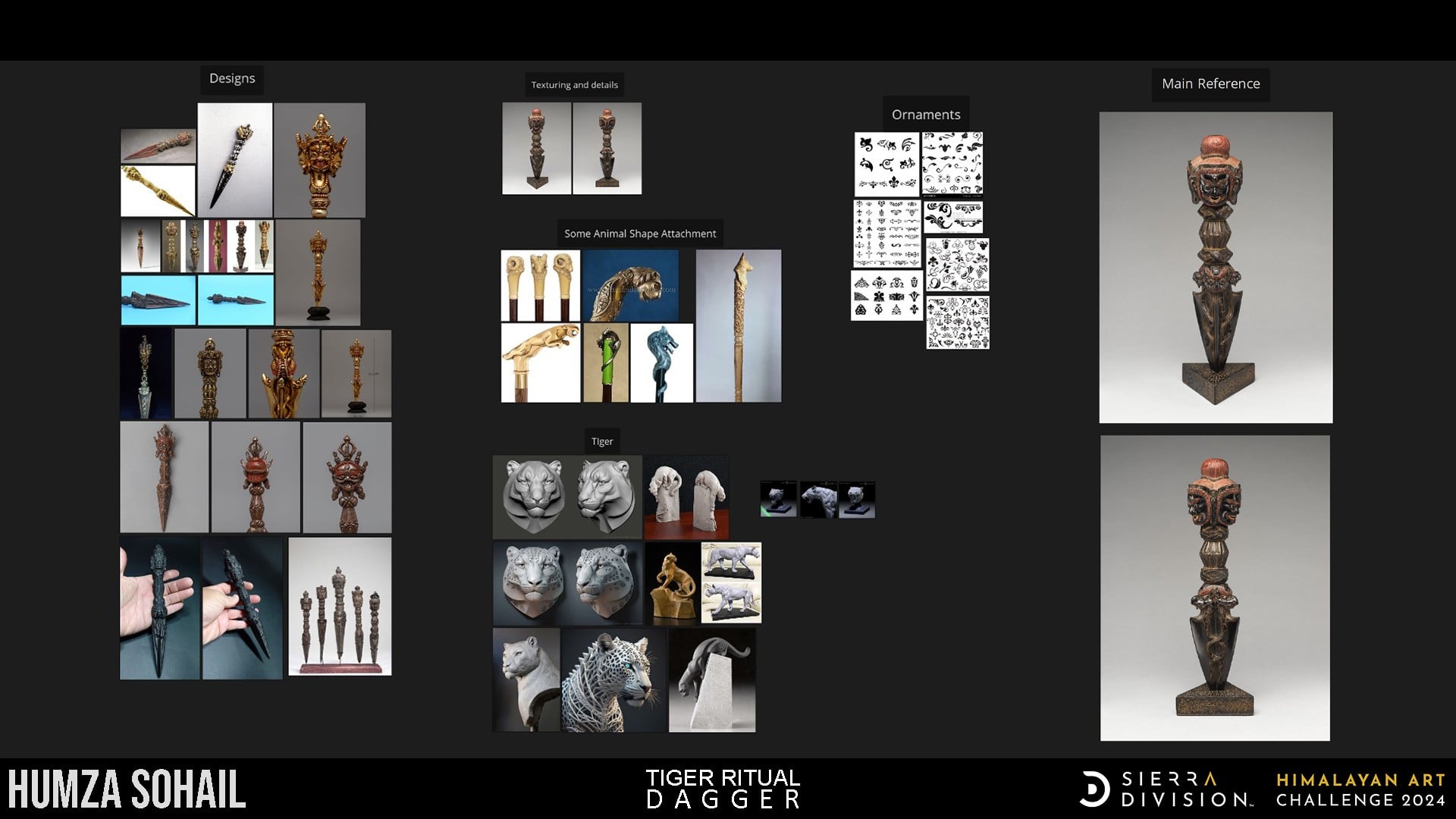
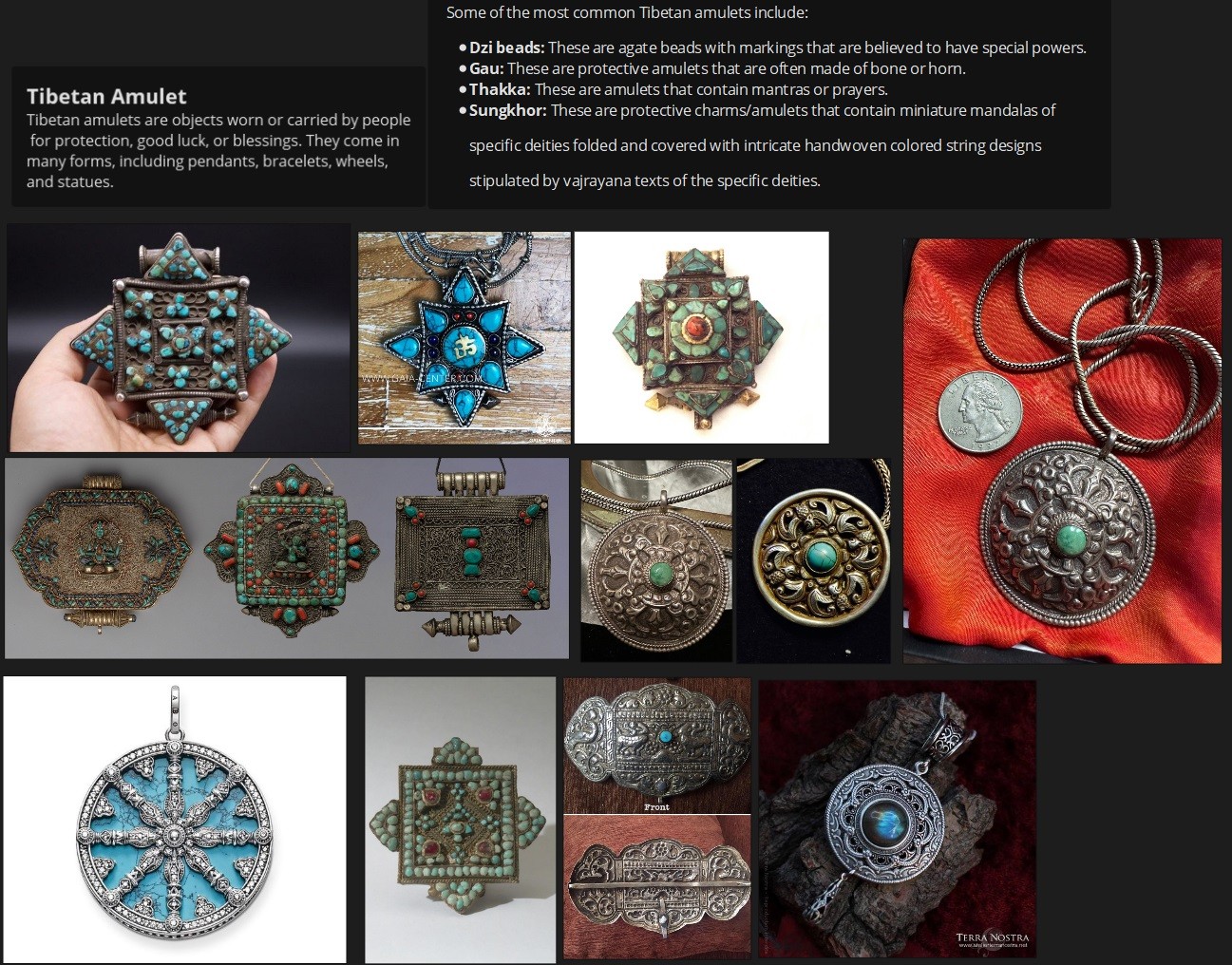
The references are divided into few parts Design, Details, Texture, Animal Shape Attachment and Ornaments.
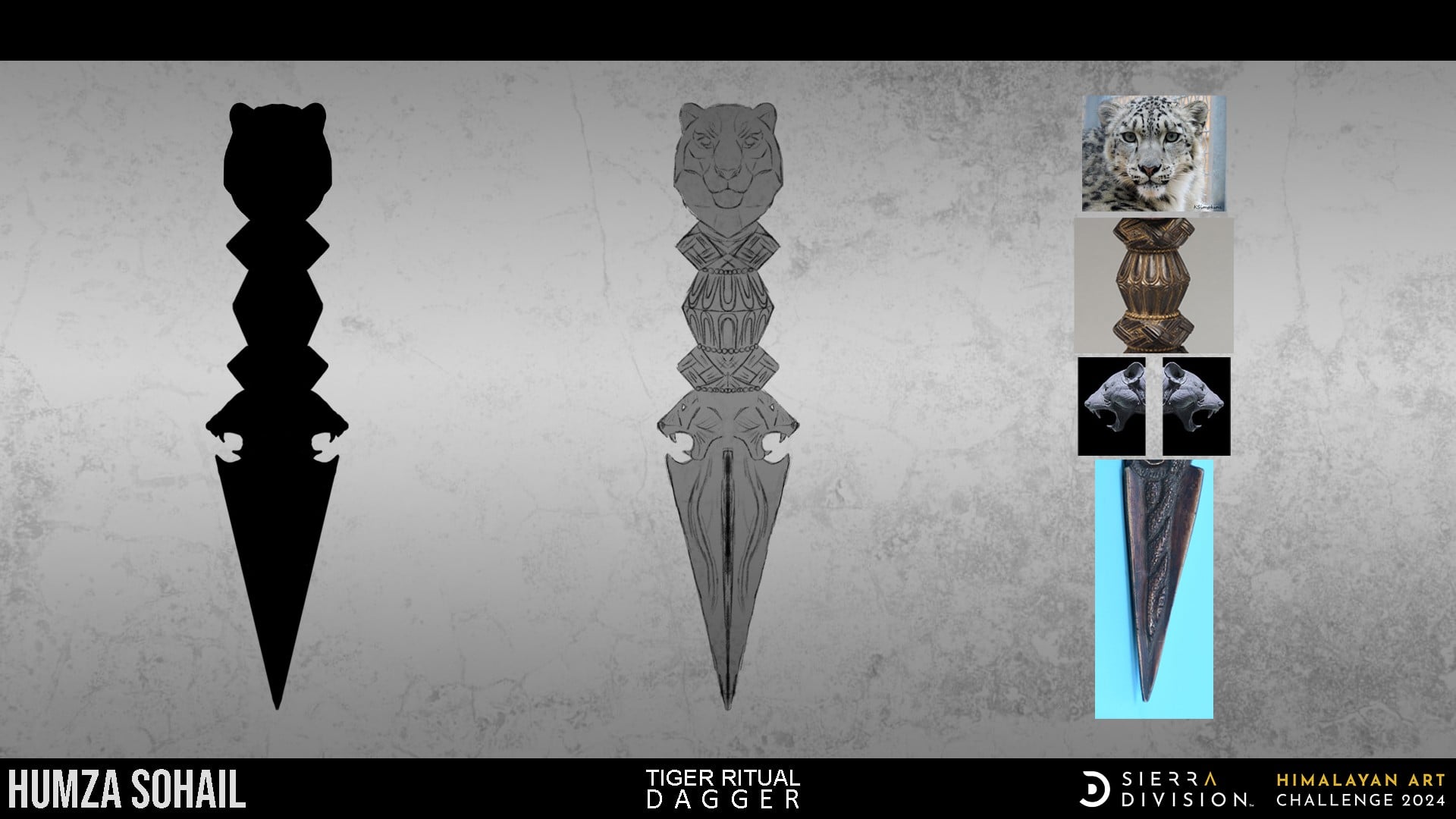
I'm not very good at concept drawings. So, i think of how to attach the shape of animal with ritual dagger and draw a silhouette then drawn some lines to get an idea how it will look.
After creating a rough sketch, I start by blocking out the shapes, then add details and polish each piece. I use Zbrush and blender for this process. For the ornaments, I first create the shapes in Adobe Photoshop, then import them into Substance Designer to smooth the edges. After that, I use these shapes as an alpha brush.
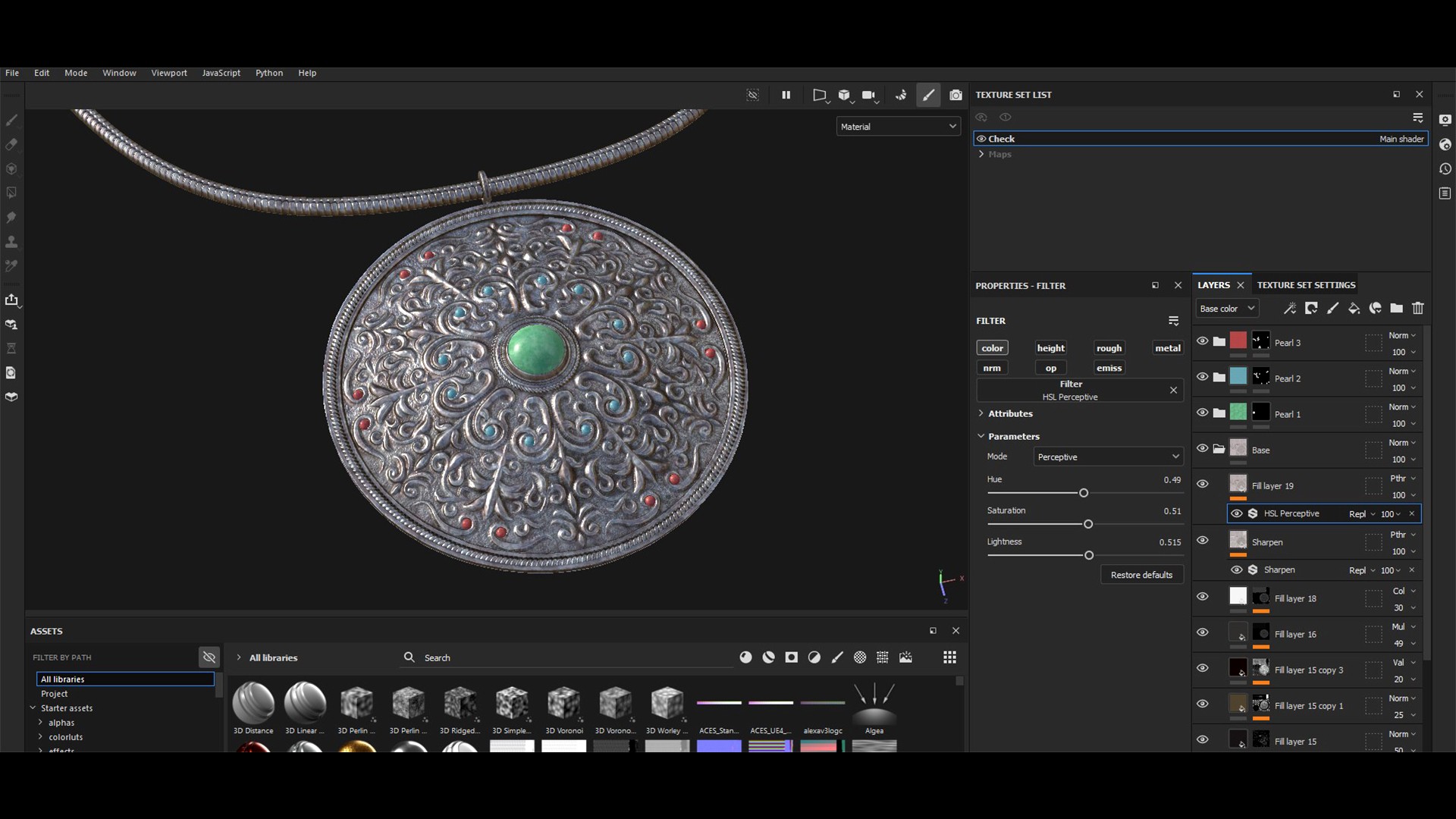
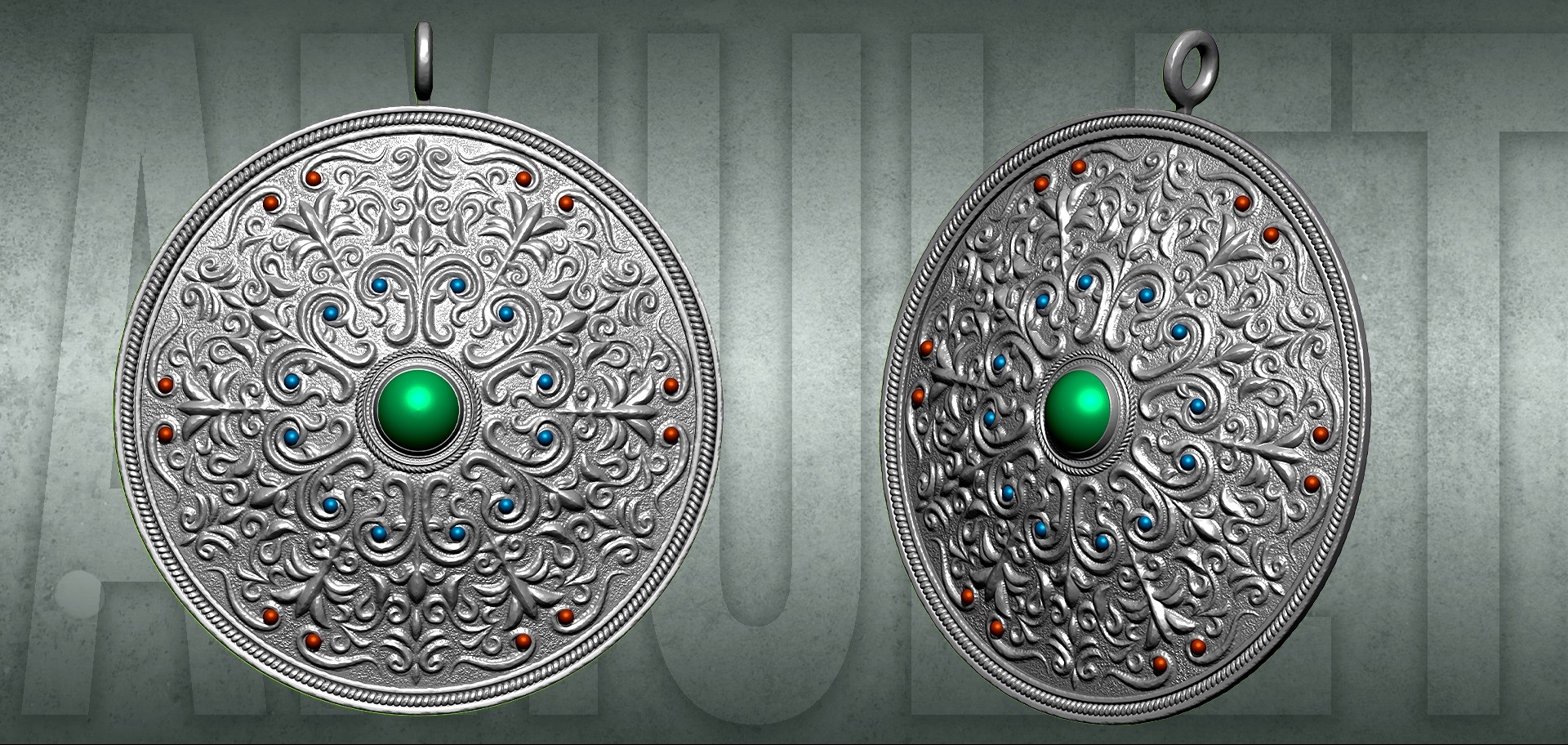
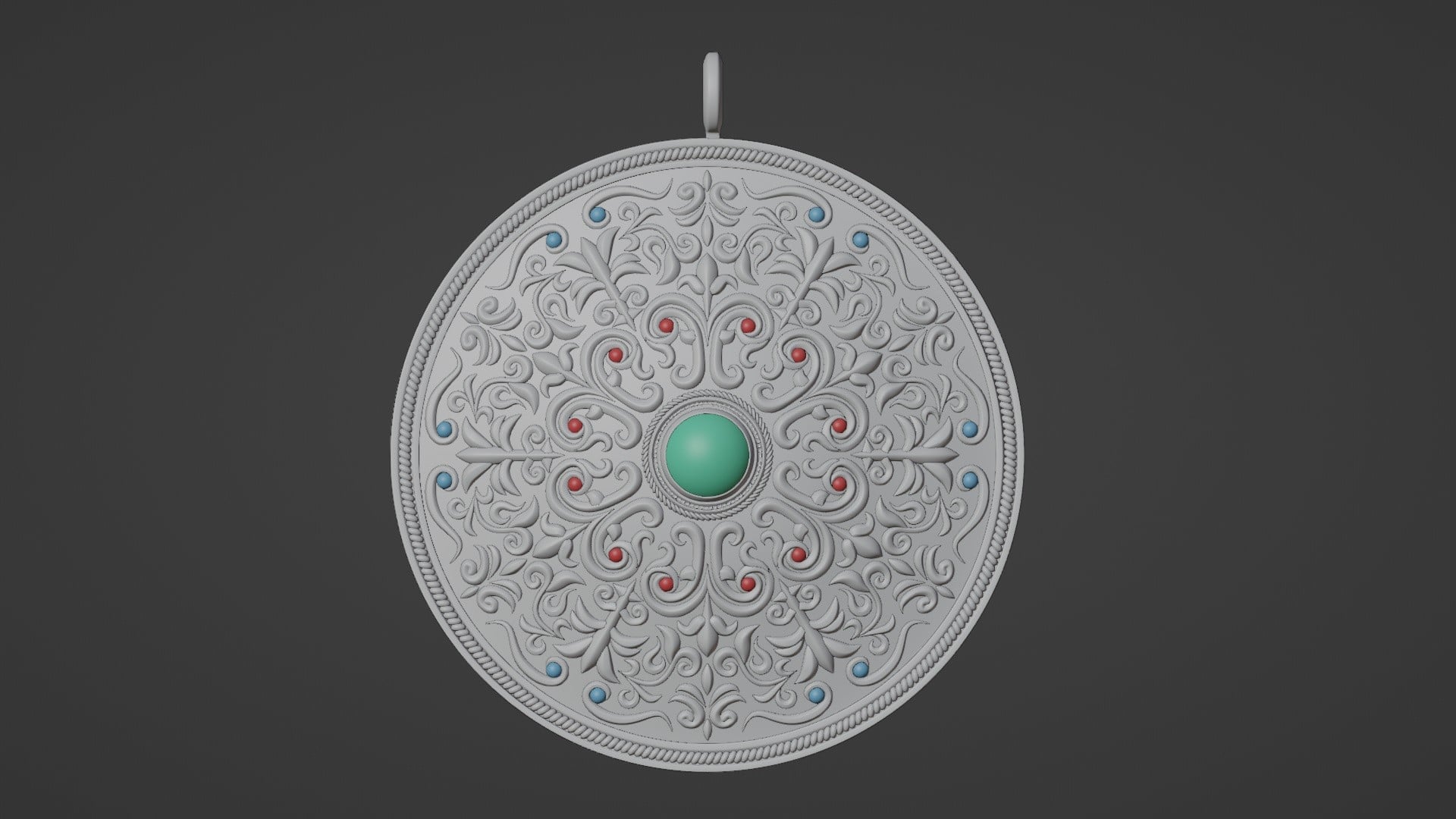
Texturing of amulet.
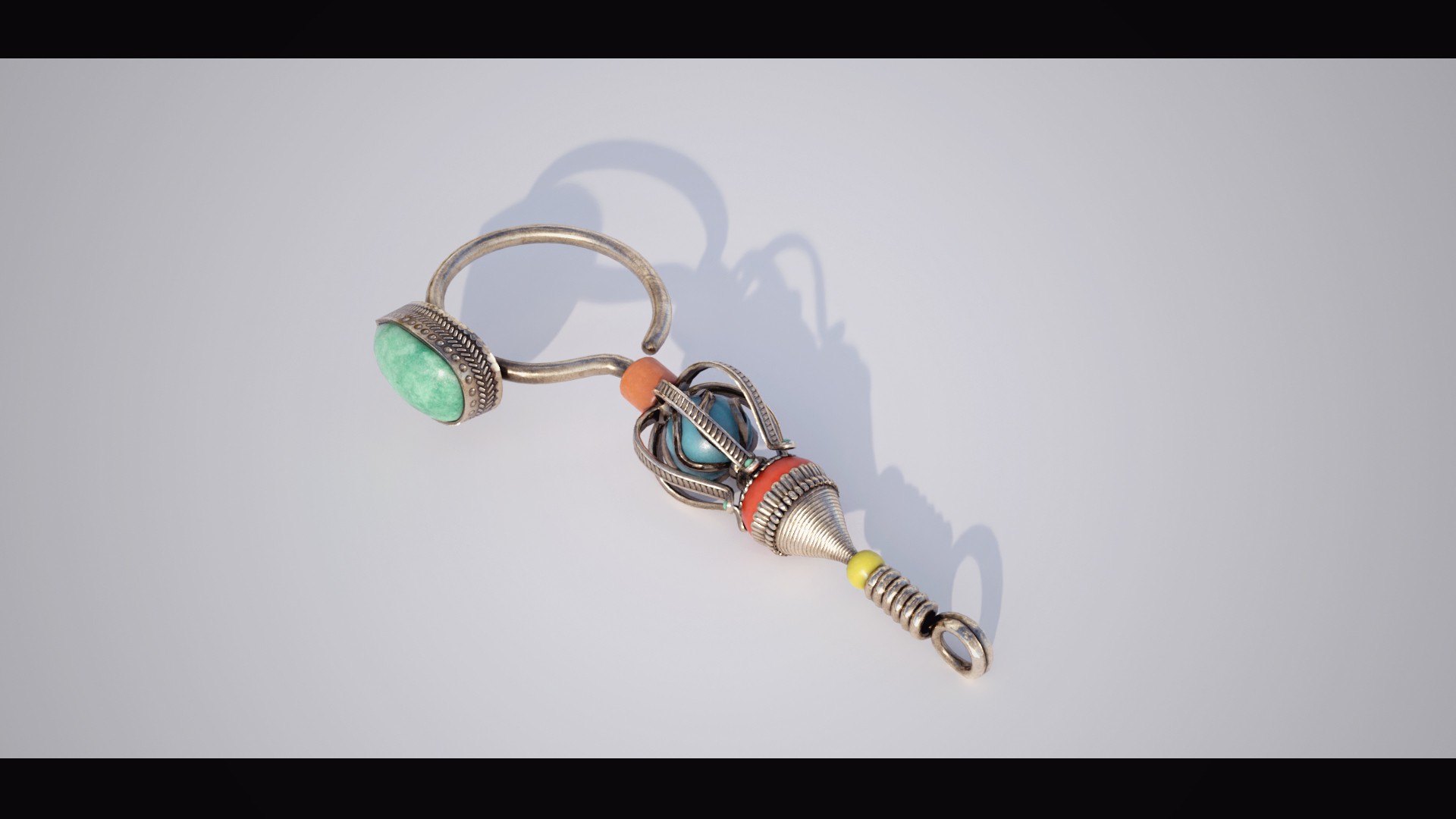
Texturing the earrings in substance painter.
Done with adding some minor details in Zbrush.
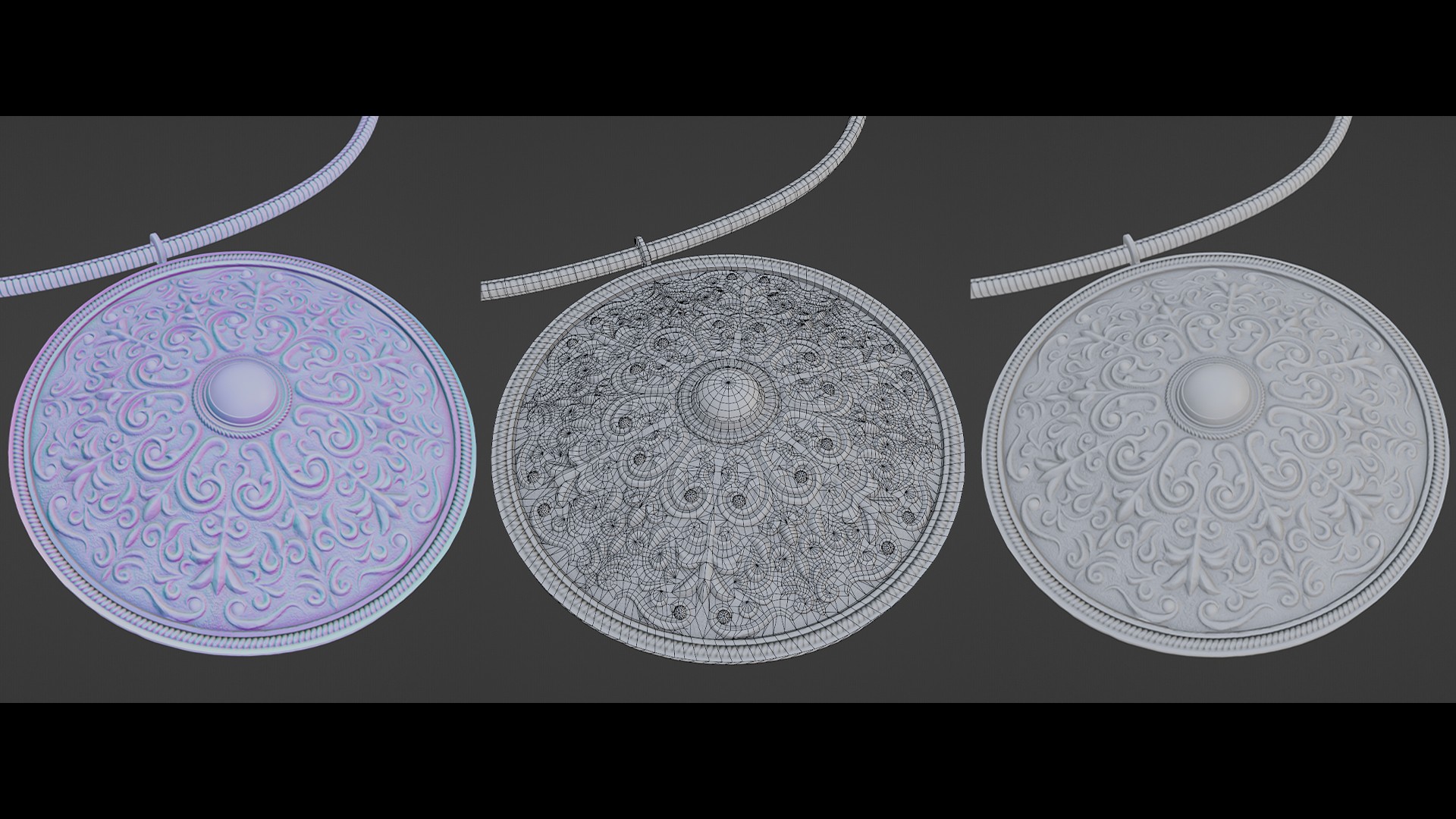
Done with with baking details from high poly to low poly. The low poly model includes a few additional triangles to ensure high-quality close-up shots during rendering.
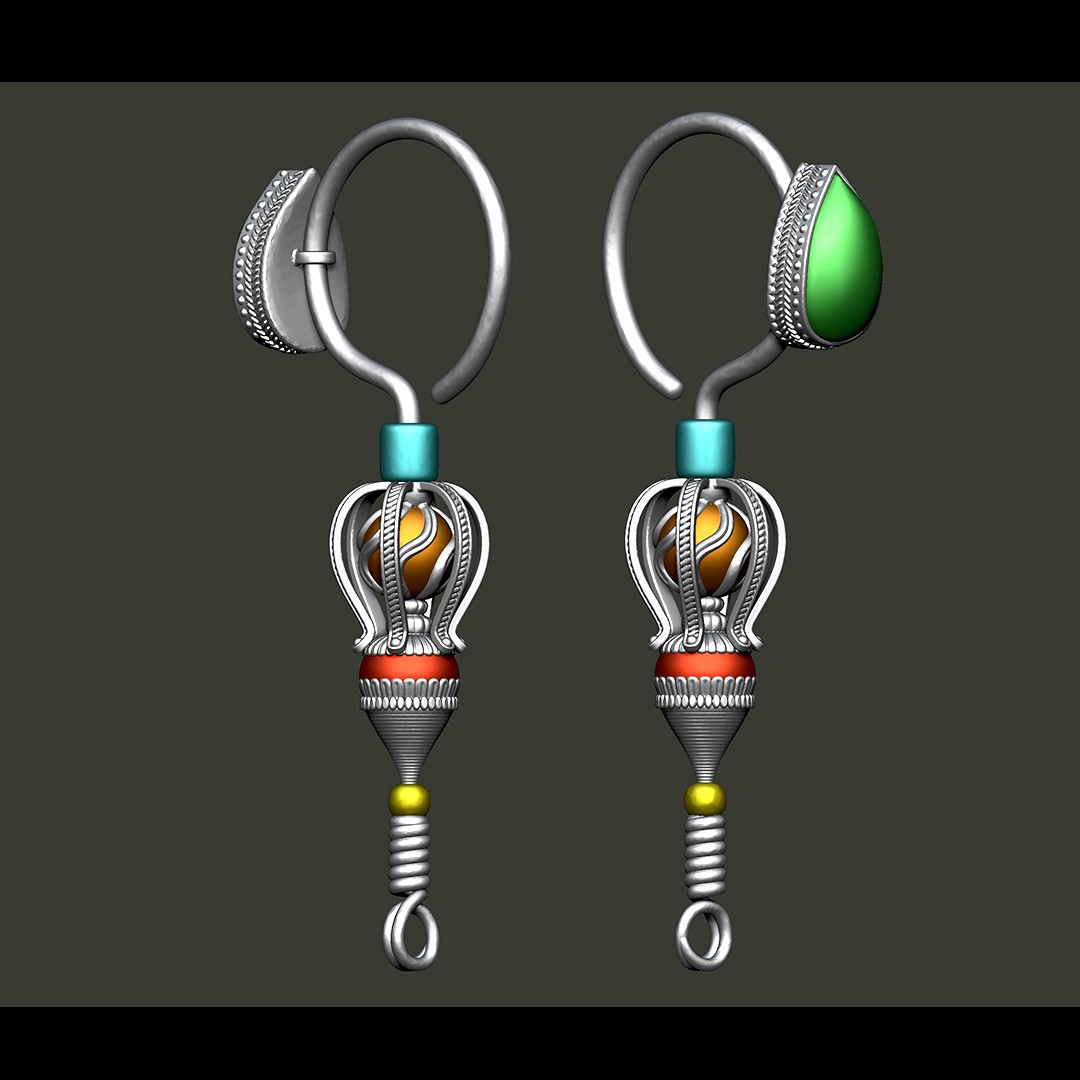
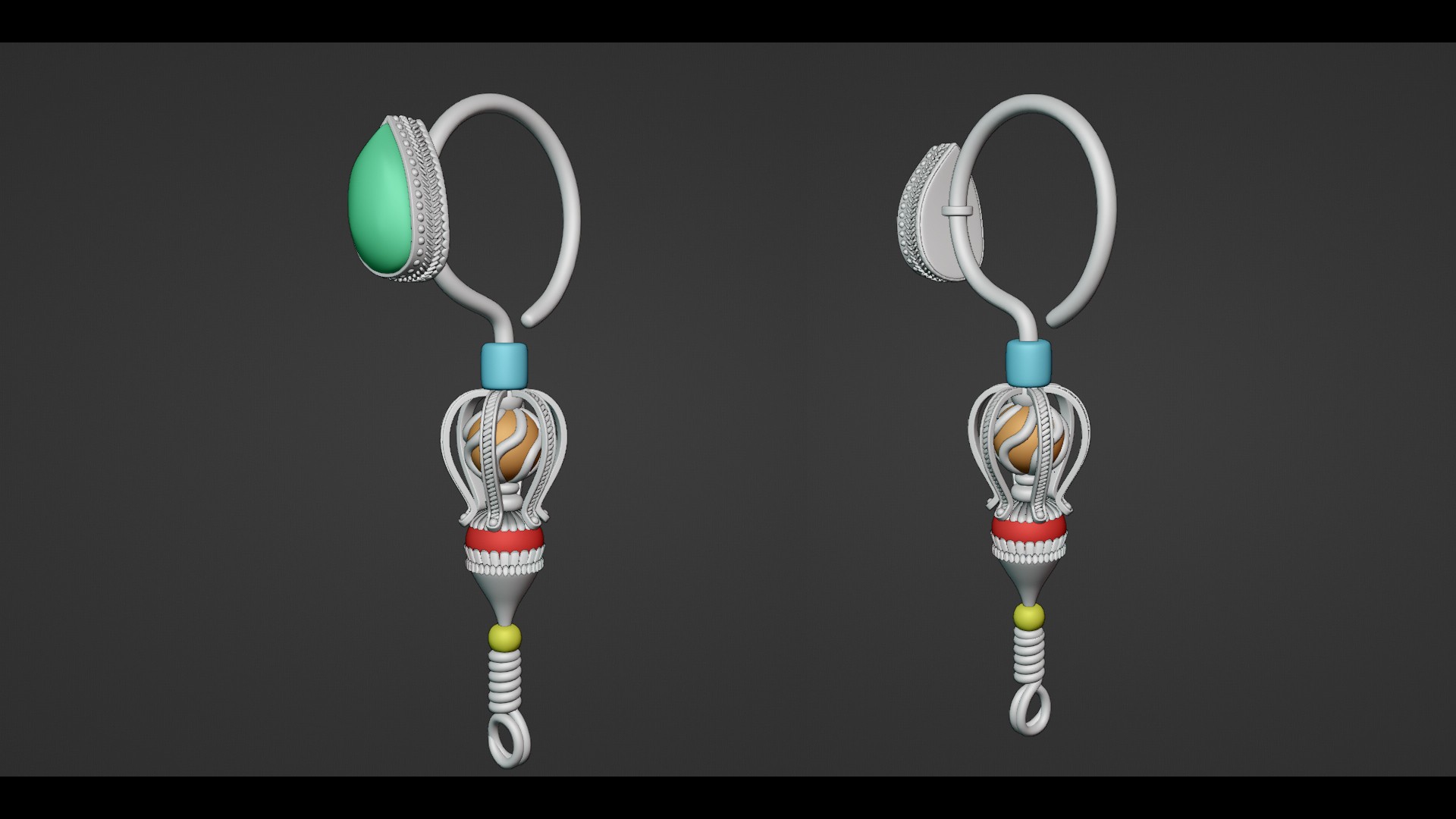
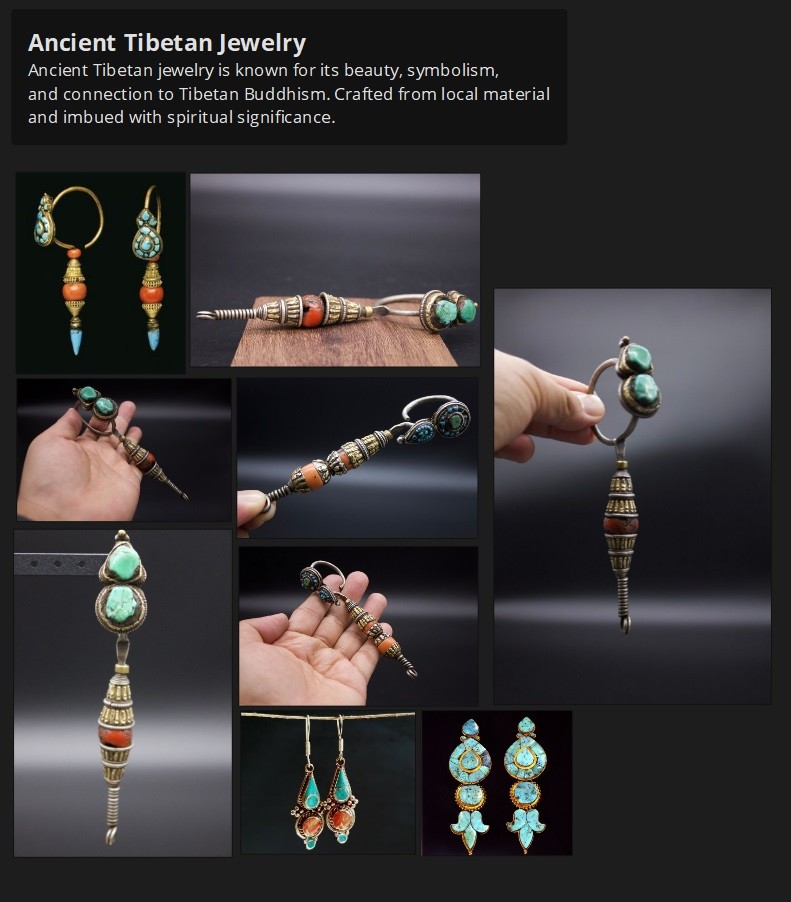
After baking the details of amulet i move to earrings. I was particularly impressed with the design of the earrings in the reference images, and I am pleased with the base shape I have achieved.
I imported this model into ZBrush to sculpt and add details.
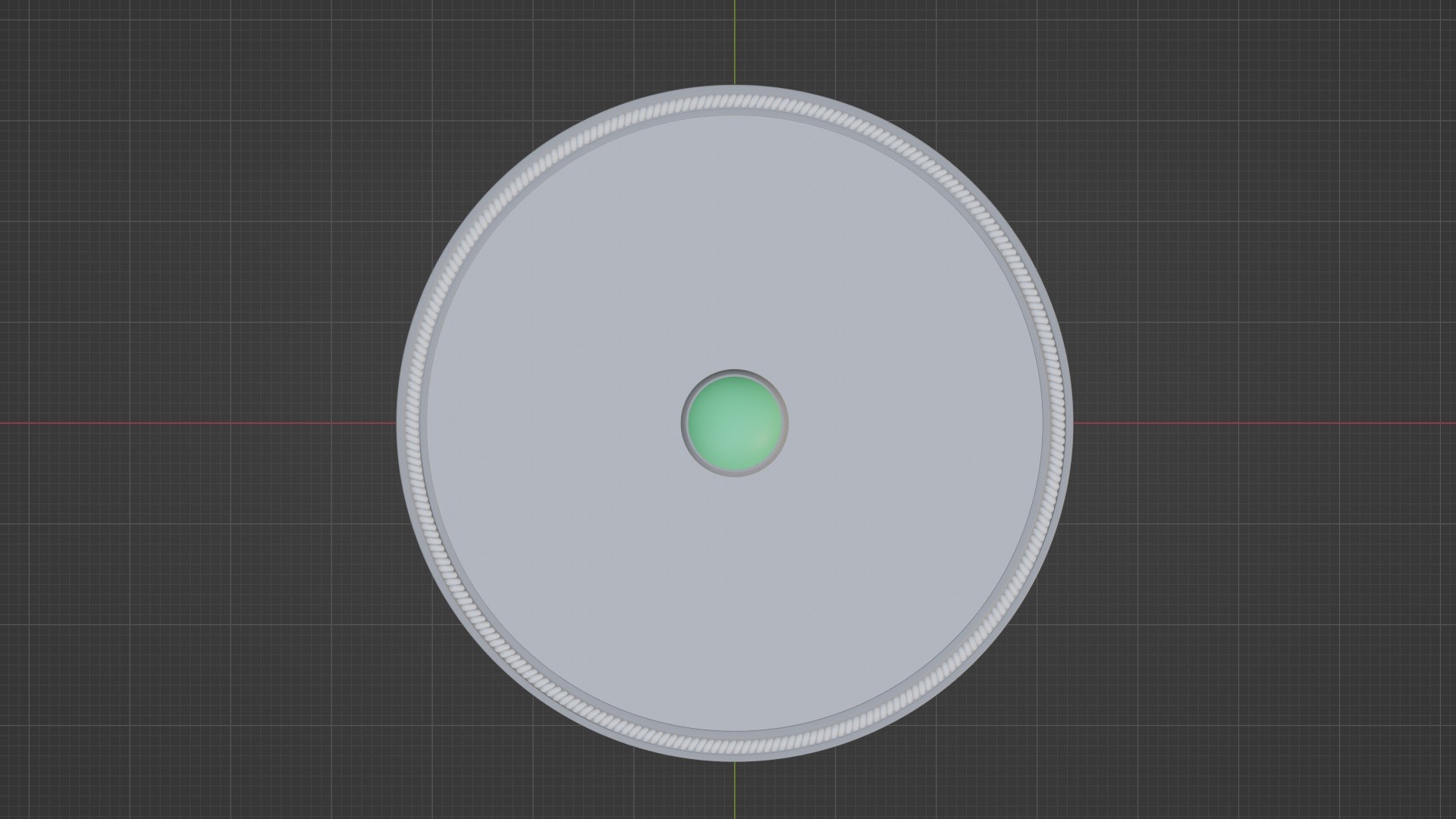
I created a basic blockout in Blender and am really drawn to the circular shape of the amulet.
I opened this image in Photoshop and experimented with various ornament designs until I found a combination I liked.
Returning to Blender, I used curves to achieve the desired shapes. After that converted the curves to mesh.
Why I Chose Tibetan Amulet and Earrings
Name: Humza Sohail
Country: Pakistan
I am participating for fun