Update #13Jul 8, 2024
tonybonet thank you!
tonybonet thank you!
tibobo Thank you so much!
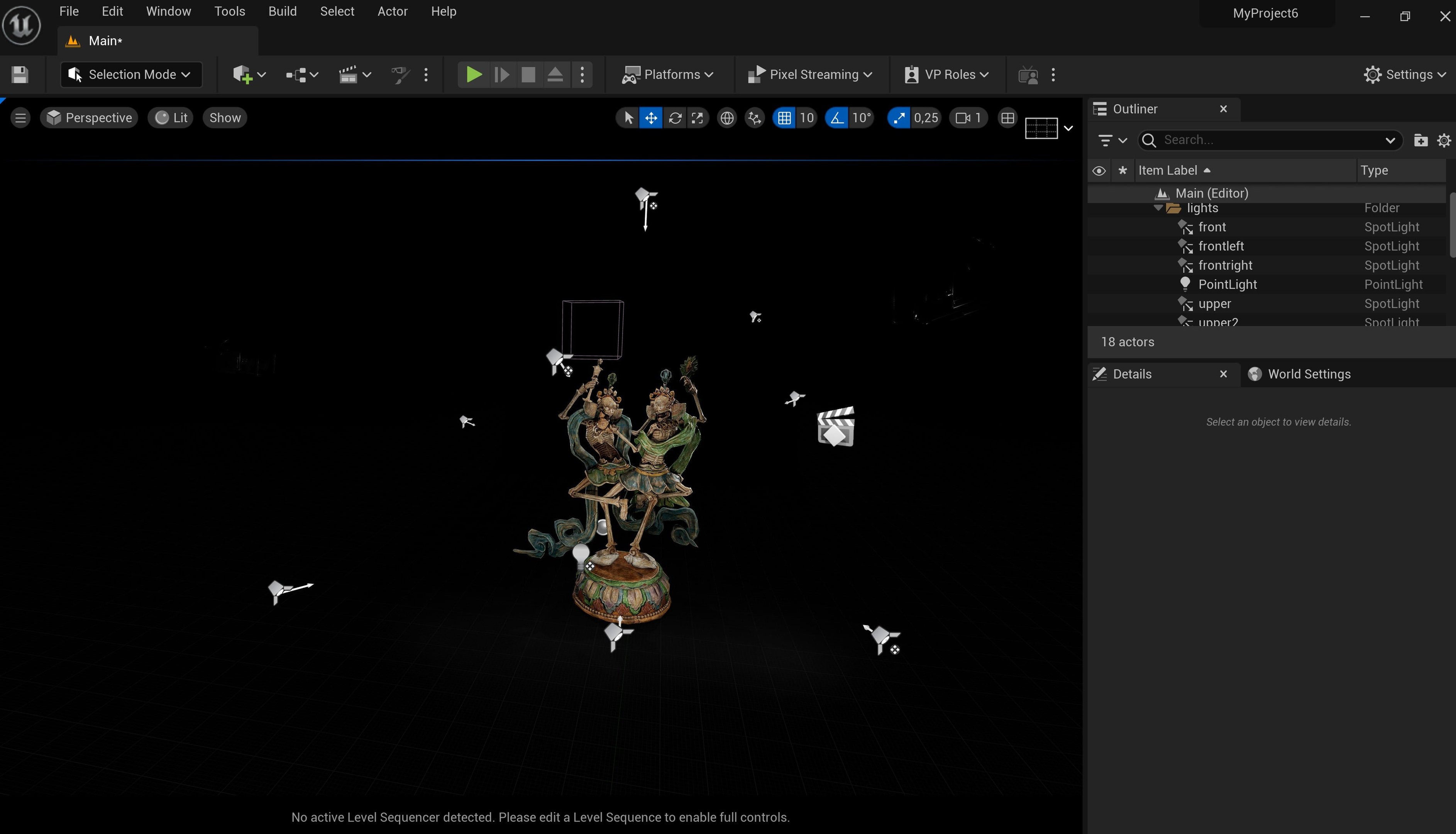
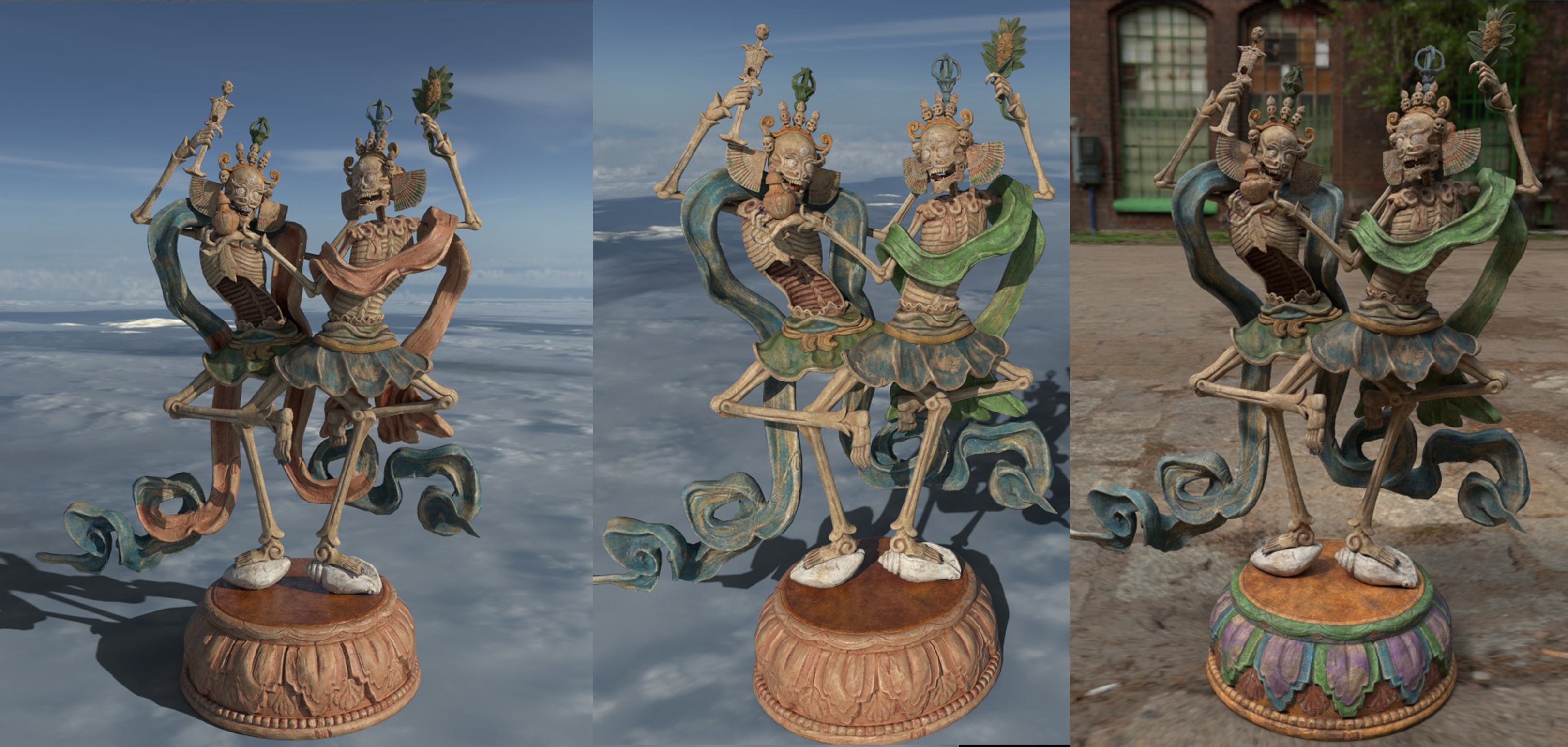
As you can see i use only a bunch of lights.
Materials and more were solved quickly cuz i exported everything from substance as an UDZ so everything was automatic (the only thing i made was invert green channels in the normal maps)
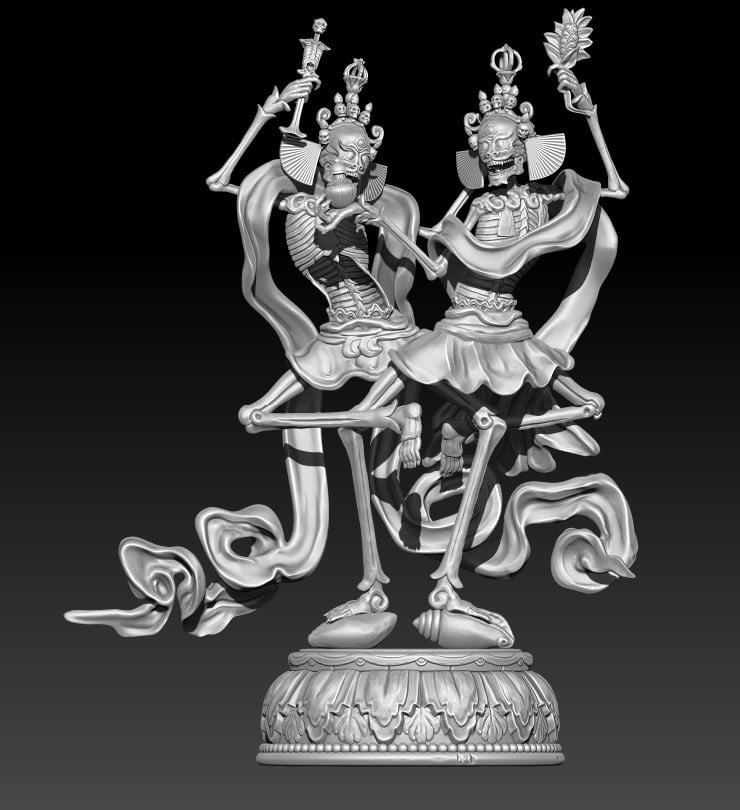
I think these guys ended pretty well what do you think?
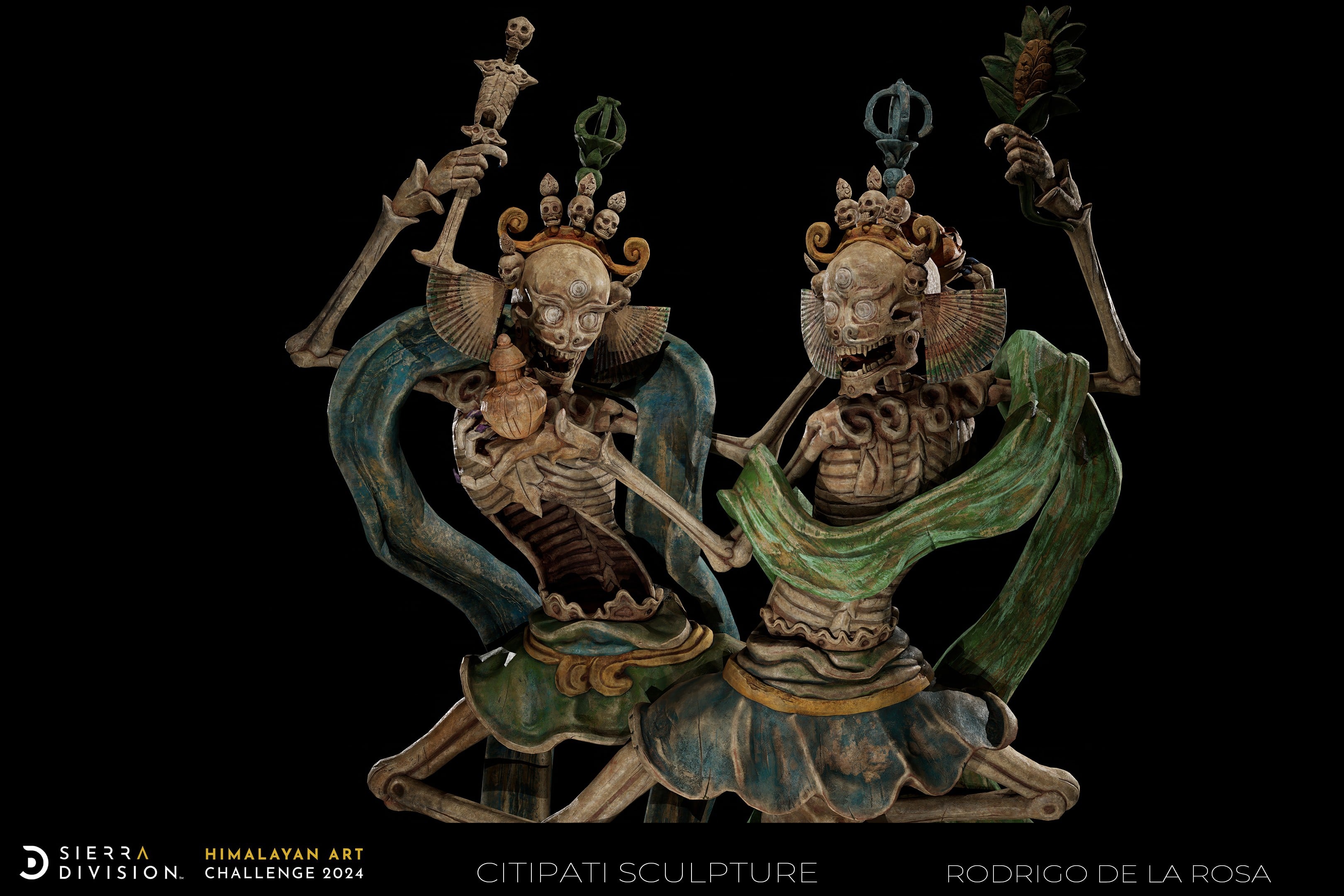
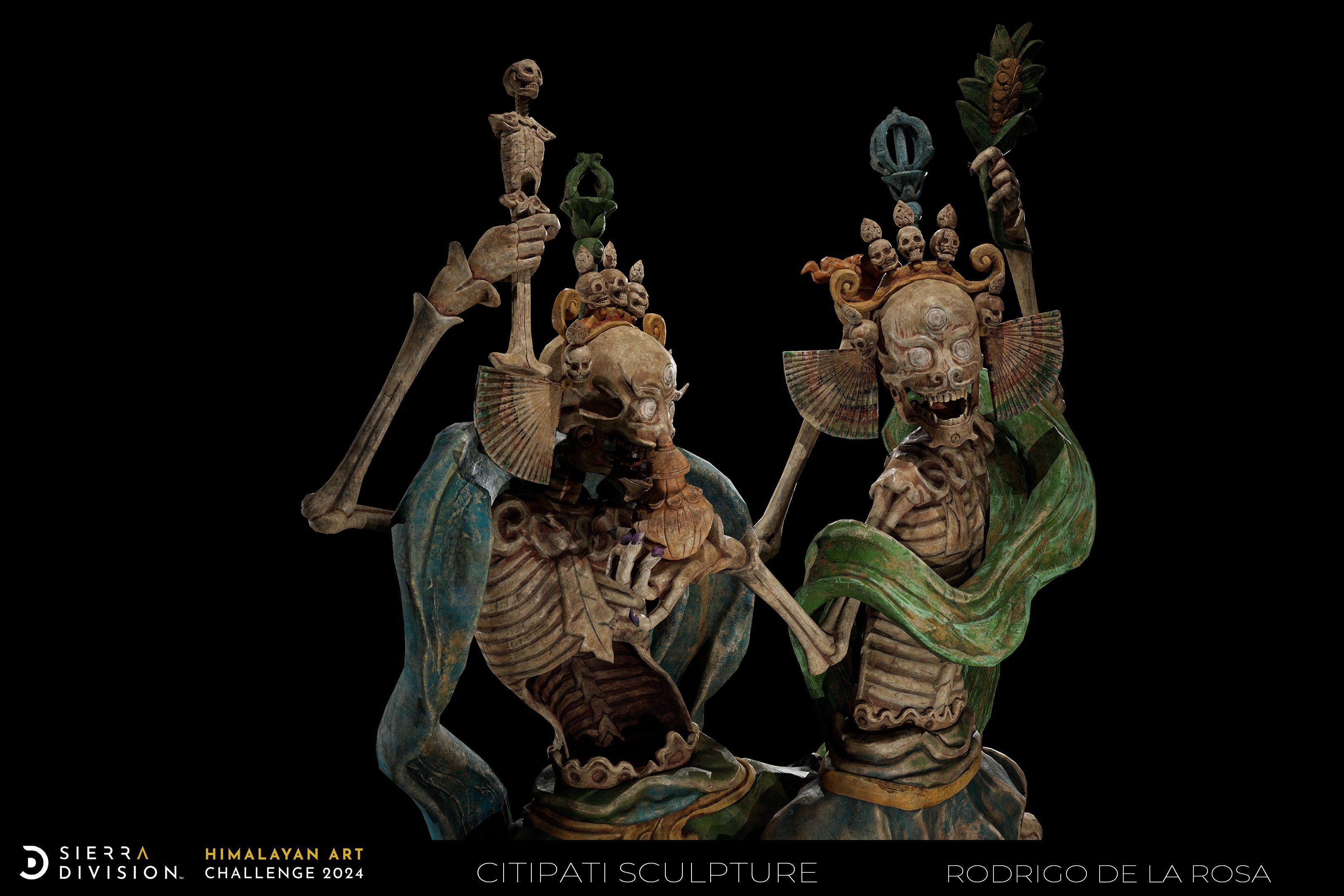
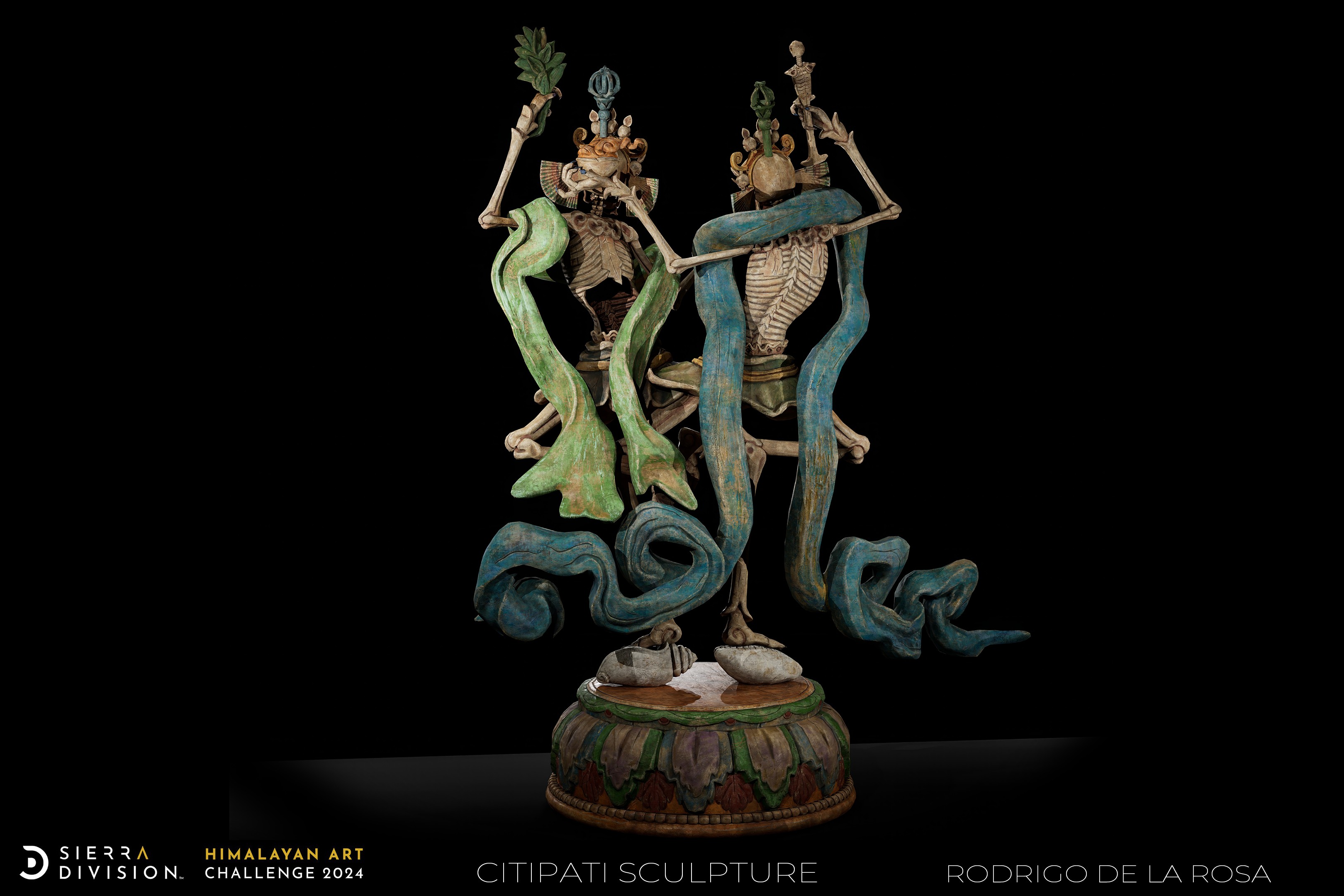
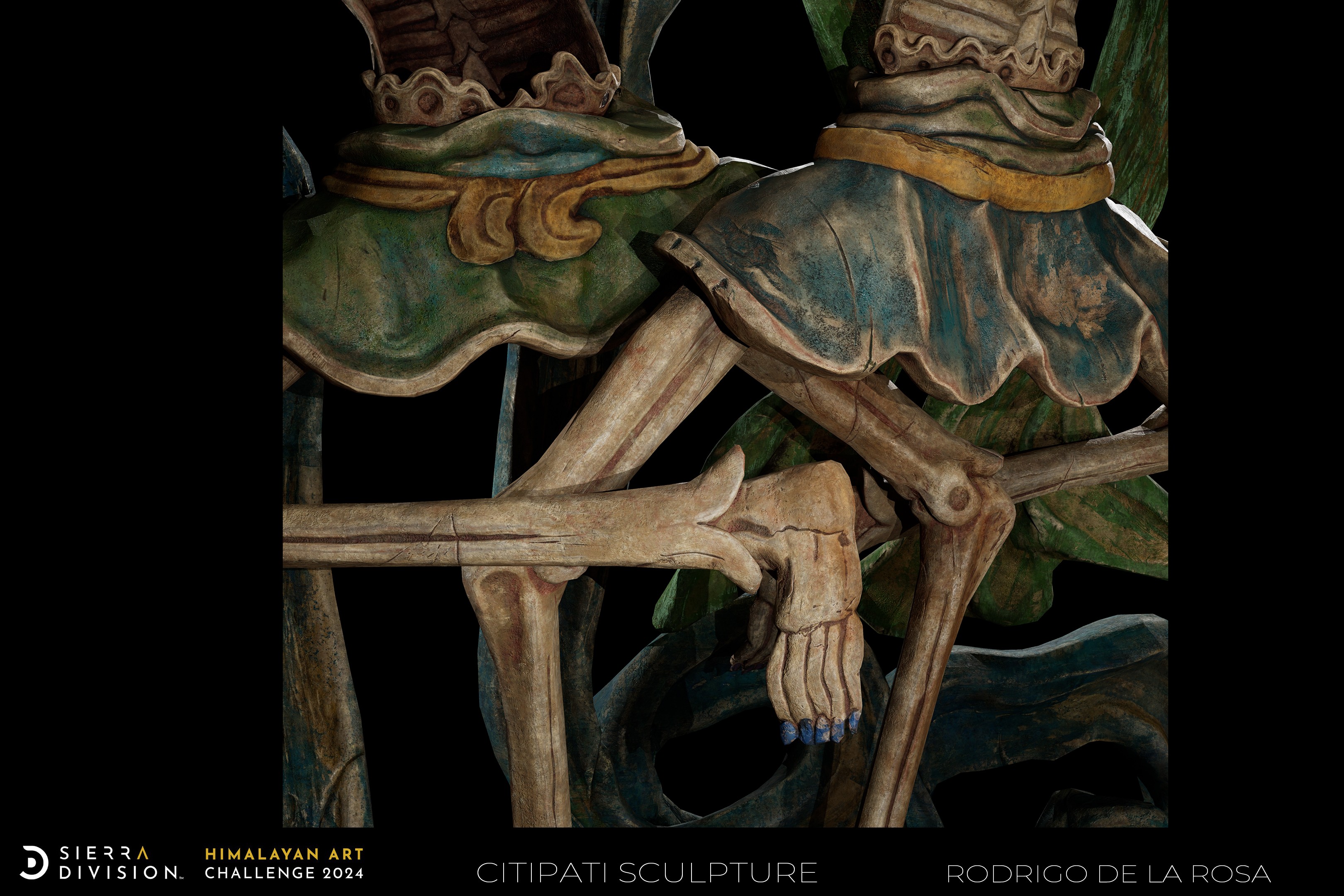
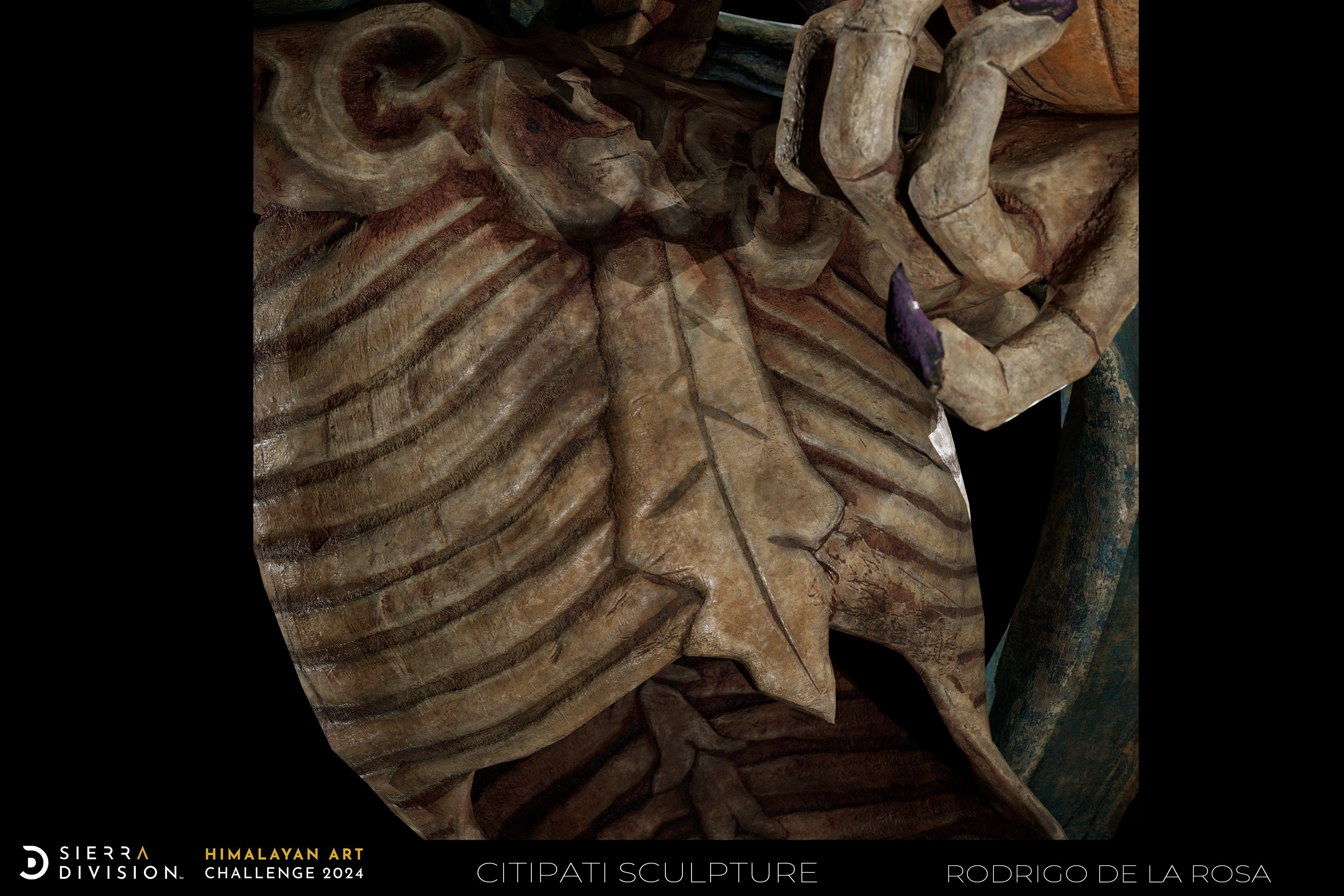
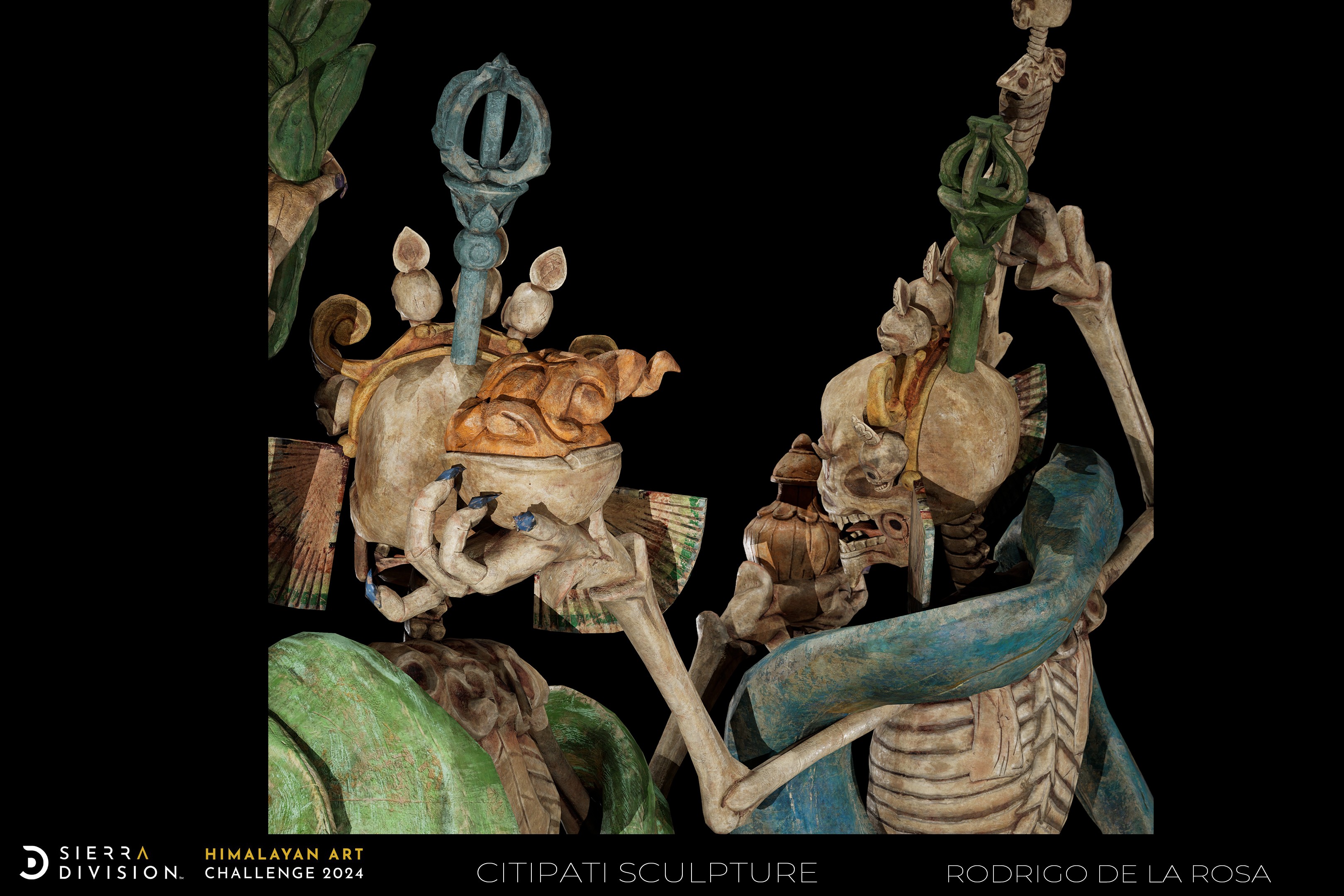
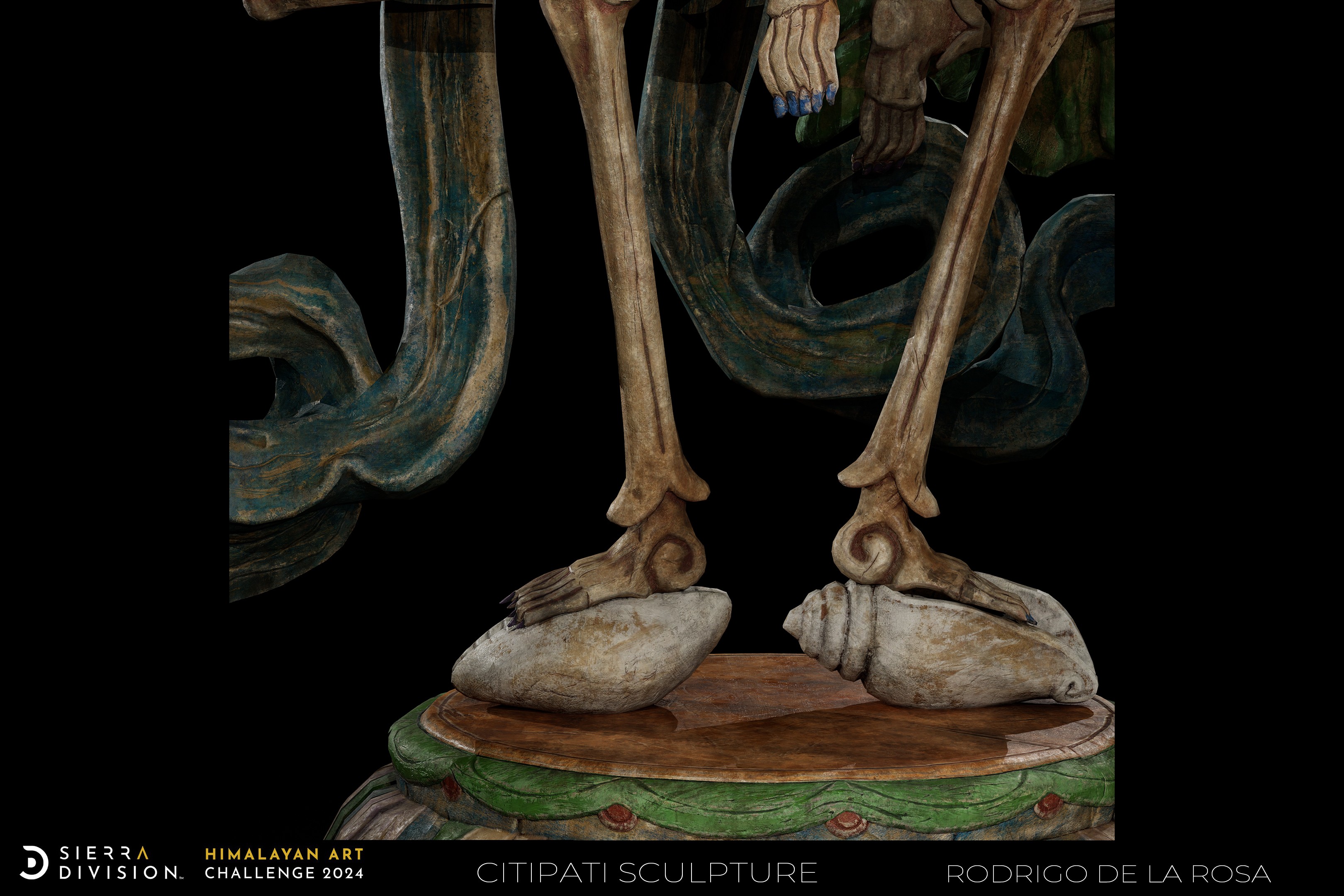
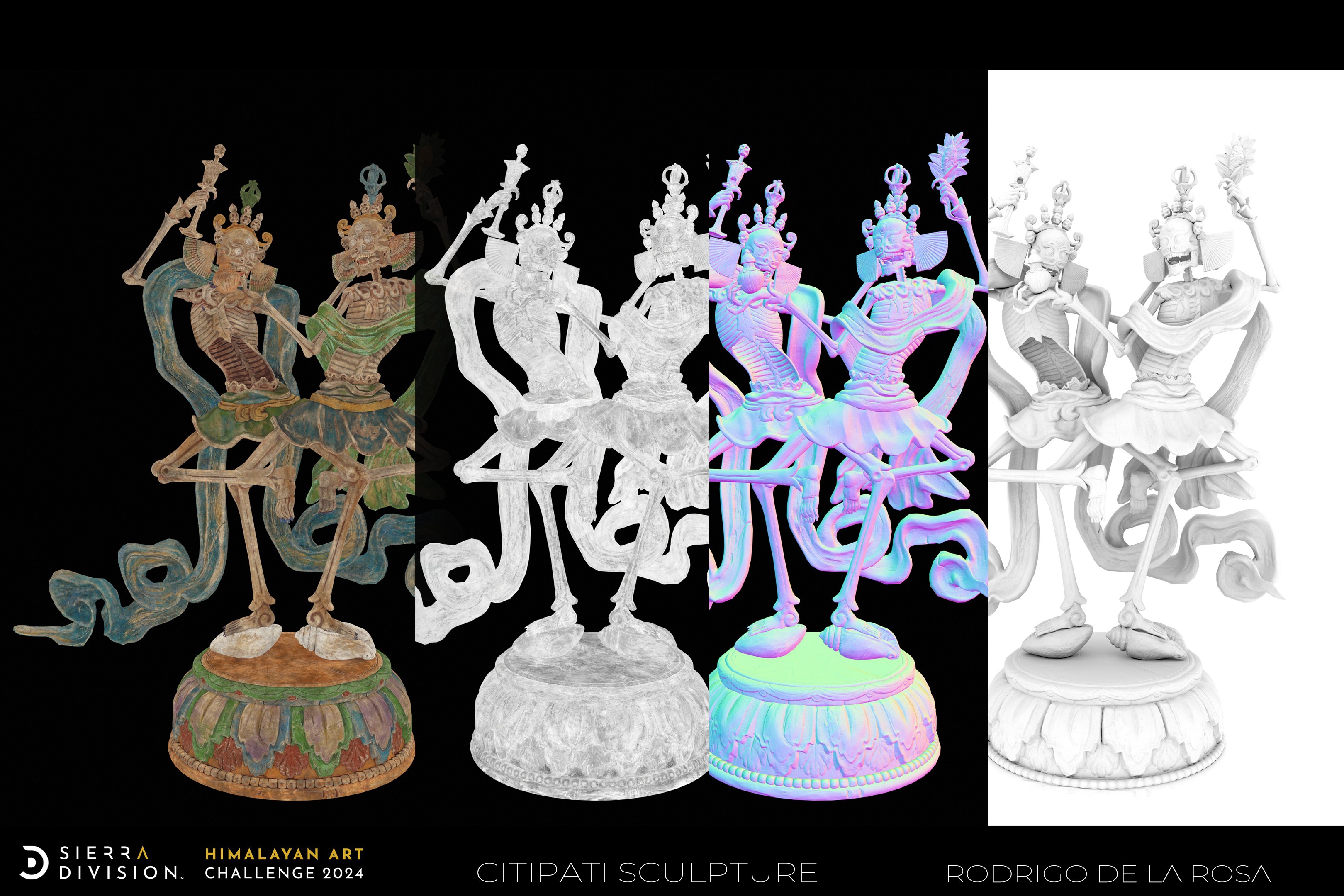
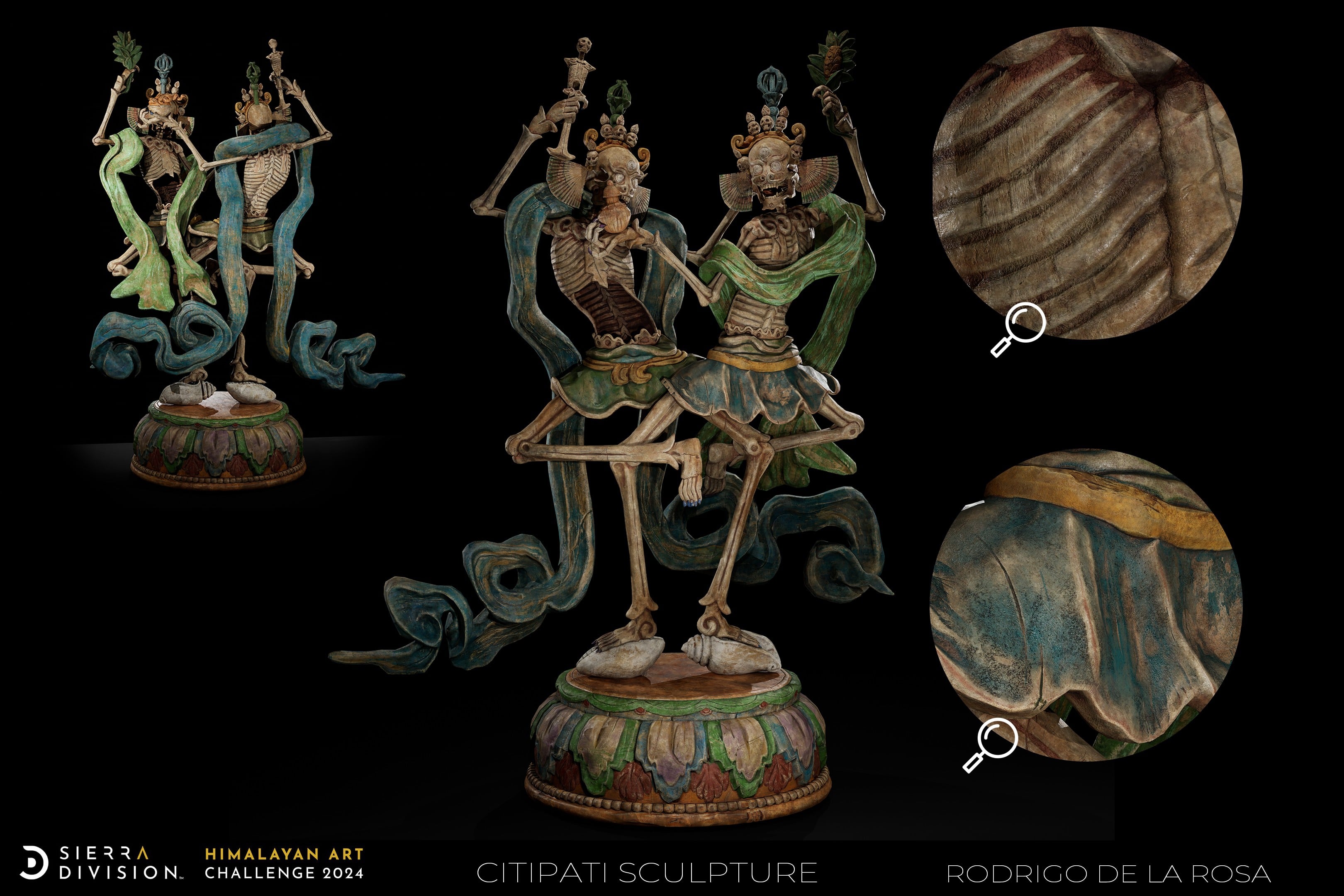
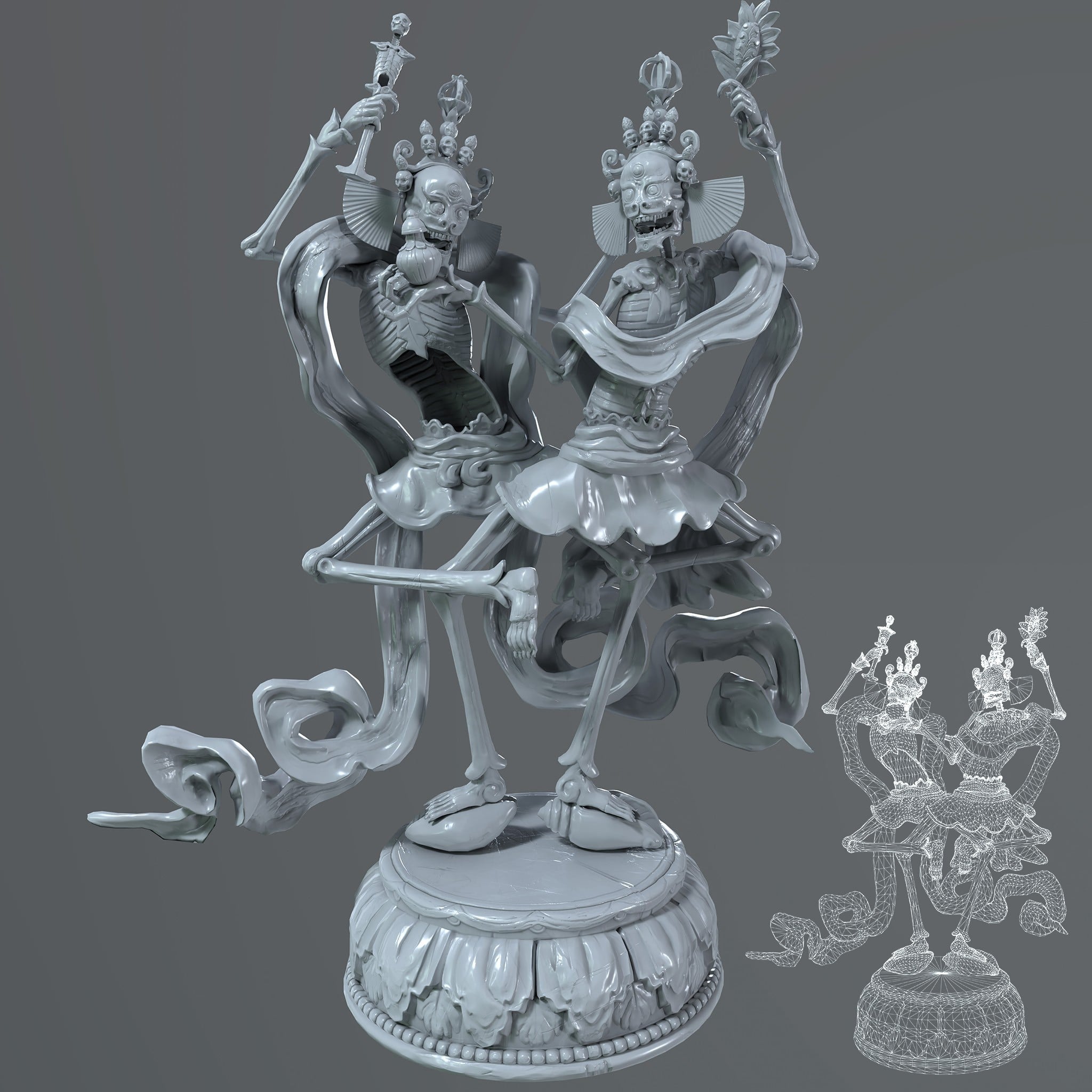
I've made some marmoset renders for showing you more details about the model:
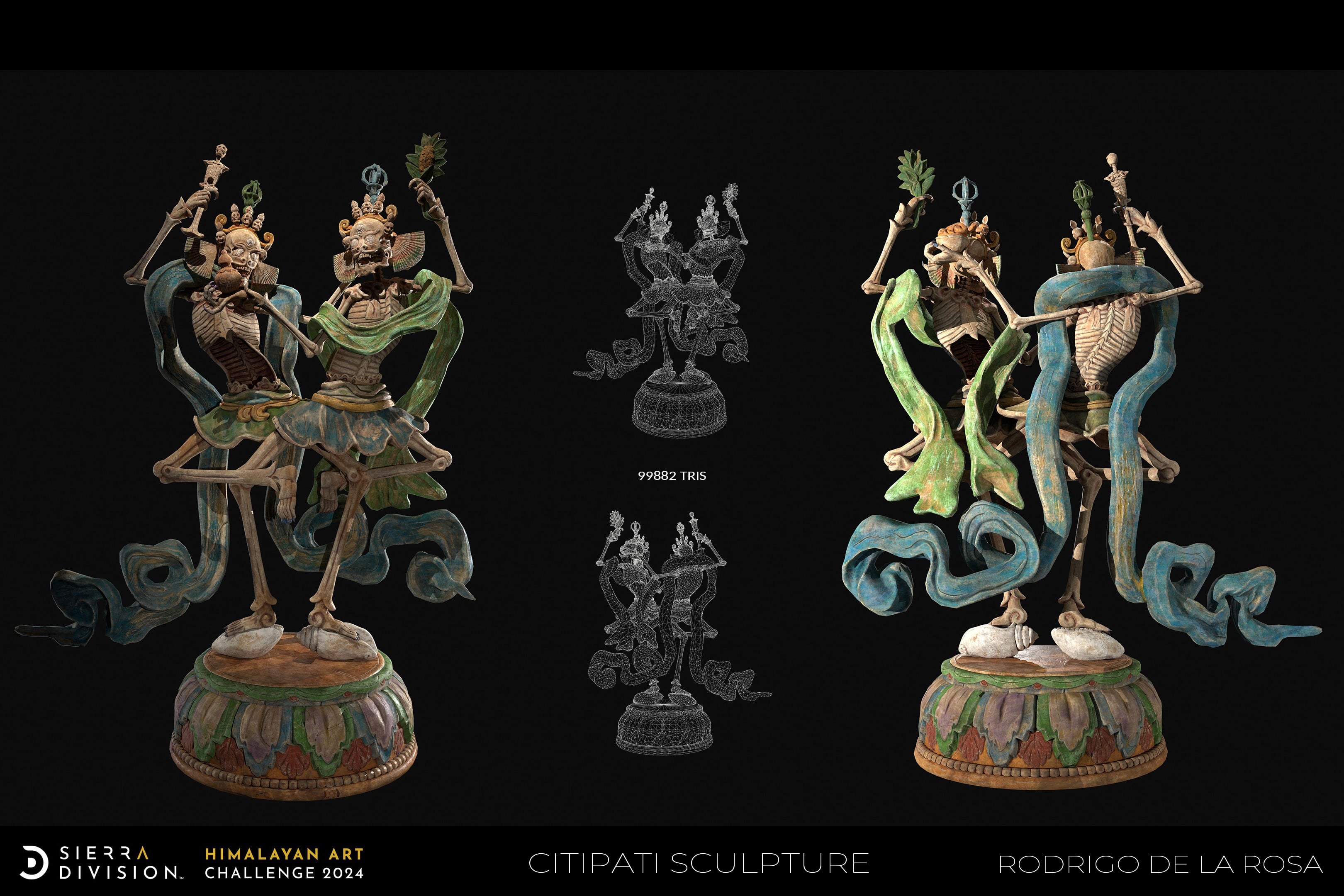
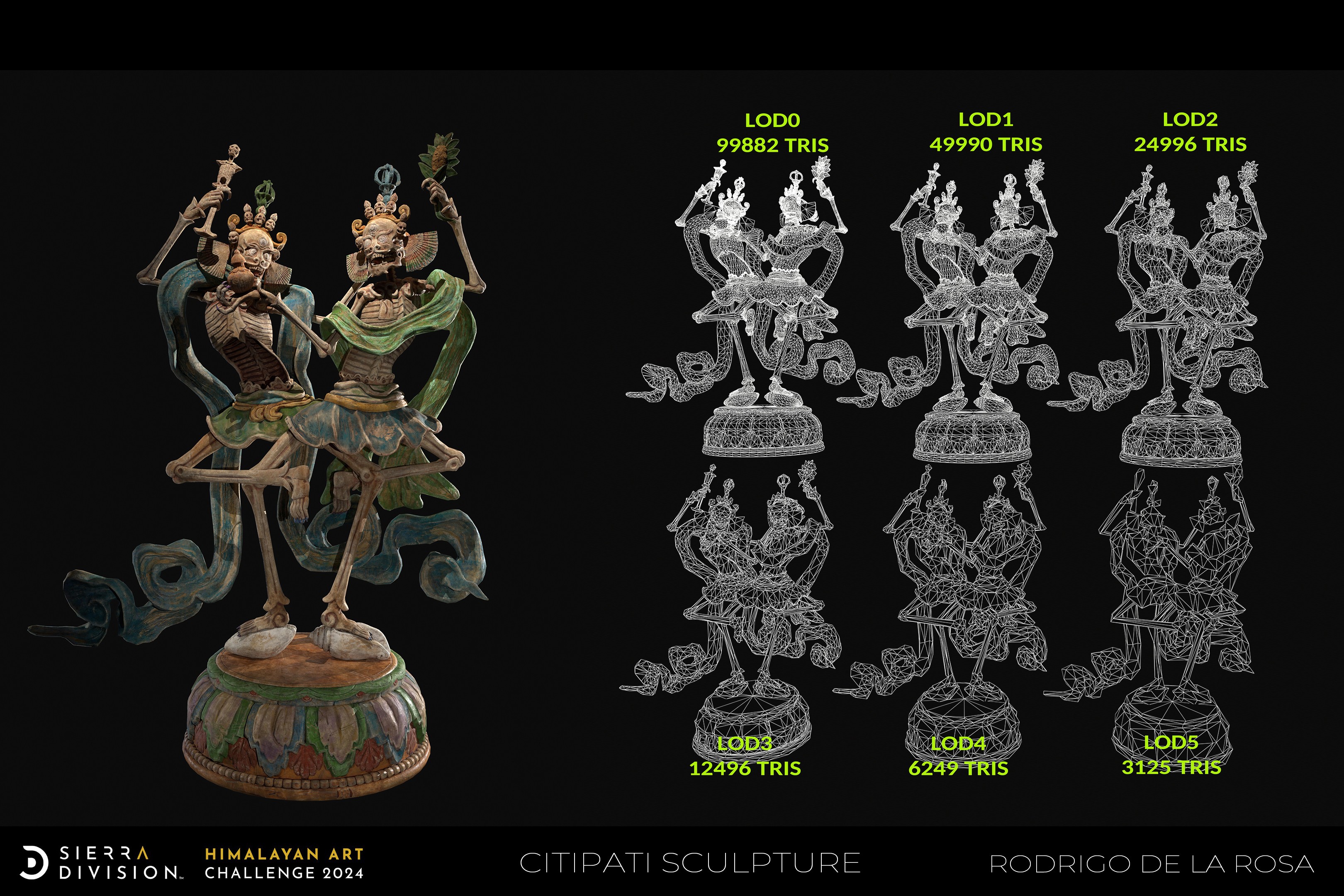
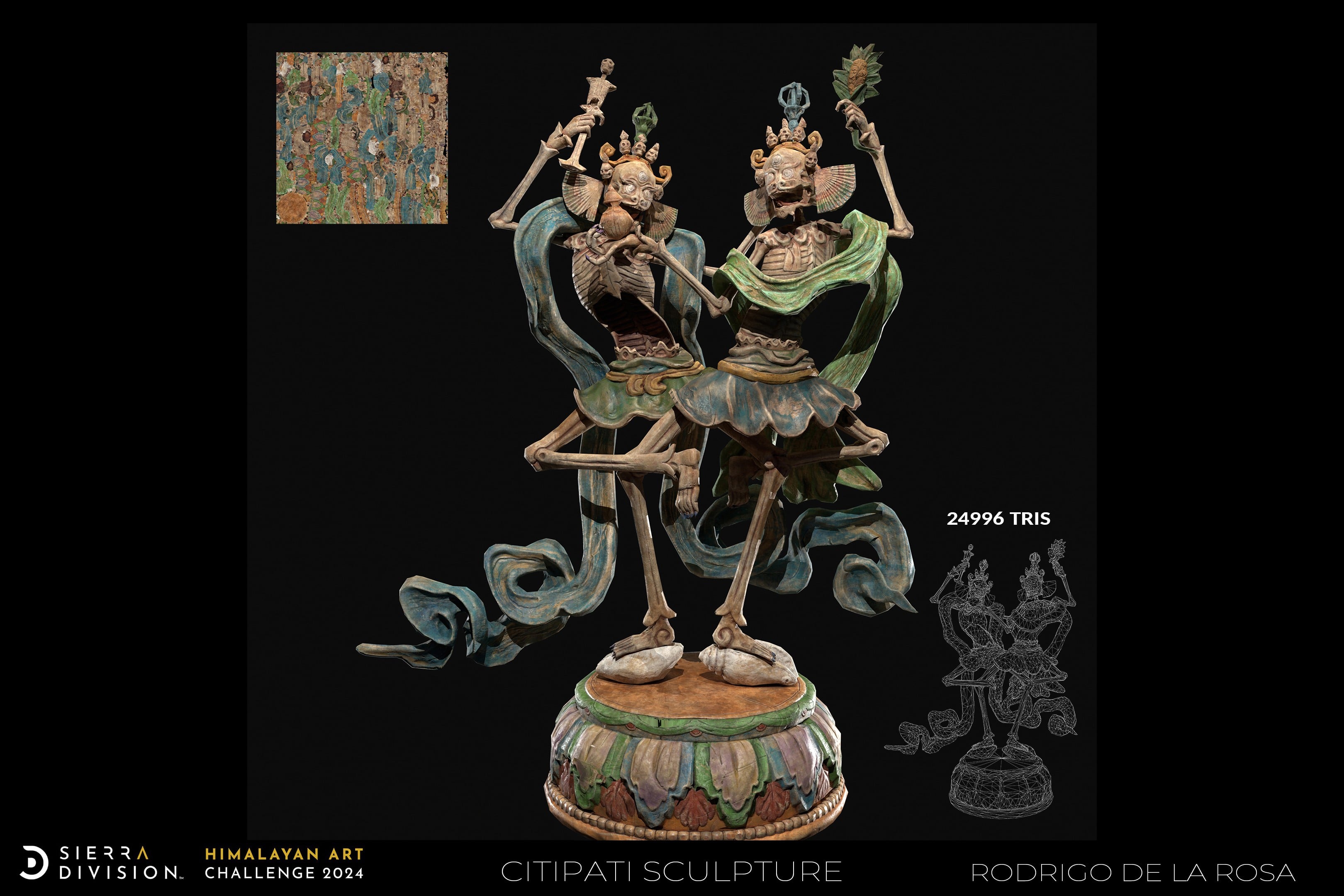
This is a ''optimized'' version with only one texture set and lowe geo.
They have no teeth tho.
I just took the 3rd LOD repacked UV'S and proyected the textures into it.
And sumarizing this was the pipeline:
Next reply will be the final submission in Unreal Engine.
I dedicated a lot of time to this process.
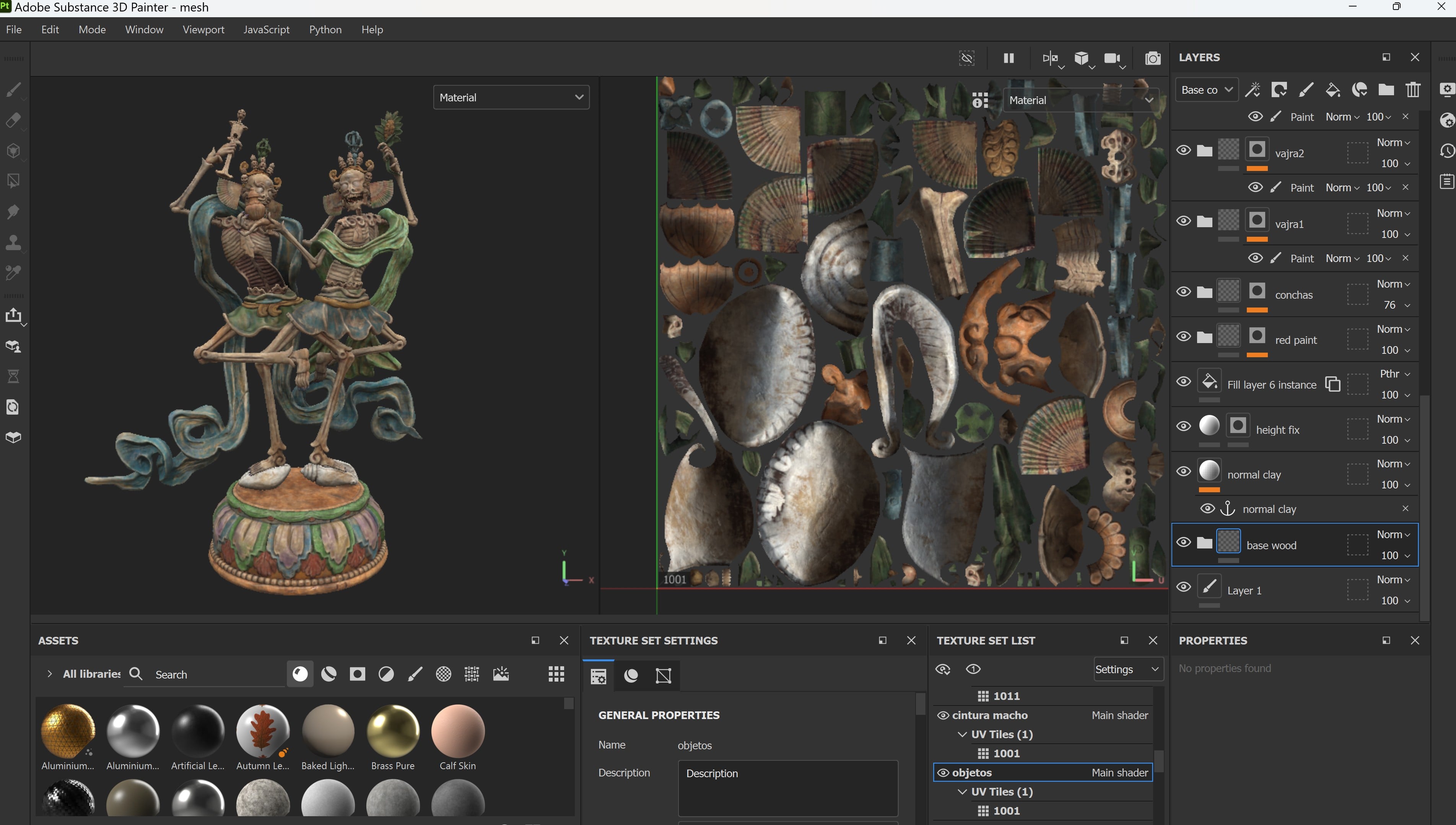
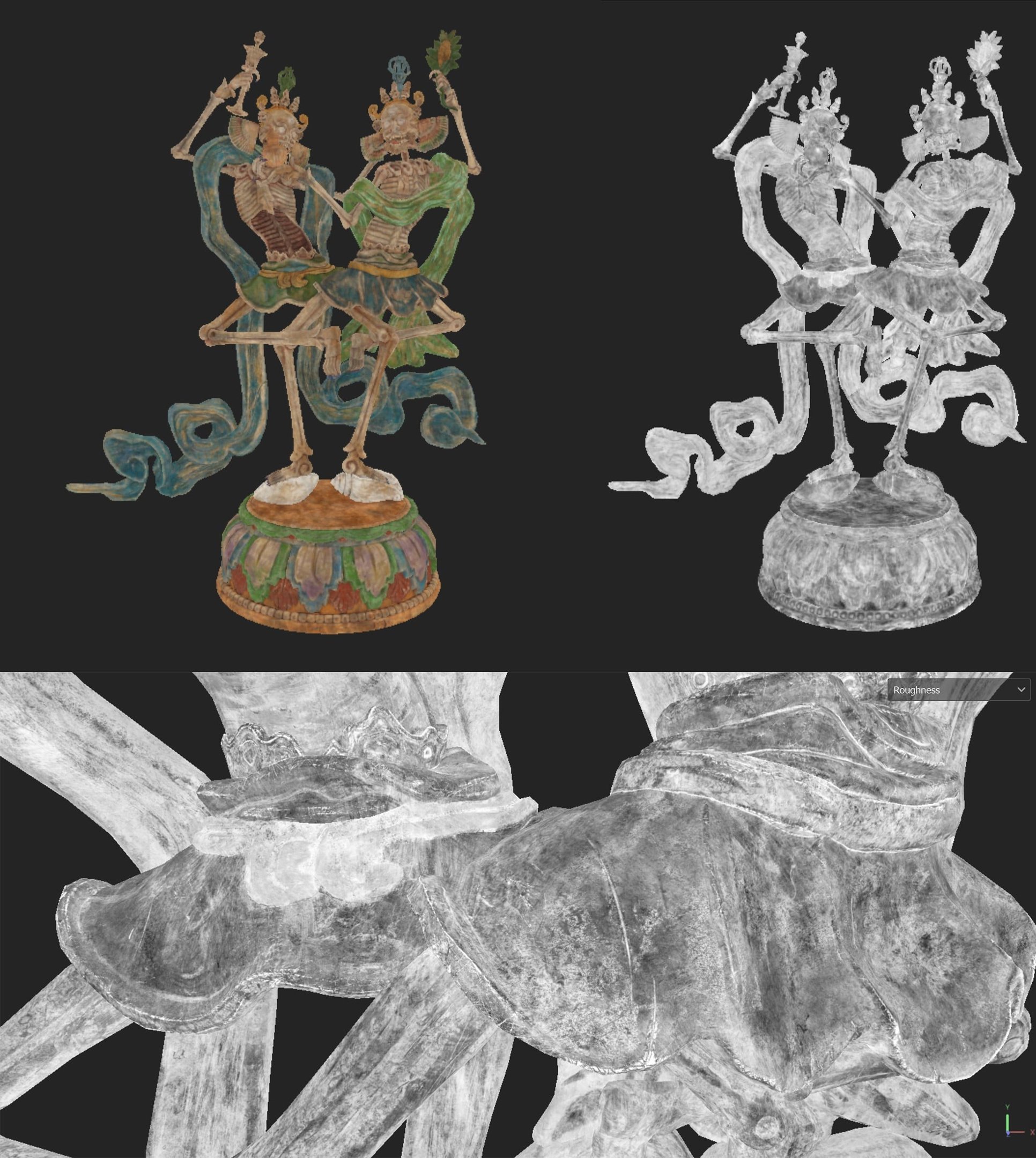
Here we can see the substance painter file.
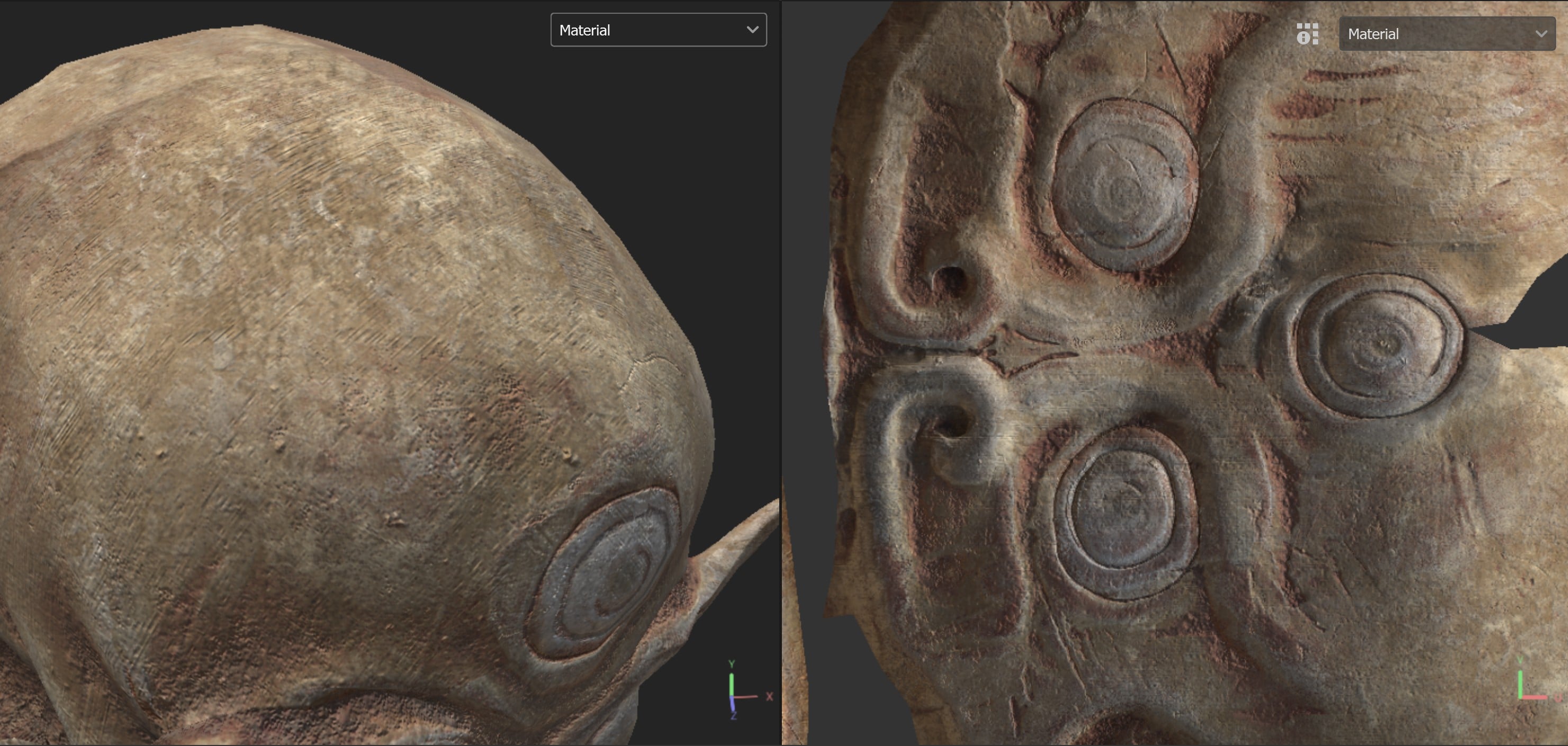
I started making a nice wood background material, nice base color and nice roughness and normal. I felt like only with this the sculpture look nice.
Then i made a cavity pass with a red paint since all the reference and art about this piece look like that. (see reply 1)
I worked in 4k btw.
After that i just applied the paint to the different zones, added some height variation and fixes (erasing the wood grain and adding bumps for example) and then i made some dust passes for enriching the roughness maps.
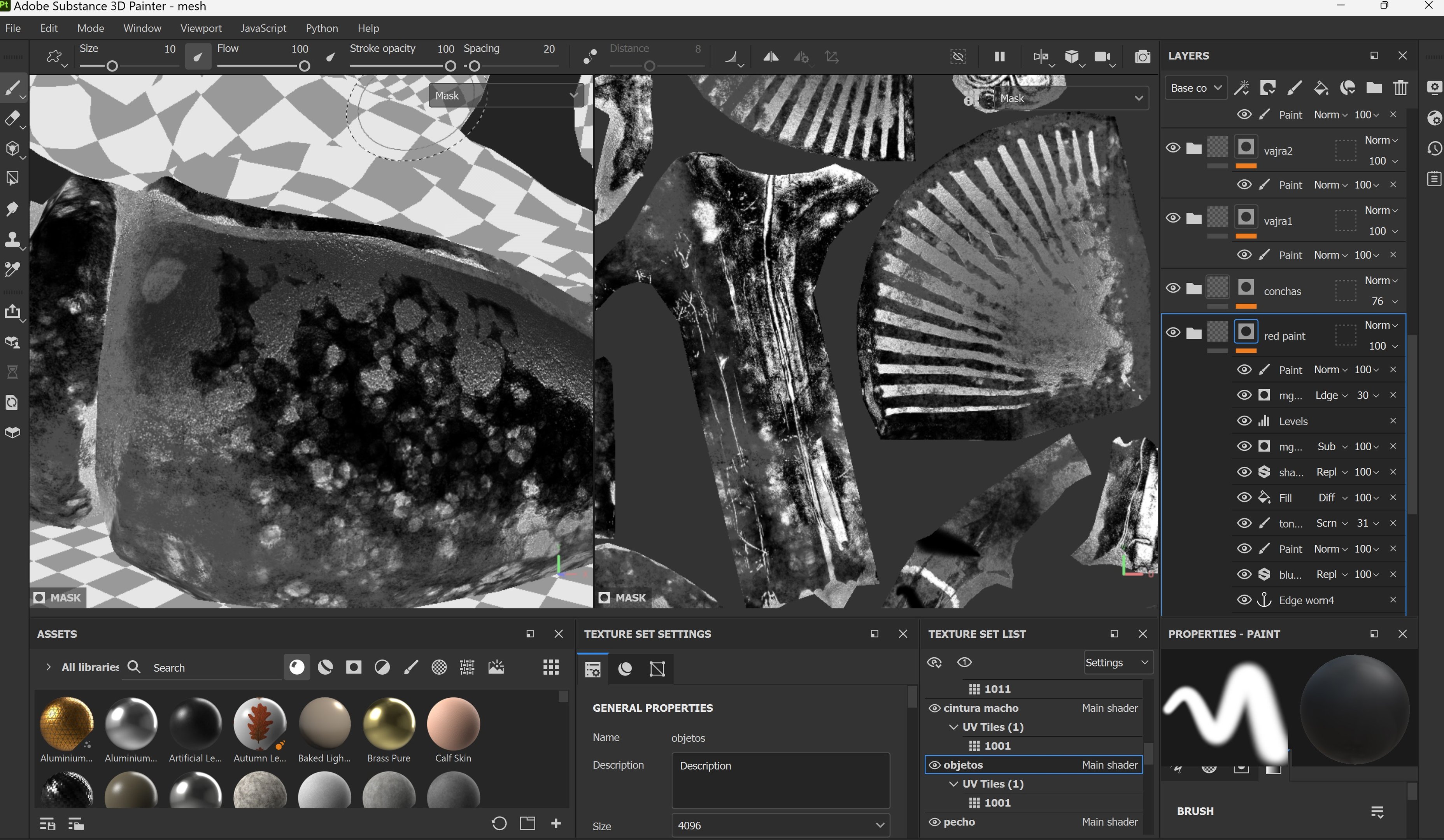
This is a red paint mask for example:
Quite rich.
And a zoom in example:
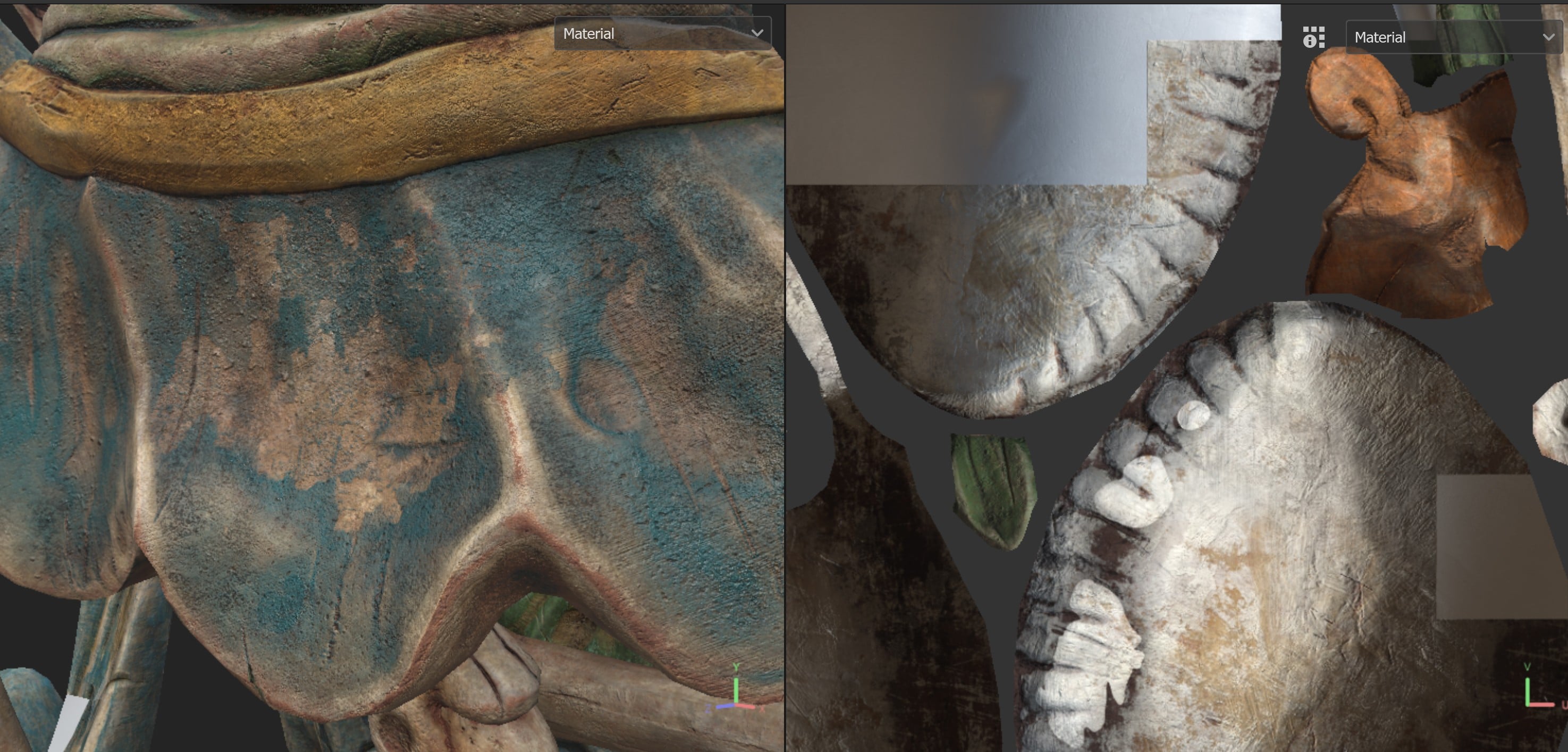
And this was more or less the progress:
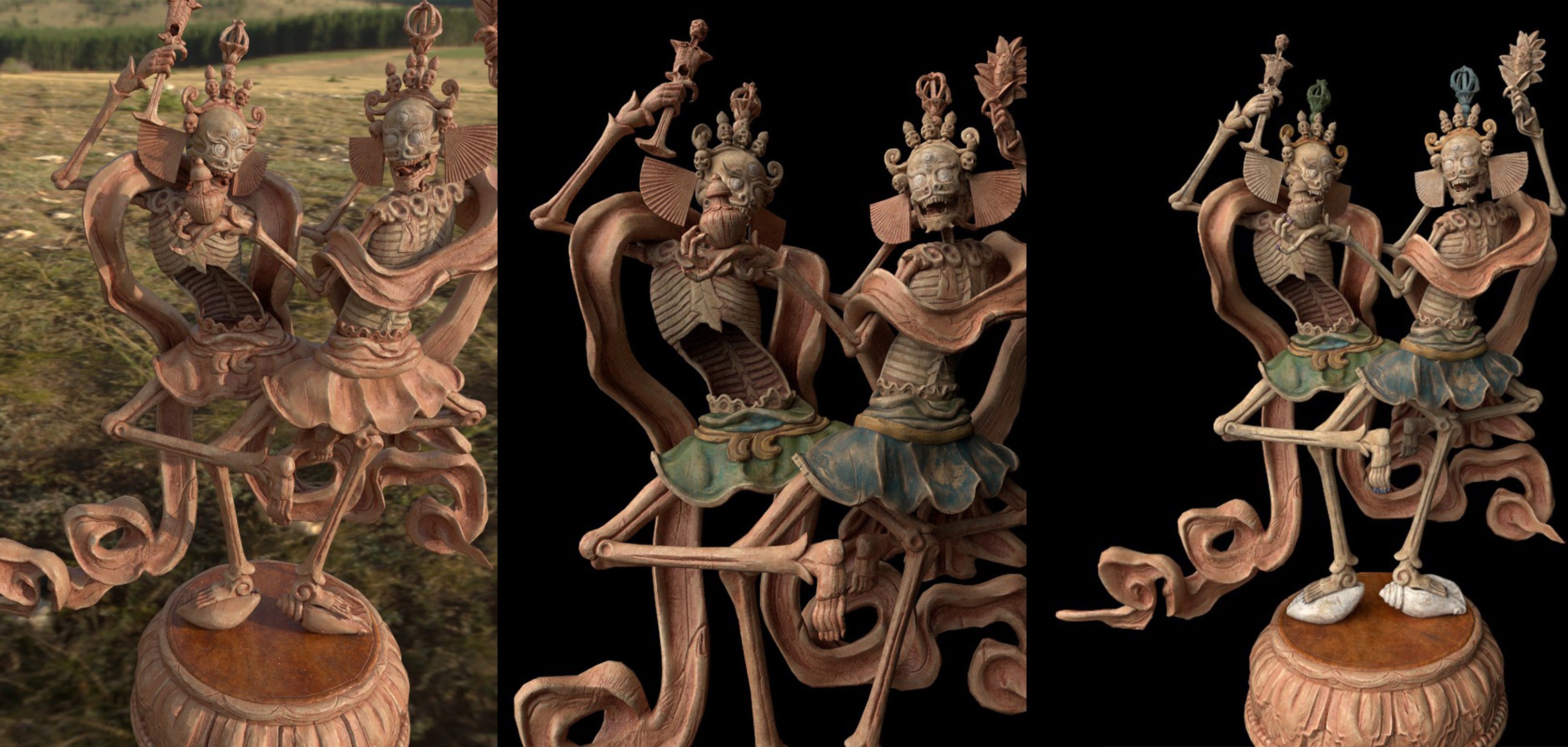
After that i just made some minor fixes.
base color and roughness.
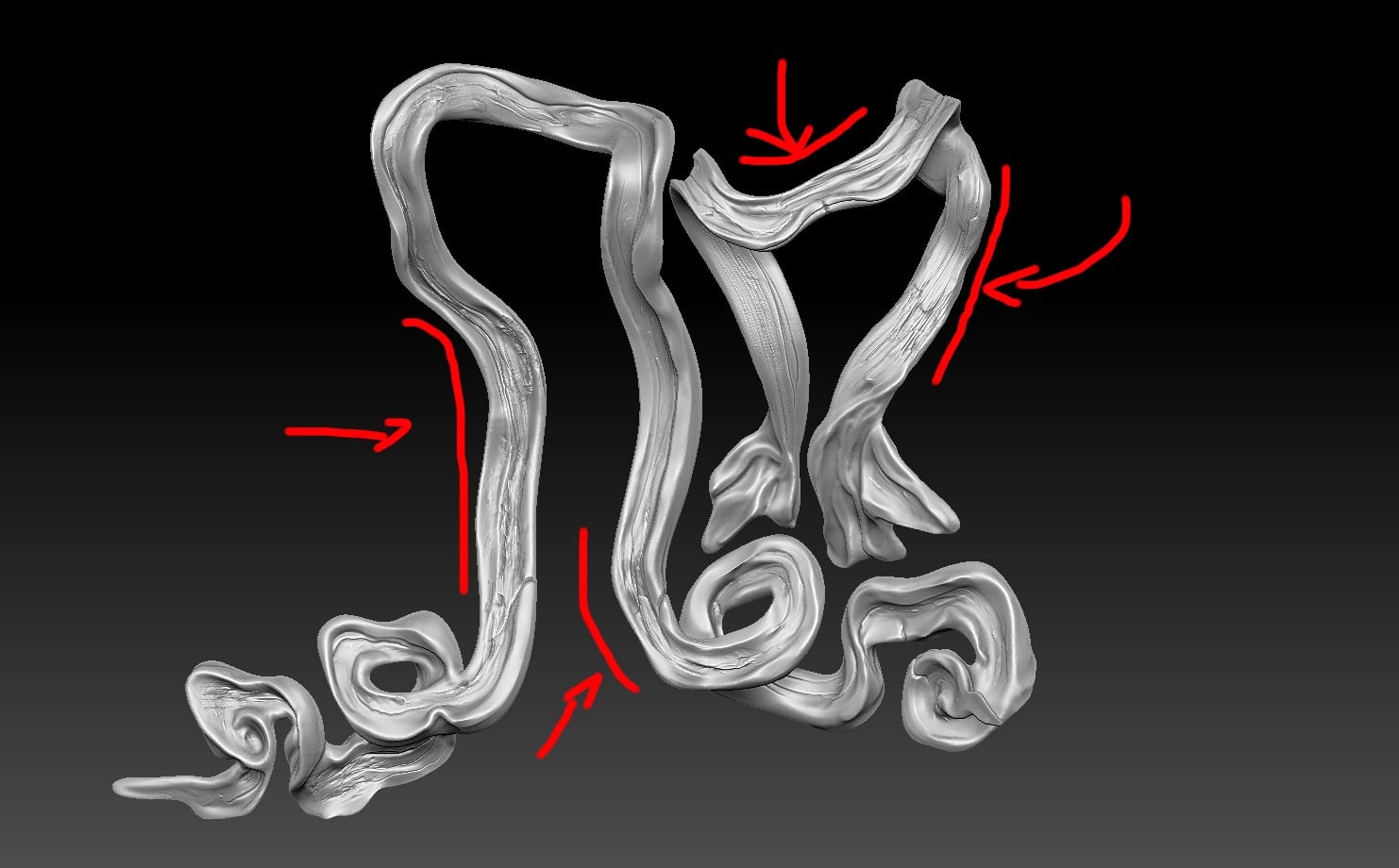
Ok so.. i was working on substance painter when i realized i needed more base details in the normal and curvature maps of the fabric pieces. So i went back to zbrush and added them
And the final baking looks like this:
Cool Right?
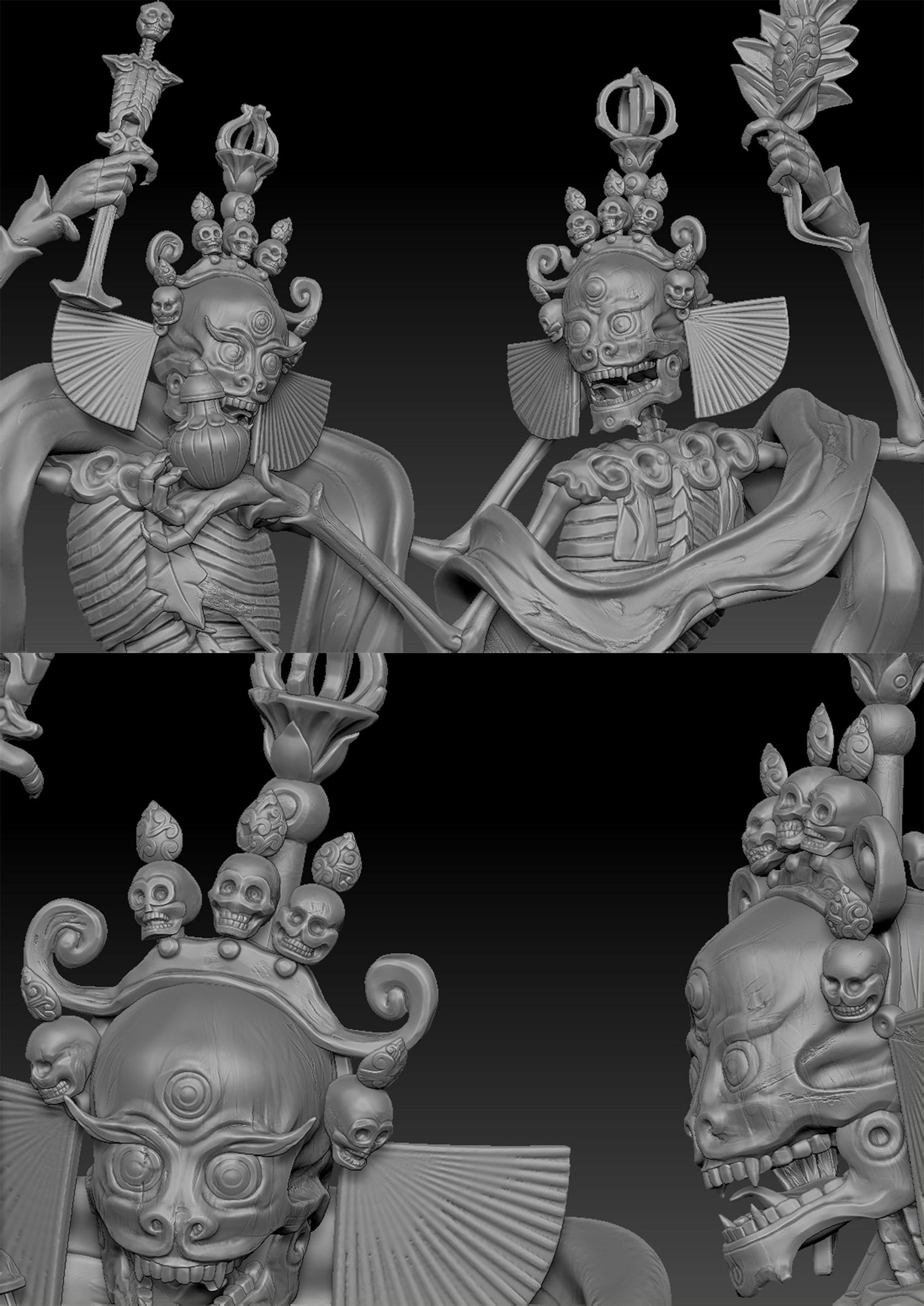
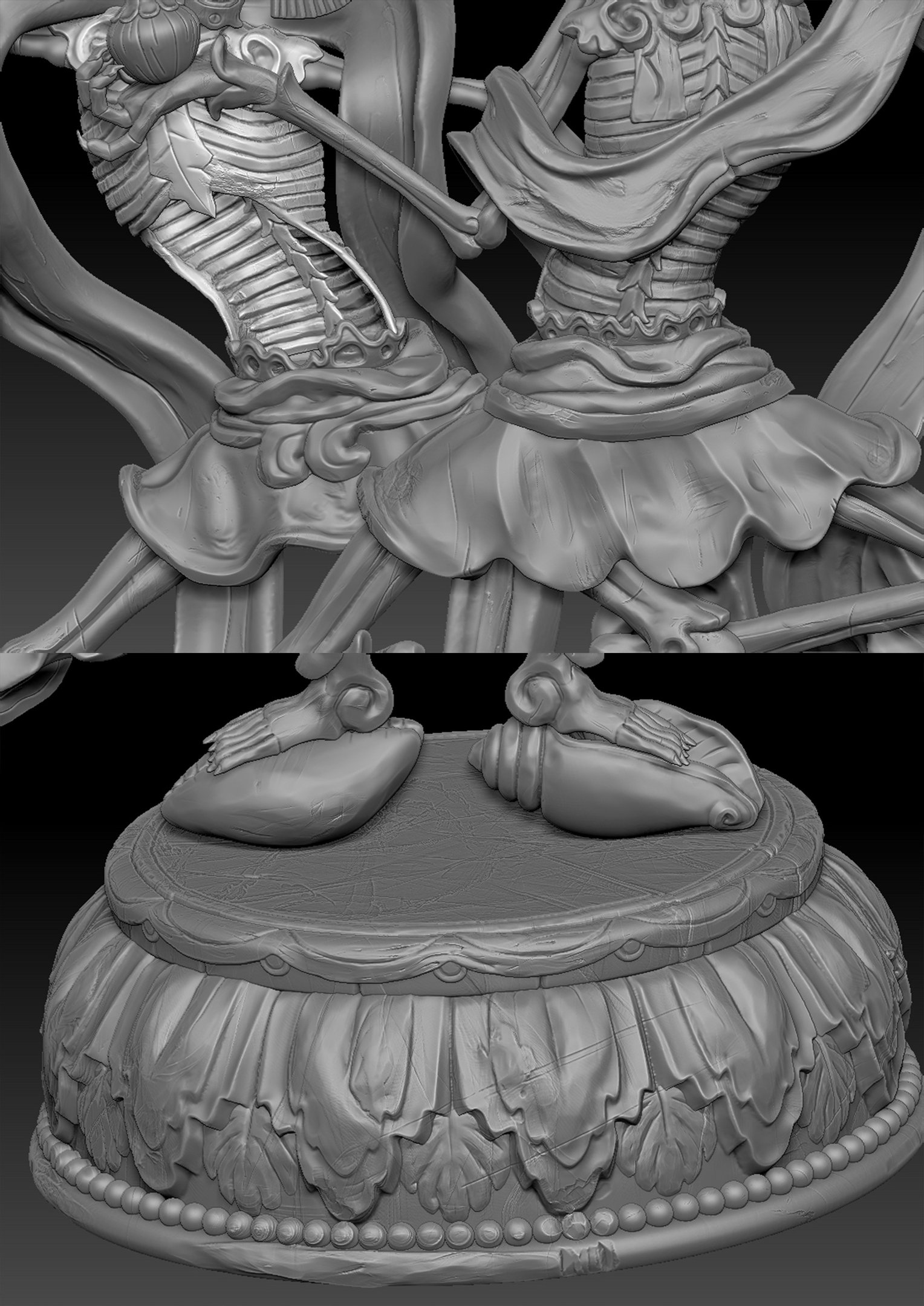
As you can see i added some details to have a better base for the Substance painter phase.
The list of brushes i used in Zbrush was:
Dam standard
Trim Dynamic
TrIm smooth borders
Clay tubes
Polish H
and some of @pablander's clay brushes
I didn't take some much pictures of this process but i can say i downloaded Topogun 3 because some years age i used version 2 of this software and was pretty awesome so i though i was time for test the new one.
But i wont lie it was tedious.
Here i have two image testing the new bridge tool.
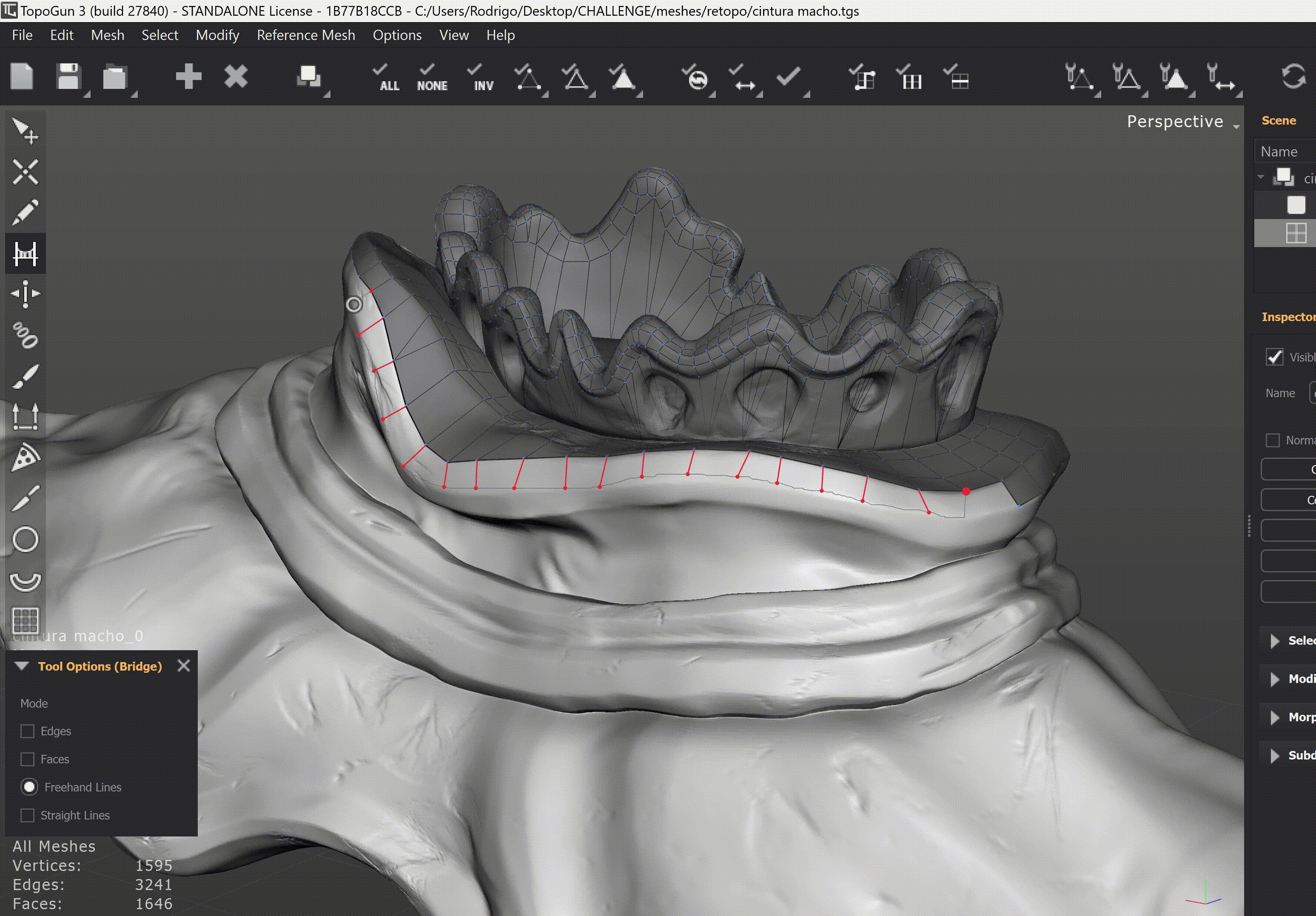
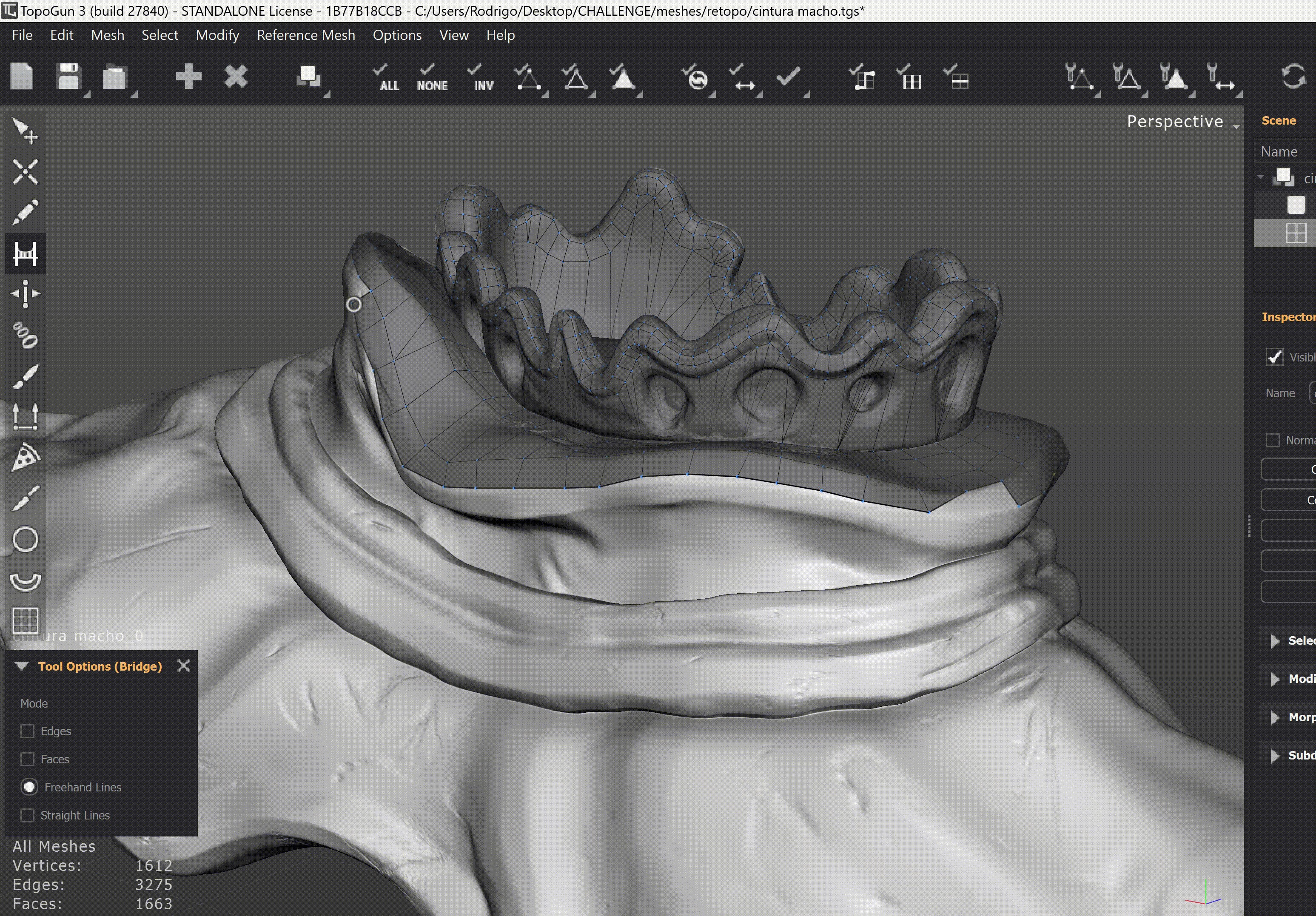
( i can't upload gifs 🙁 )
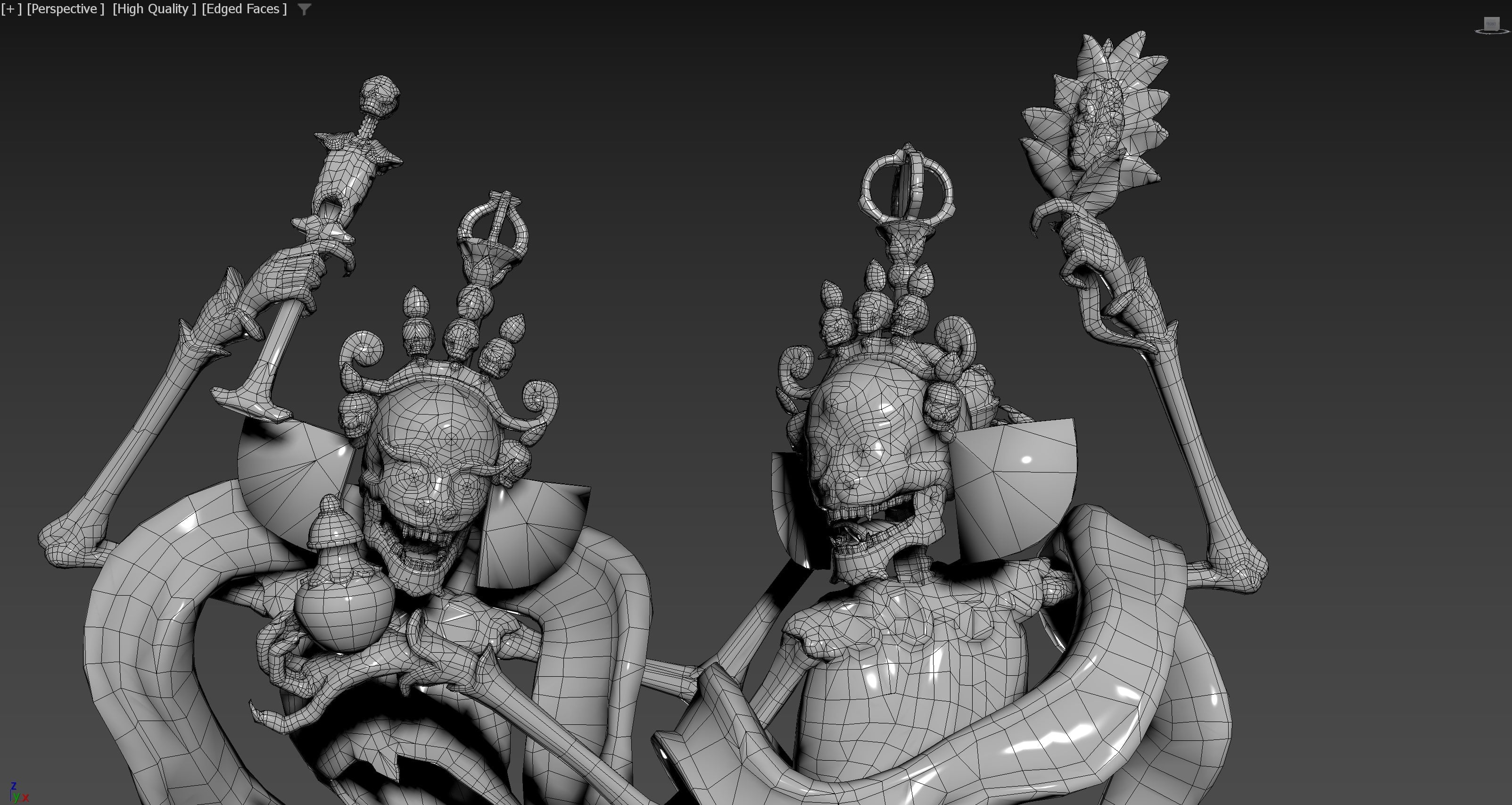
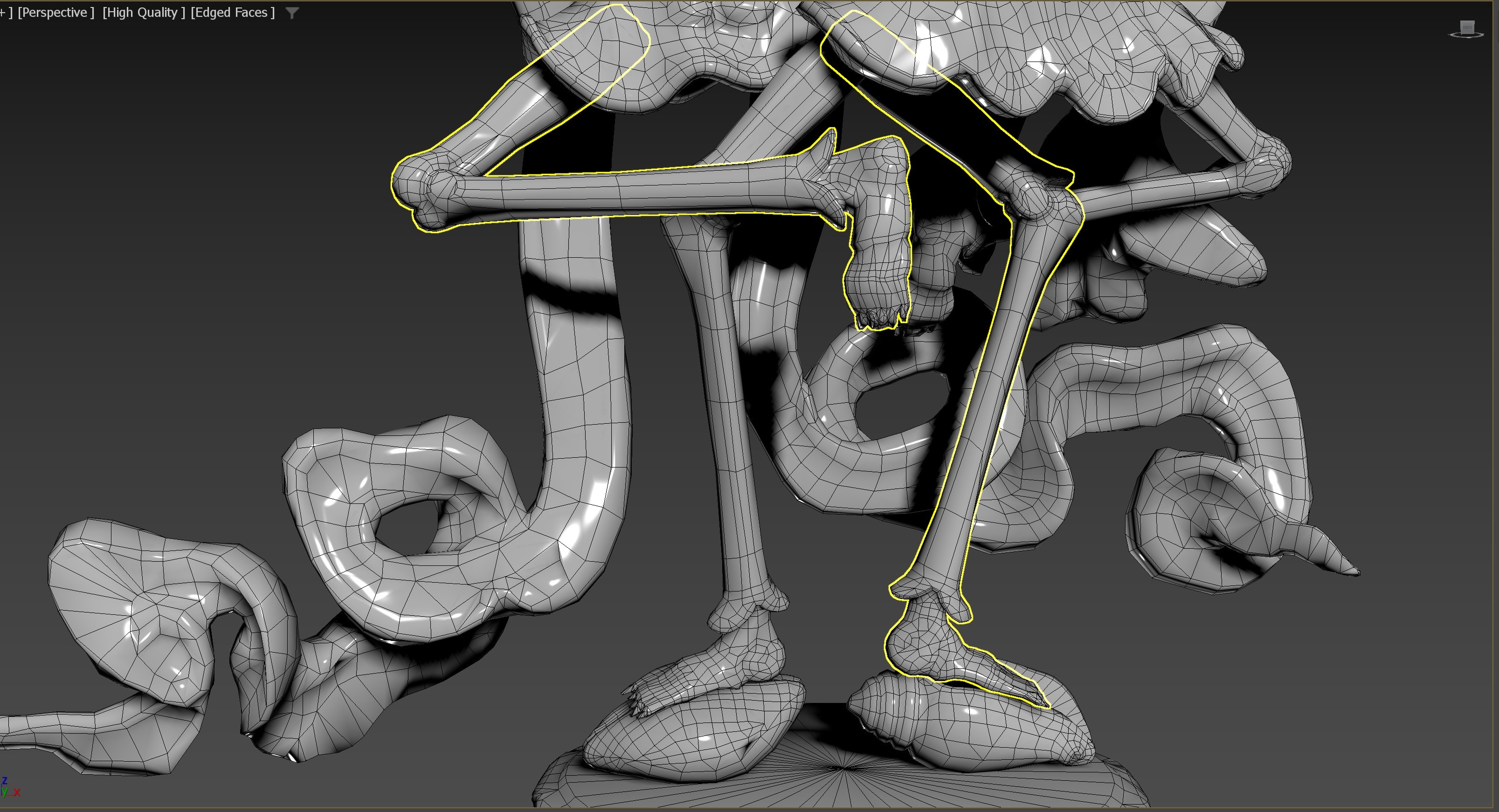
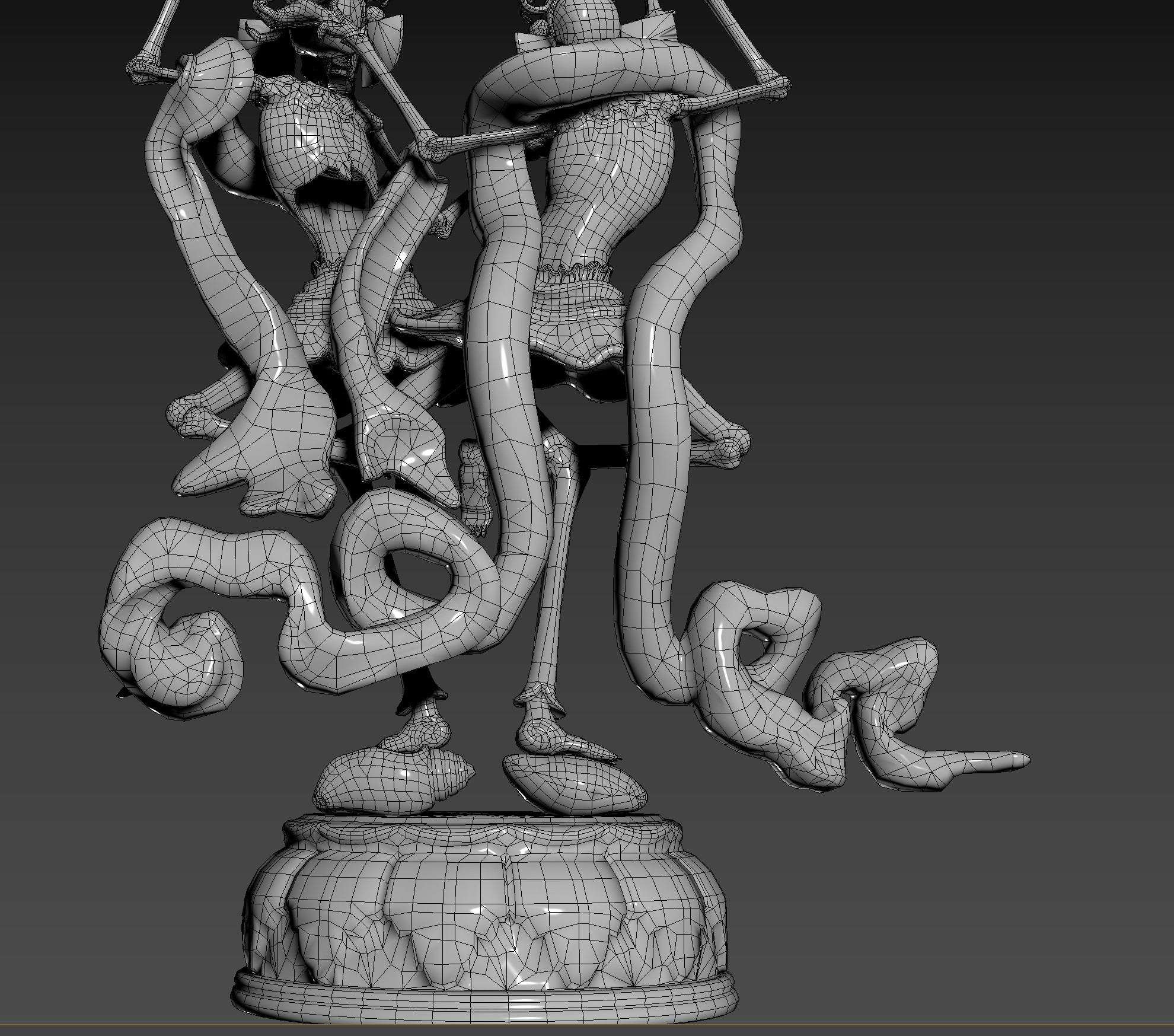
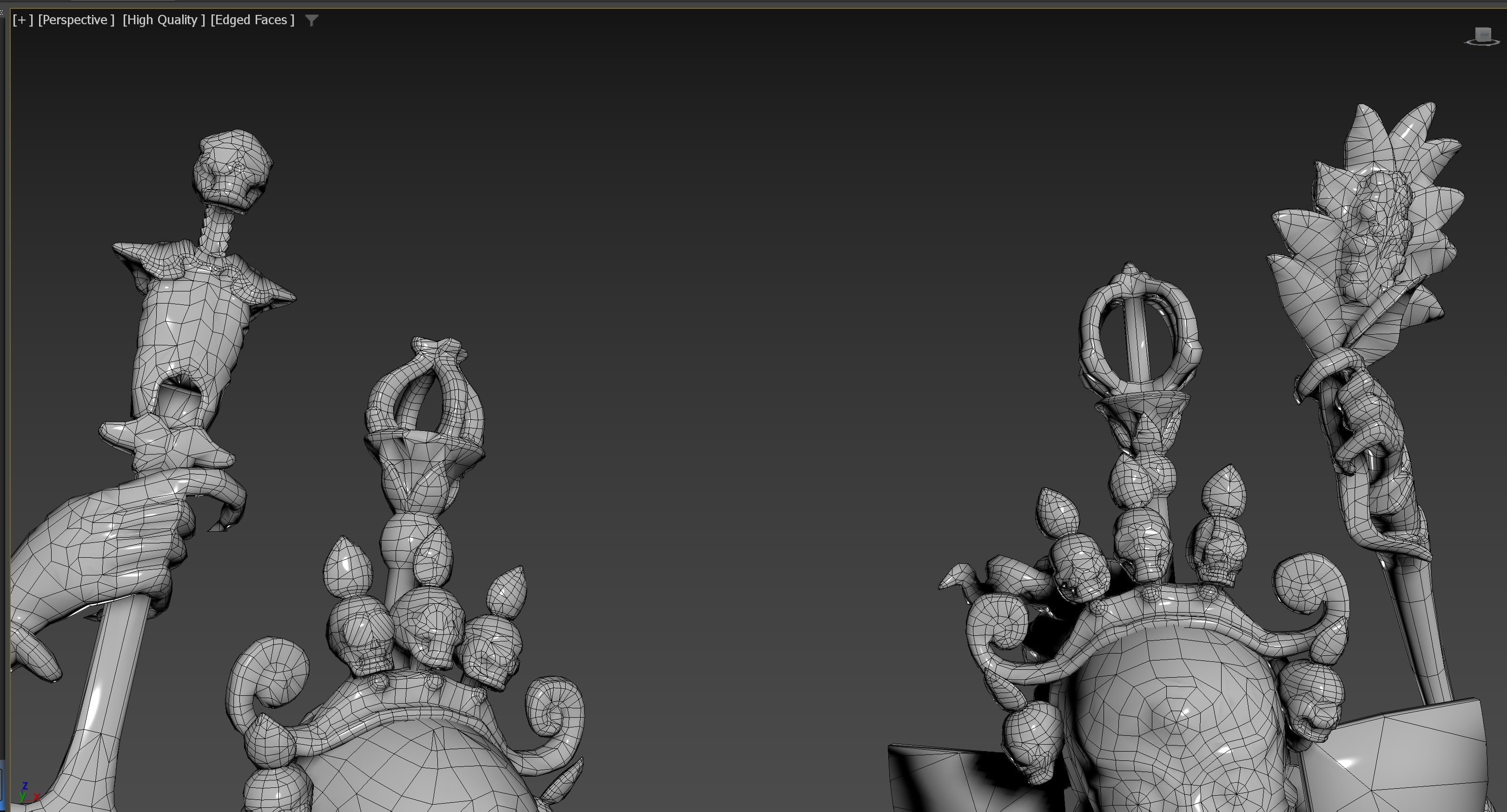
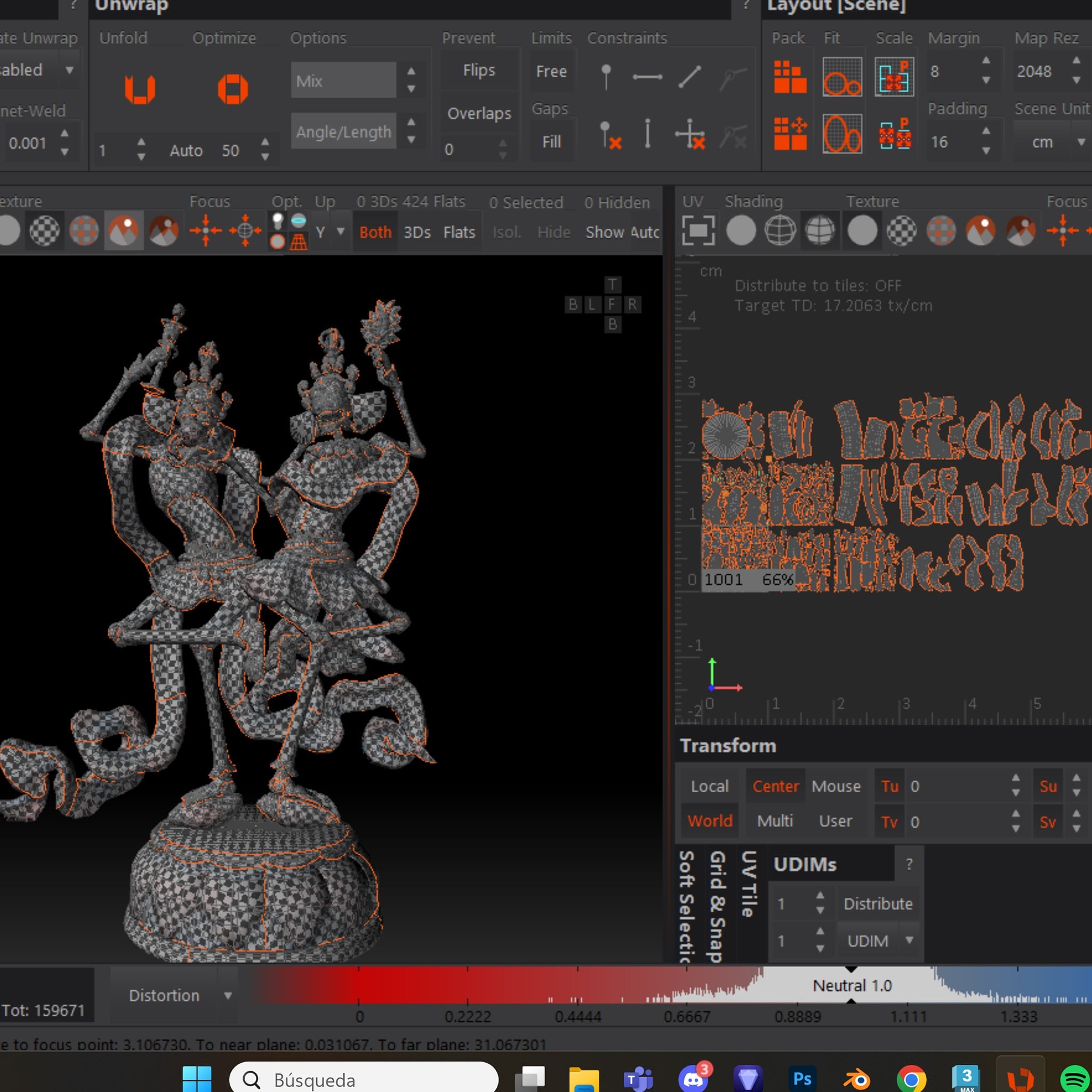
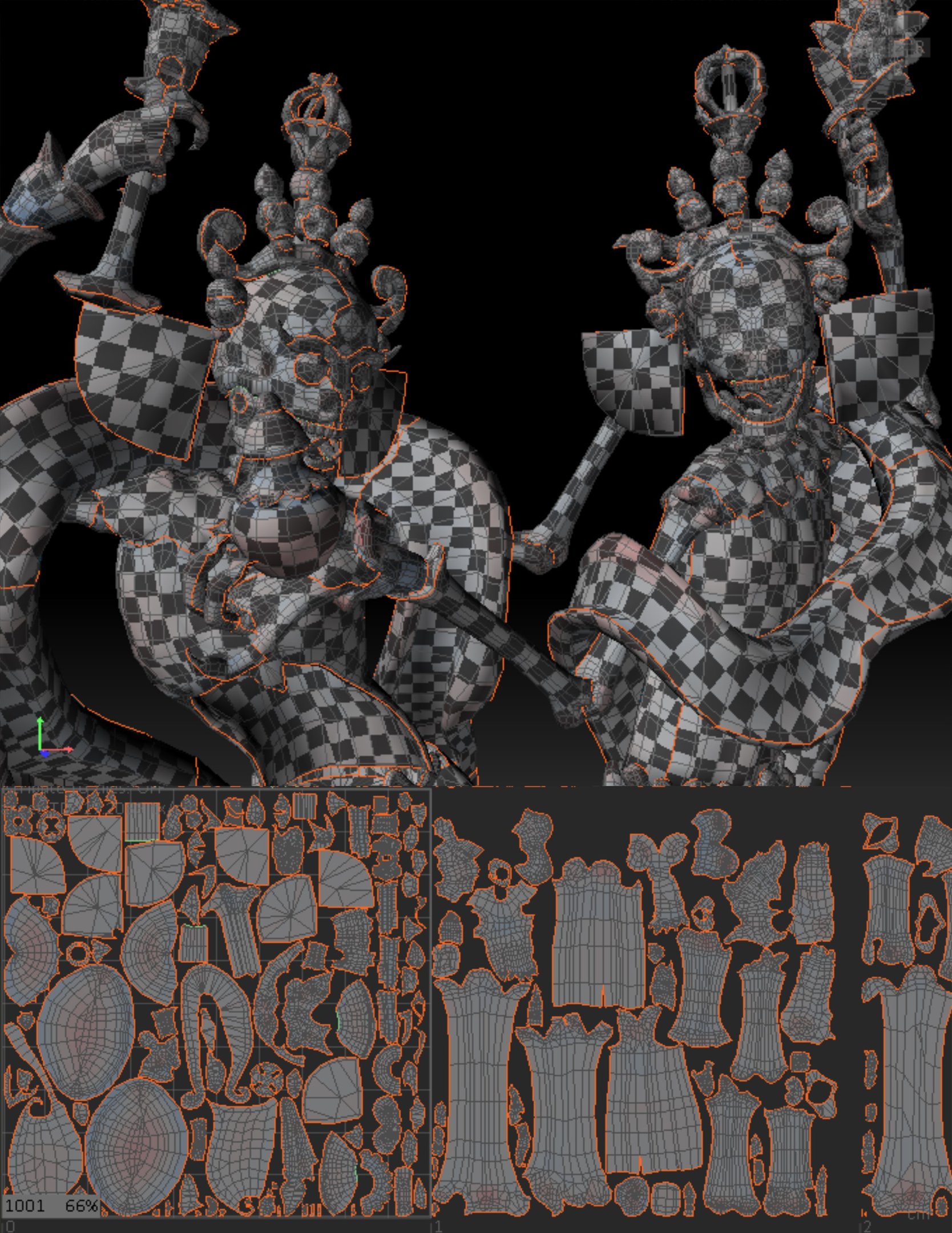
Of course i needed UDIMS for this i would like to use less of them but the drapery and base of the statue were too much and couldn't maintain a reasonable texel density. Most of the uv's are just fabric pieces.
Polygon count is higher than normal but these guys will resist a pretty close framing.
Then is just UE5 LOD's and nanite.
I'm looking forward to see these guys painted.
I think they can end pretty cool.
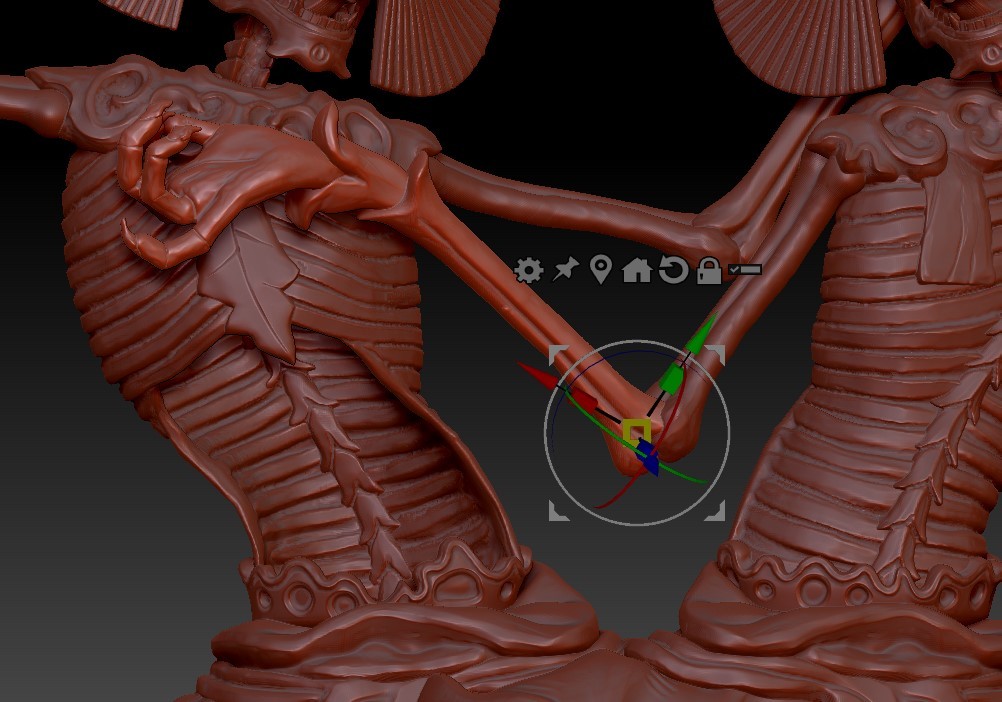
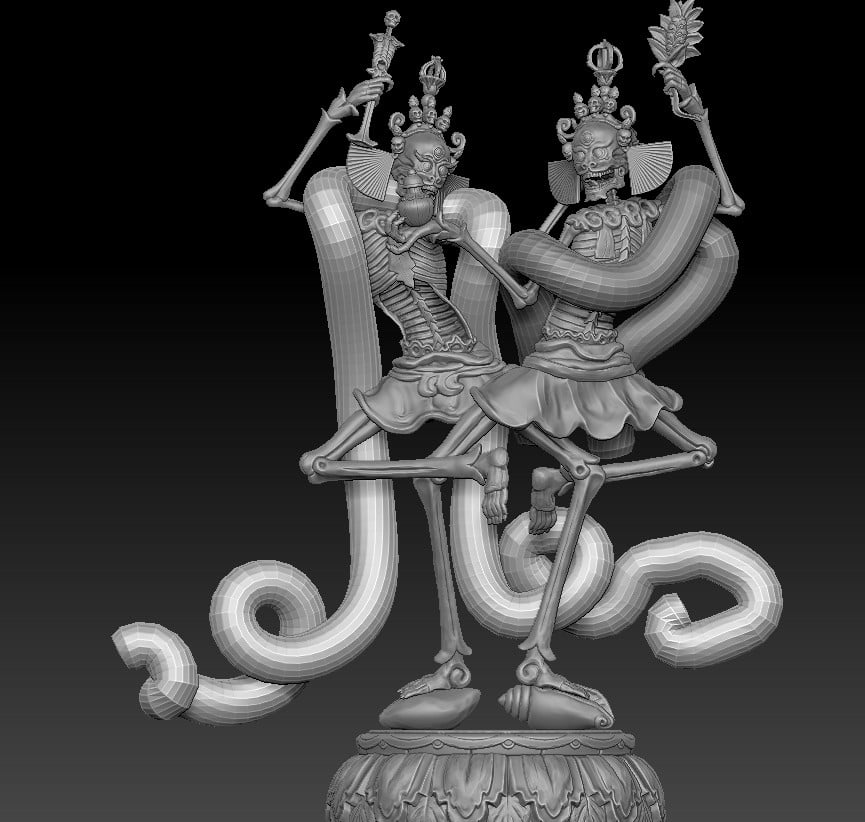
I'll have a f***ing hard time doing the retopology and uv's.
What do you think?
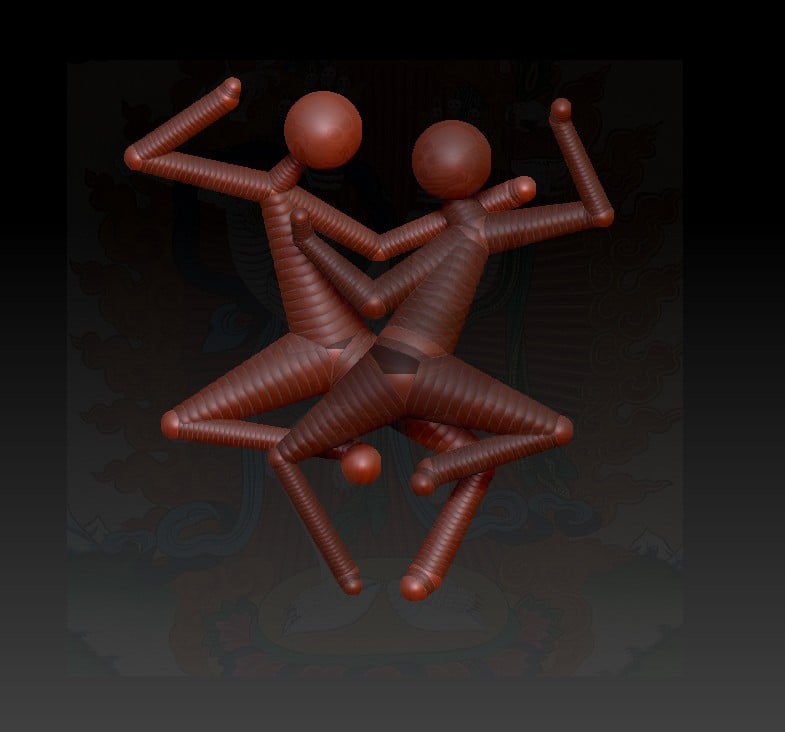
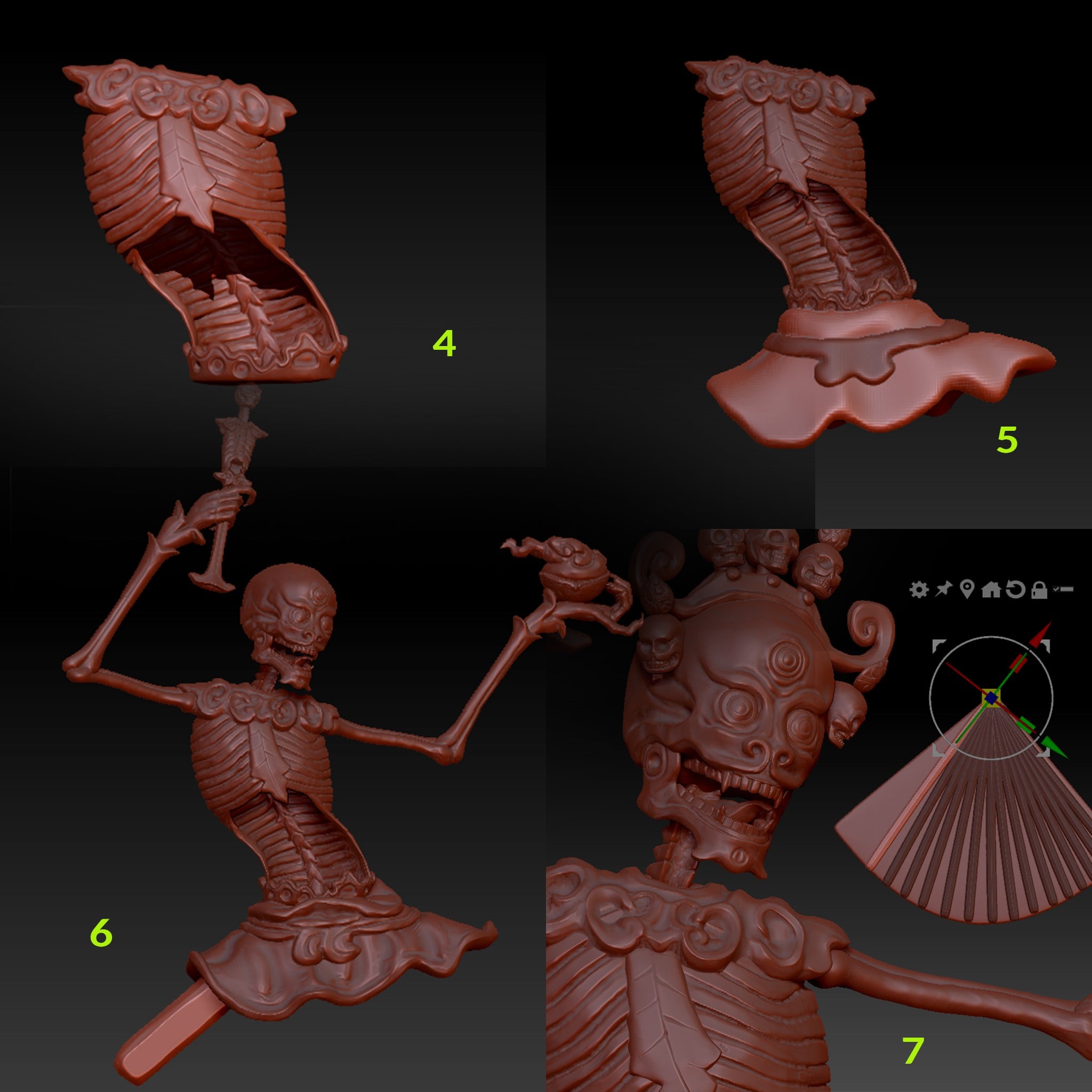
Using Spotlight and zspheres i made both blockings to have a correct notion of the scale.
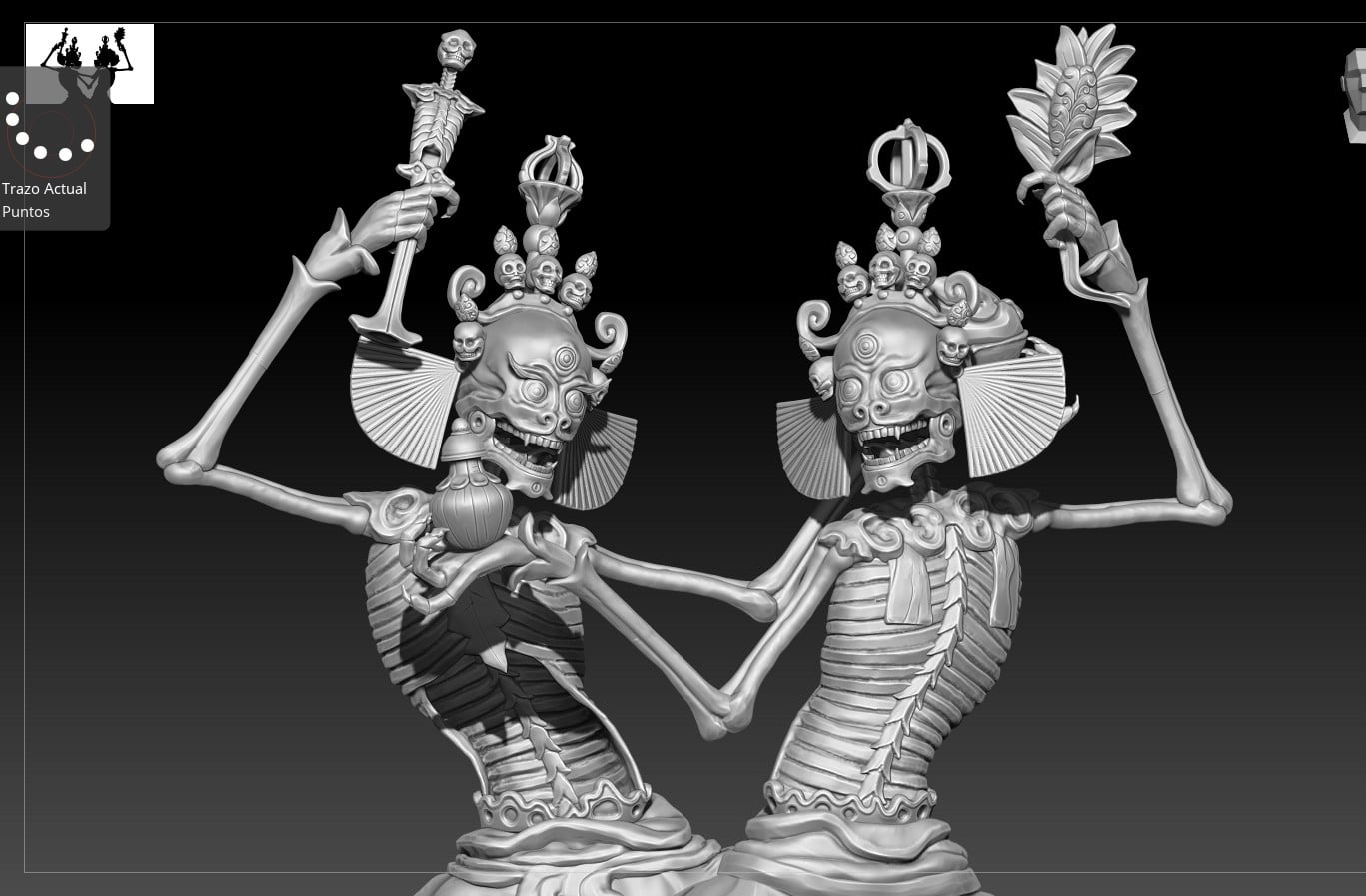
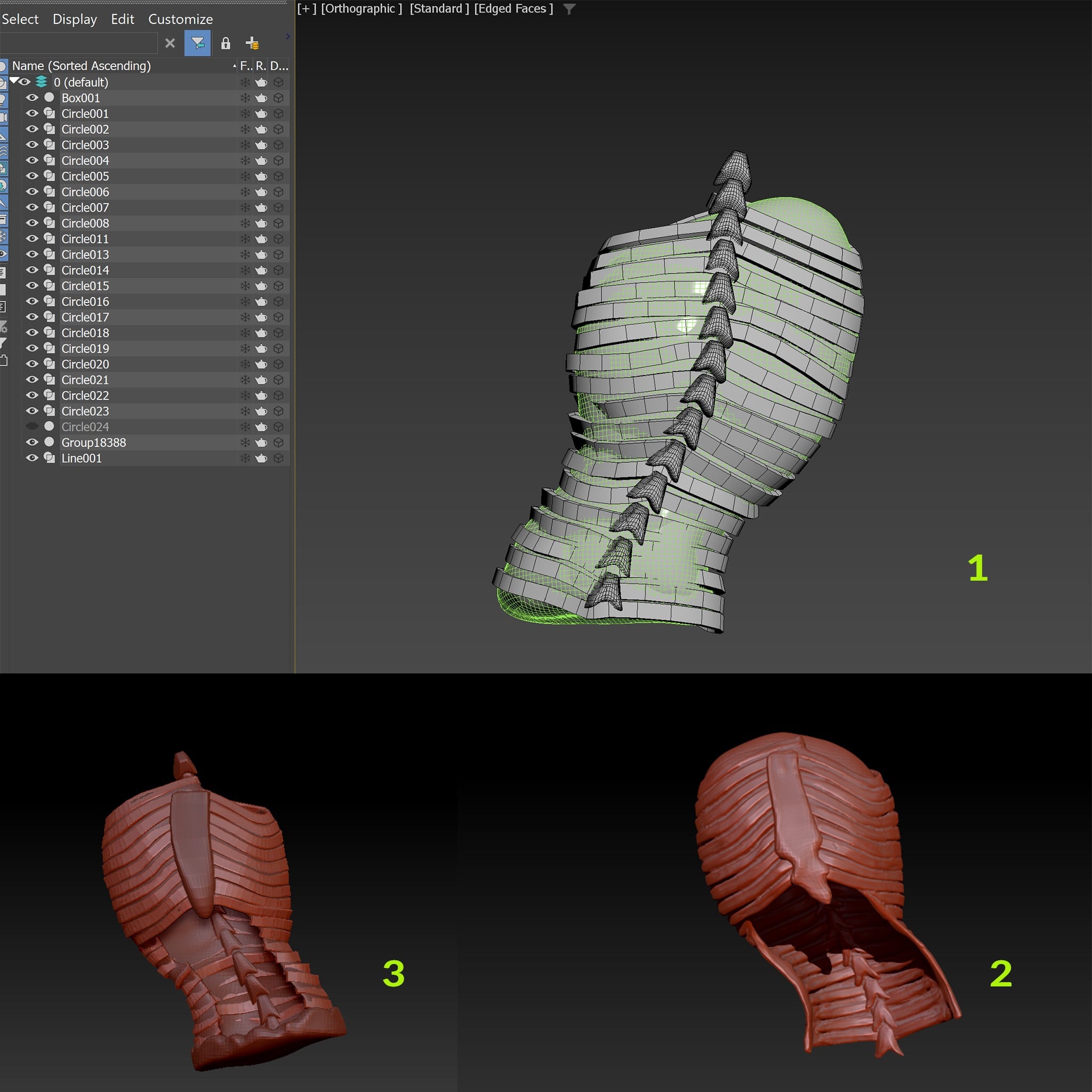
After that i started to build the torso:
In the hands: he grabs a skeleton staff and a skull piece with blood (the nut kind of thing)
i have more!
⬇⬇⬇⬇⬇⬇⬇⬇⬇⬇⬇⬇⬇⬇⬇⬇⬇⬇⬇⬇⬇⬇⬇⬇⬇⬇⬇⬇⬇⬇⬇
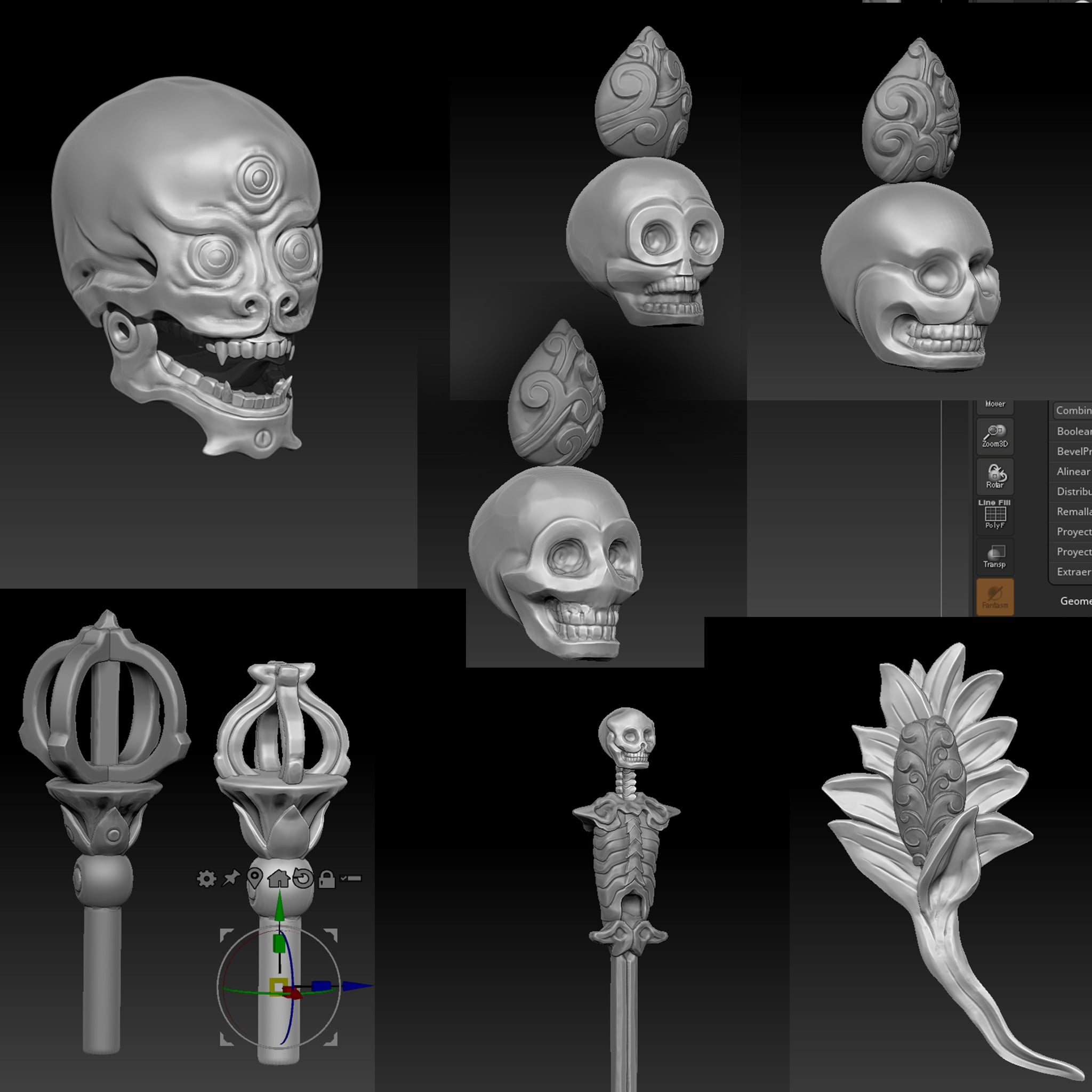
I started doing a kitbash file in zbrush because i feel there are a lot of components in this sculpture i can re-use
For example:
I sculpted everything thinking about what the retopology process will be like but things like Vajras or other ornaments will be a bit demanding, in general the key point of this project will lie in the retopology and mapping, in my opinion.
Since I don't want to make two symmetrical figures.
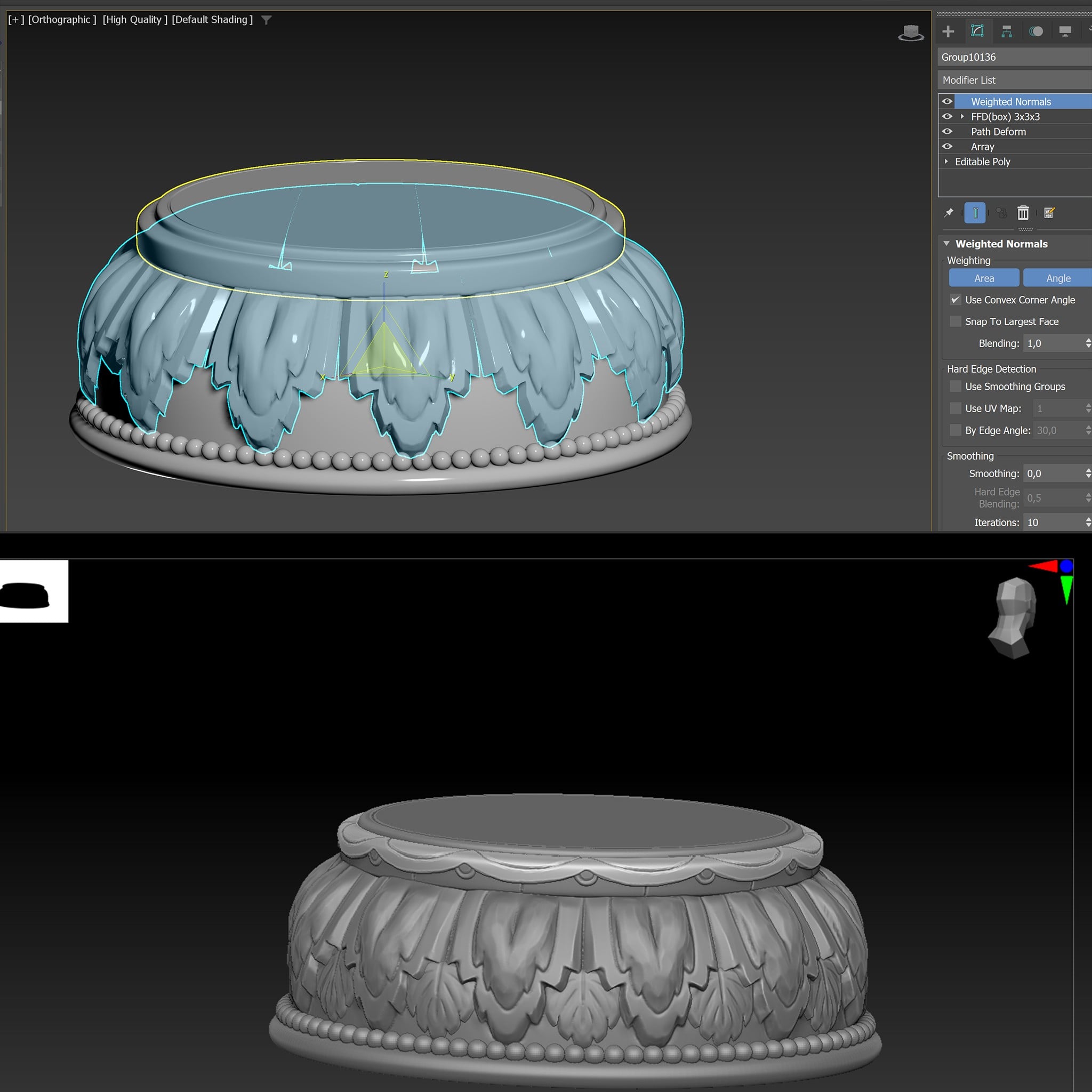
Here we can see how I deal with repetitive pieces
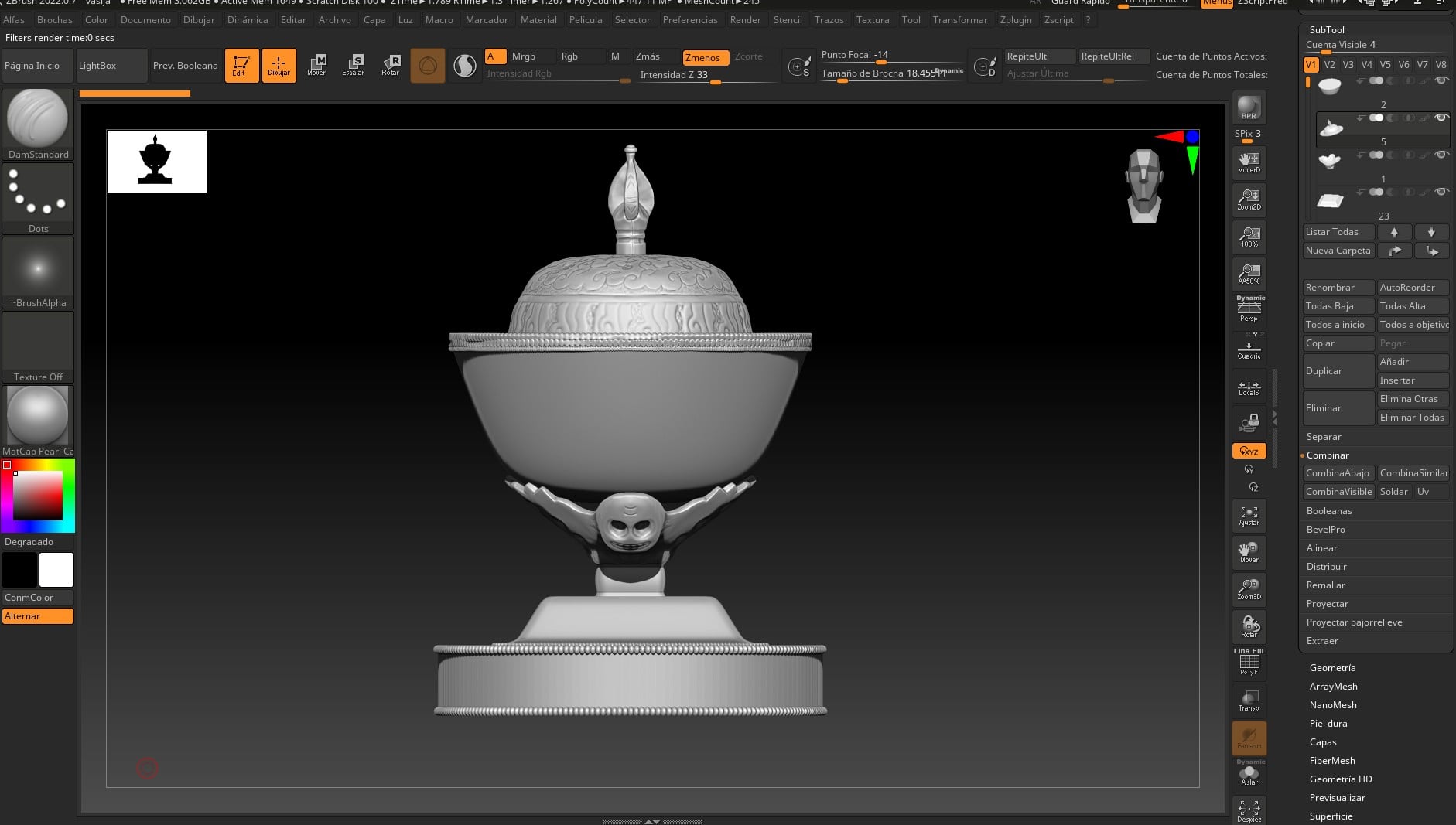
One of the objects that the sculpture must support is a vessel of life.
Here we have an example of something that is not going to make the cut because I have realized that it is not going to match the general feeling.
Representations of Chitipati are usually made of polychrome wood, and this object does not seem that way.
Next reply will be about blocking the general figures!
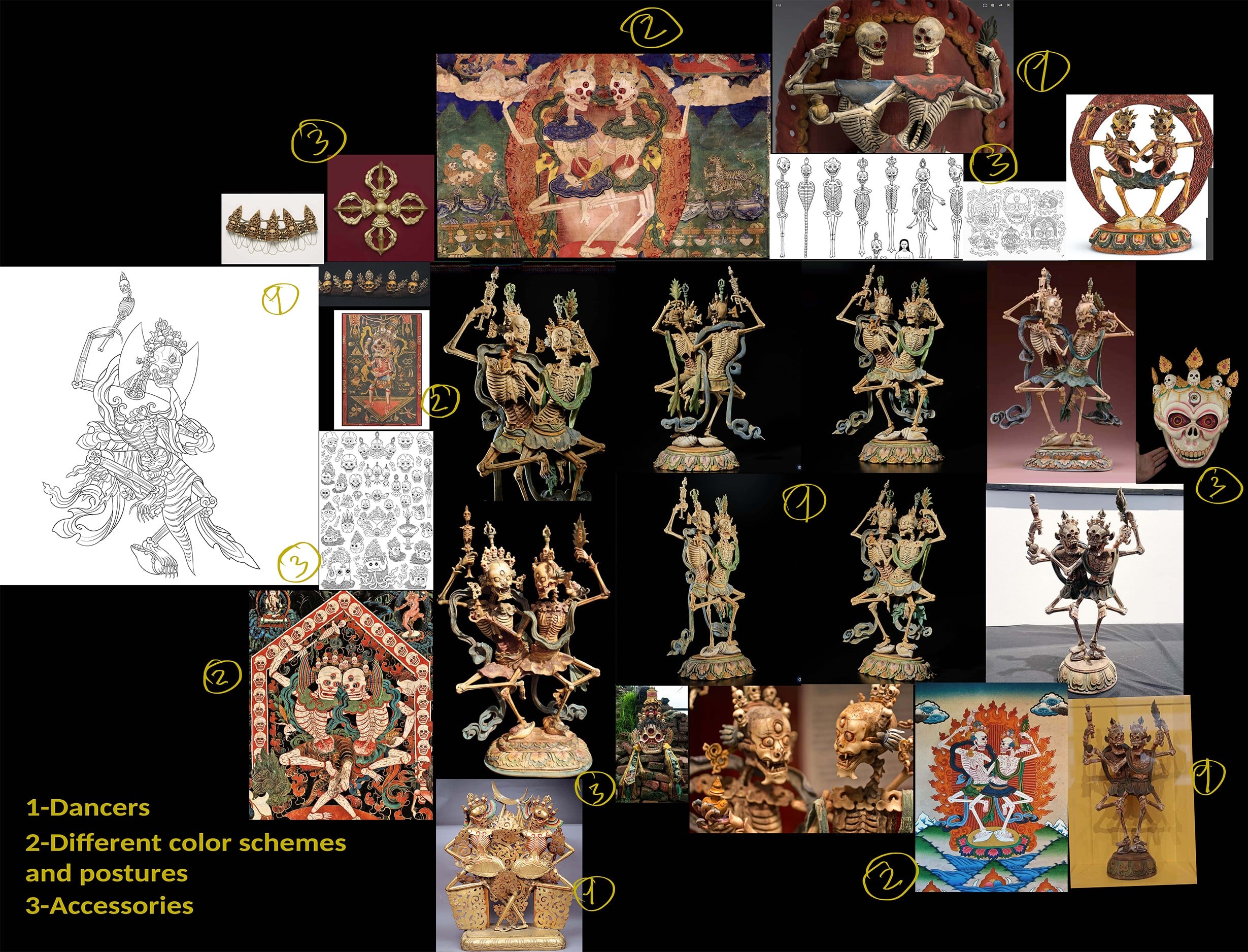
I made a Pure ref export of what i'm using as a reference with some (yellow) annotations styles, postures, etc..
I'll make my own version of this somehow 🙂
Hello everyone!
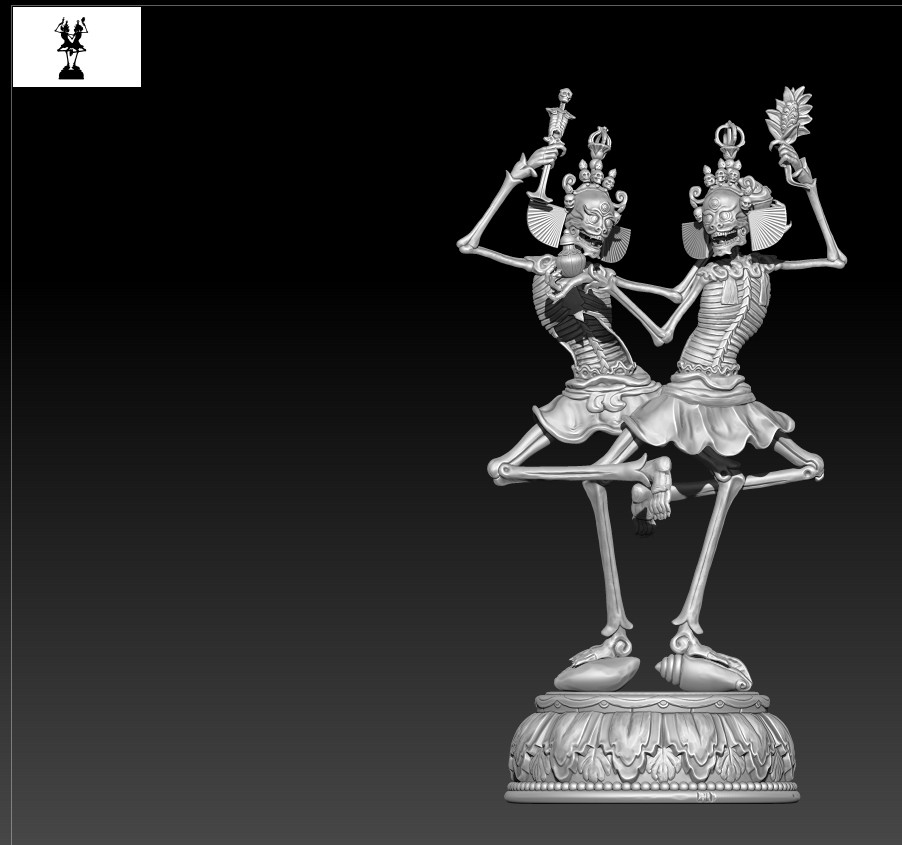
I'm going to do a Chitipati sculpture!
What is this?
⬇⬇⬇⬇⬇⬇⬇⬇
Commonly known as Citipati (meaning ‘Lord of the Funeral Pyre’) these Guardians of the Cremation Ground invariably depicted as a pair of male and female skeletons in a dancing pose. They are intended to be quite terrifying with a gruesome smile on their skull-faces but this function is intended to scare only those who enter the graveyard with improper intentions. Such intruders might include tantric vow-breakers who wish to misuse the cemetery for evil rituals or thieves who intend to rob the deceased person’s remains. In addition to these obvious protective roles they also act as encouraging presences for those meditators whose proper tantric rituals require the use of a cemetery as a place for meditation on impermanence and death itself.
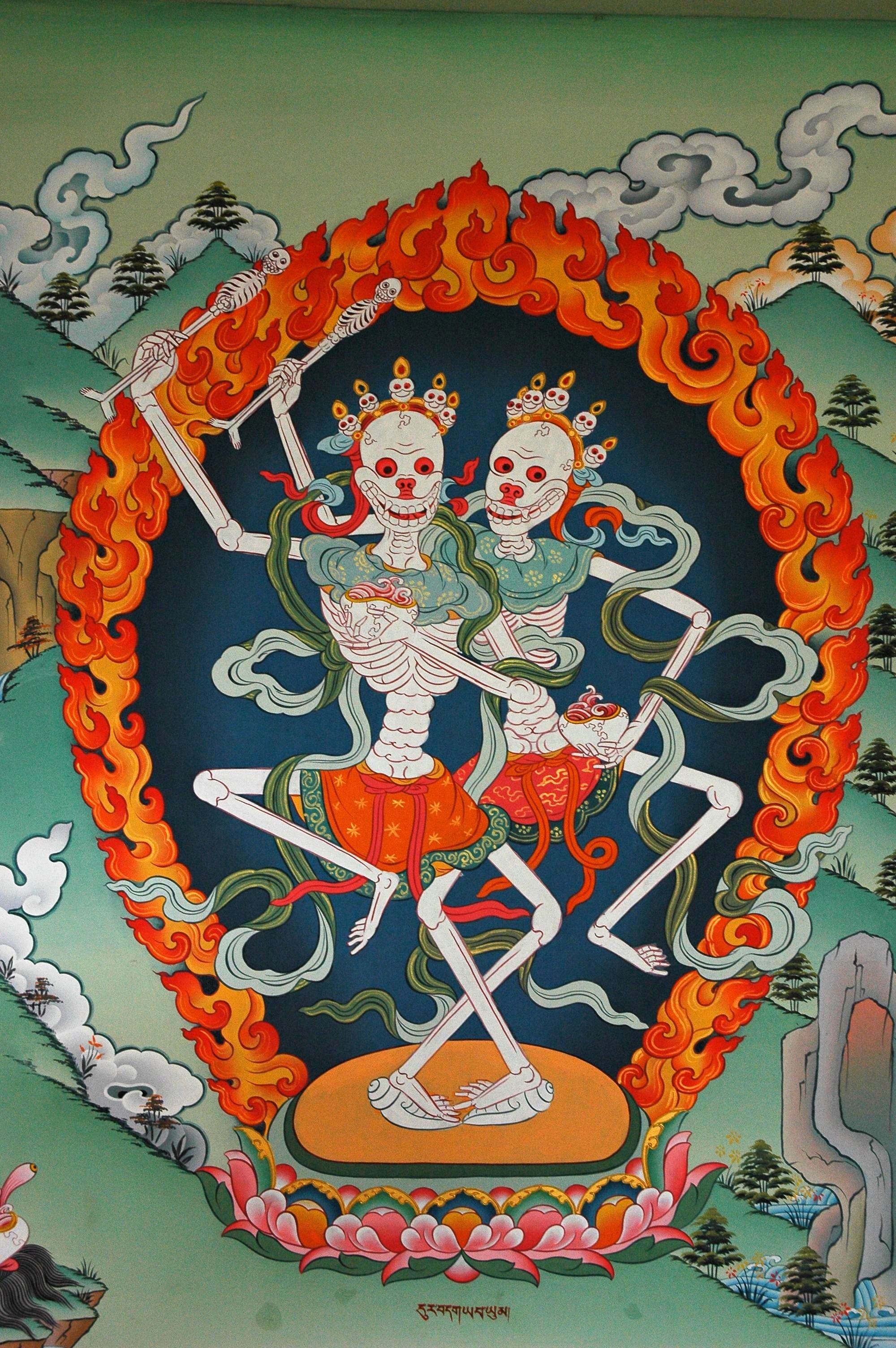
This particular pair is portrayed in what is known as the ‘older’ style, that is without the female (on the viewer’s right) holding a vase of long-like elixir and a stalk of grain. This more recent ‘elixir and grain’ style is usually seen in images made after the mid-16th century and only very rarely before then. It is usually (but not always) associated with the Gelug tradition (the so-called ‘Yellow Hat’ school). However they sometimes also appear in other traditions bearing those attributes to accent their association with fruitfulness as well as protection.
quite a challenge, right?
Name: Rodrigo De La Rosa
Country: Spain
I have read the terms and conditions and am eligible for prizes.